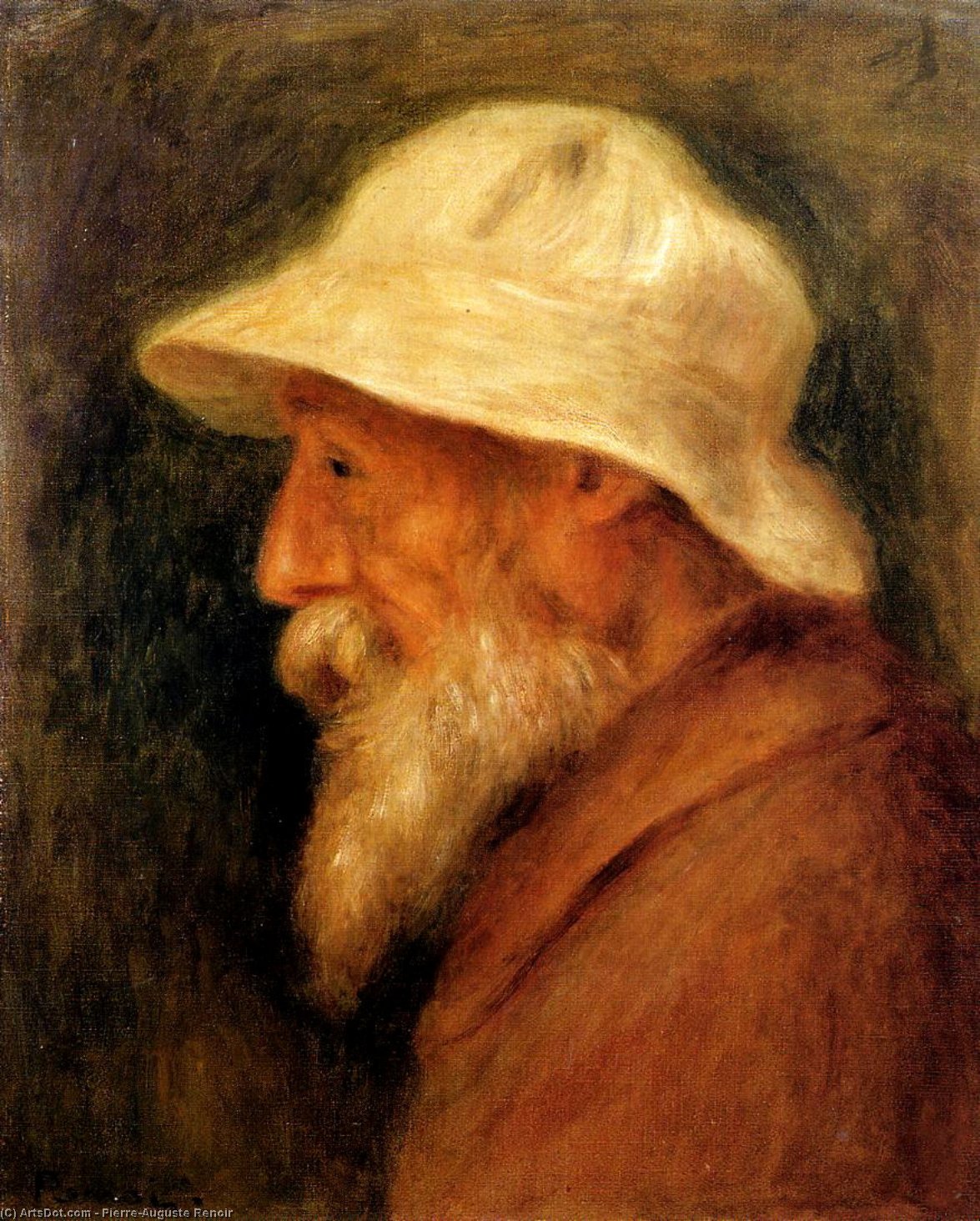
A Window into Renoir’s Soul
In the vast, luminous tapestry of Impressionism, few works offer as profound an intimacy as Pierre-Auguste Renoir’s 1910 masterpiece, Self-Portrait with a White Hat. While many of his contemporaries sought to capture the fleeting dance of sunlight on water or the bustling energy of Parisian boulevards, this particular canvas turns the gaze inward. It is not merely a record of a face, but an evocative window into the artist’s psyche during a period of significant personal and artistic evolution. As we look upon the weathered features and the steady, contemplative eyes of the elder Renoir, we are invited to share in a moment of quiet solitude that transcends the boundaries of time.
The painting serves as a poignant bridge between the artist's physical reality and his enduring spirit. Through the soft, rhythmic application of oil on canvas, Renoir captures himself not as a distant icon, but as a man deeply connected to the textures of life. For collectors and lovers of fine art, this piece offers more than just aesthetic beauty; it provides an emotional resonance that can transform the atmosphere of any space, bringing a sense of historical depth and soulful tranquility to a room.
The Impressionist Mastery of Light and Texture
To study this self-portrait is to witness the pinnacle of Impressionist technique. Renoir, a master who learned his craft through the delicate precision of porcelain painting, here employs a much more liberated hand. He eschews the rigid, sharp outlines characteristic of academic tradition, opting instead for loose, dancing brushstrokes that seem to vibrate with life. These strokes do not merely sit upon the surface; they blend and merge, creating a seamless illusion of depth and atmosphere.
The brilliance of the work lies in Renoir’s ability to manipulate light and shadow to suggest volume without sacrificing softness. Notice how the subtle variations in pigment allow light to appear as if it is filtering through the very air surrounding him. This technique creates a luminous quality that makes the subject feel present, almost breathing. For an interior designer, such a piece acts as a focal point of warmth; the textural richness of the brushwork provides a sophisticated layer of visual interest that complements both classical and contemporary decor.
A Reflection of the Belle Époque
Beyond the technical brilliance, Self-Portrait with a White Hat is steeped in the cultural significance of the early 20th century. Painted during the height of the Belle Époque, the work reflects a period of relative peace and burgeoning cultural refinement in France. The white hat worn by Renoir is more than a mere accessory; it serves as a subtle symbol of dignity and the quiet elegance that defined the era. It underscores a sense of self-assuredness, even as the artist navigated the complexities of an evolving world.
This portrait stands as a testament to Renoir's place within a revolutionary movement alongside legends like Monet and Sisley. By choosing to portray himself with such unpretentious honesty, he rejects the idealized grandeur of the past in favor of a more human, relatable truth. Owning a high-quality reproduction of this work allows one to possess a fragment of this historical revolution—a piece that celebrates the beauty of the everyday and the enduring power of the human spirit.