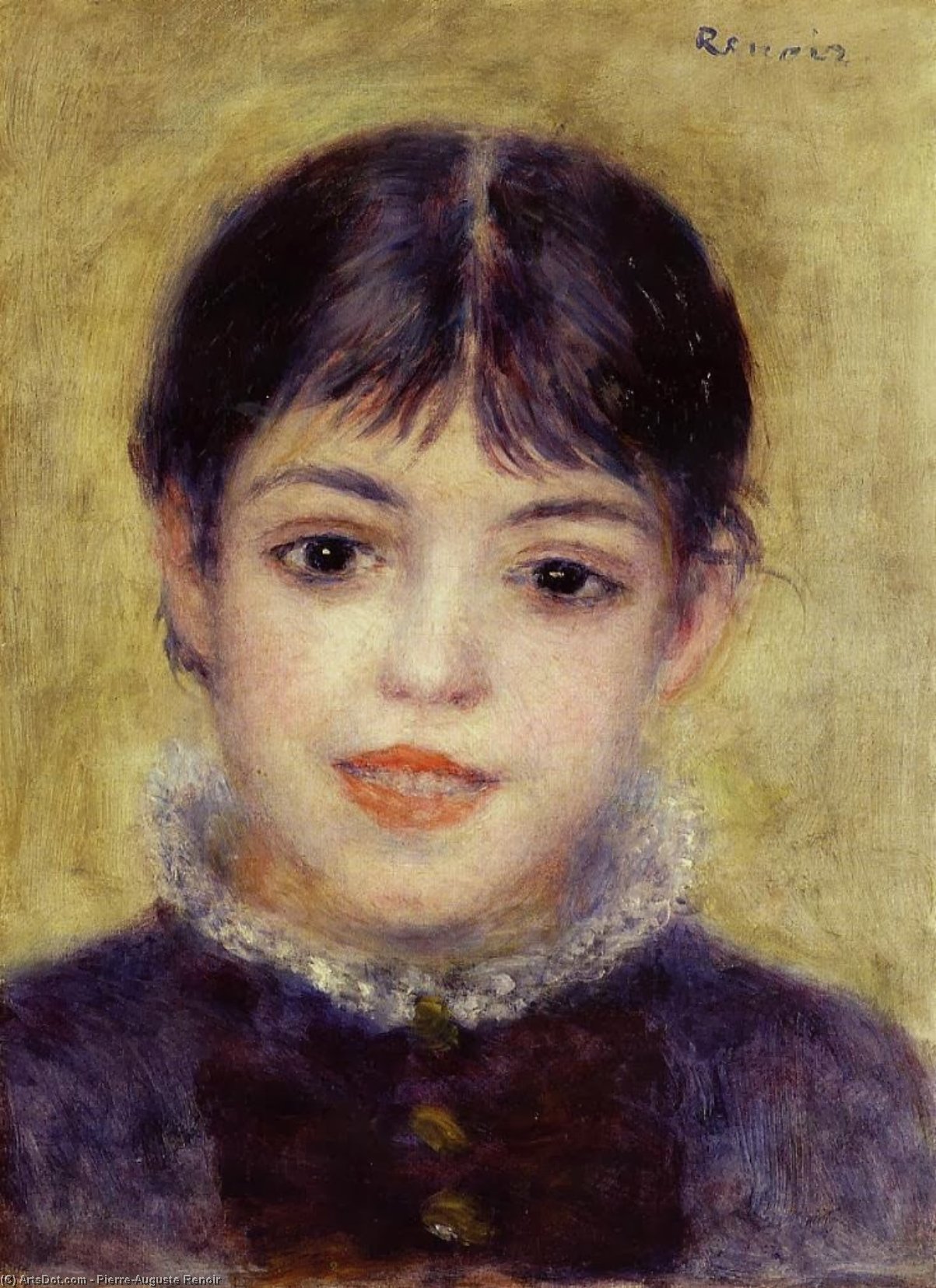
Admire Pierre-Auguste Renoir’s ‘Smiling Young Girl,’ an Impressionist masterpiece capturing serene beauty and fleeting light. Explore a stunning oil painting reproduction at ArtsDot.
Explore Pierre-Auguste Renoir's (1841-1919) luminous Impressionist paintings! Discover portraits, Parisian life & feminine beauty in his iconic artworks.
A Moment Frozen in Light: Pierre-Auguste Renoir’s “Smiling Young Girl”
The painting "Smiling Young Girl," created by Pierre-Auguste Renoir in 1878, stands as a quintessential embodiment of Impressionism—a movement dedicated to capturing fleeting impressions of light and color rather than meticulous realism. More than just a portrait, it's an exquisite distillation of Parisian life during the Belle Époque, offering viewers a glimpse into a serene intimacy that continues to resonate today. Located in a private collection, this artwork exemplifies Renoir’s masterful ability to convey emotion through subtle brushstrokes and luminous hues.
The Artist and His Vision
Pierre-Auguste Renoir (1841–1919) emerged from humble beginnings as a porcelain painter, yet swiftly ascended to artistic prominence thanks to his unwavering passion for painting and his profound connection with the vibrant atmosphere of Paris. Early exposure to the Louvre’s Old Masters instilled in him an appreciation for beauty and technique that would inform his entire oeuvre. Renoir wasn't merely documenting reality; he sought to evoke feeling—to capture the ephemeral magic of a particular moment, as exemplified by this captivating depiction of youthful innocence. His artistic philosophy aligns perfectly with the Impressionist ethos: “To paint what I see,” he famously declared, prioritizing sensory experience over academic convention.
Technical Brilliance: Impressionistic Technique
Renoir’s technique is instantly recognizable—loose, fluid brushstrokes that prioritize color and light above precise detail. Observe how he renders the girl's dress with dappled strokes of dark and light hues, suggesting texture without resorting to laborious shading. This approach isn’t about replicating appearances; it’s about conveying atmosphere and emotion. The artist skillfully utilizes complementary colors—warm flesh tones juxtaposed against cooler shades of apparel—creating a harmonious interplay that enhances the painting's luminosity. Furthermore, Renoir’s meticulous attention to capturing the subtleties of light – particularly how it dances across the girl’s face – underscores the Impressionist commitment to portraying reality as perceived by the eye.
Symbolism and Emotional Resonance
Beyond its technical prowess, “Smiling Young Girl” possesses a quiet symbolic depth. The girl's gaze directly at the viewer establishes an immediate connection, inviting contemplation on themes of vulnerability and innocence. Her gentle smile conveys warmth and contentment—a celebration of simple joys found in everyday life. Renoir’s portrayal captures not just a visual likeness but also an emotional essence, reflecting the Impressionist desire to convey subjective experience. The painting's placement within a private collection speaks to its enduring beauty and ability to inspire those who encounter it.
Further Exploration
To delve deeper into Pierre-Auguste Renoir’s artistic legacy and discover more remarkable artworks, visit ArtsDot.com for comprehensive information on his life and career. For insights into the Musée BOZAR (Belgium), where this masterpiece resides, explore its website at ArtsDot.com. And don't miss the opportunity to learn about Impressionism’s influence on art history—a movement that continues to captivate audiences worldwide.