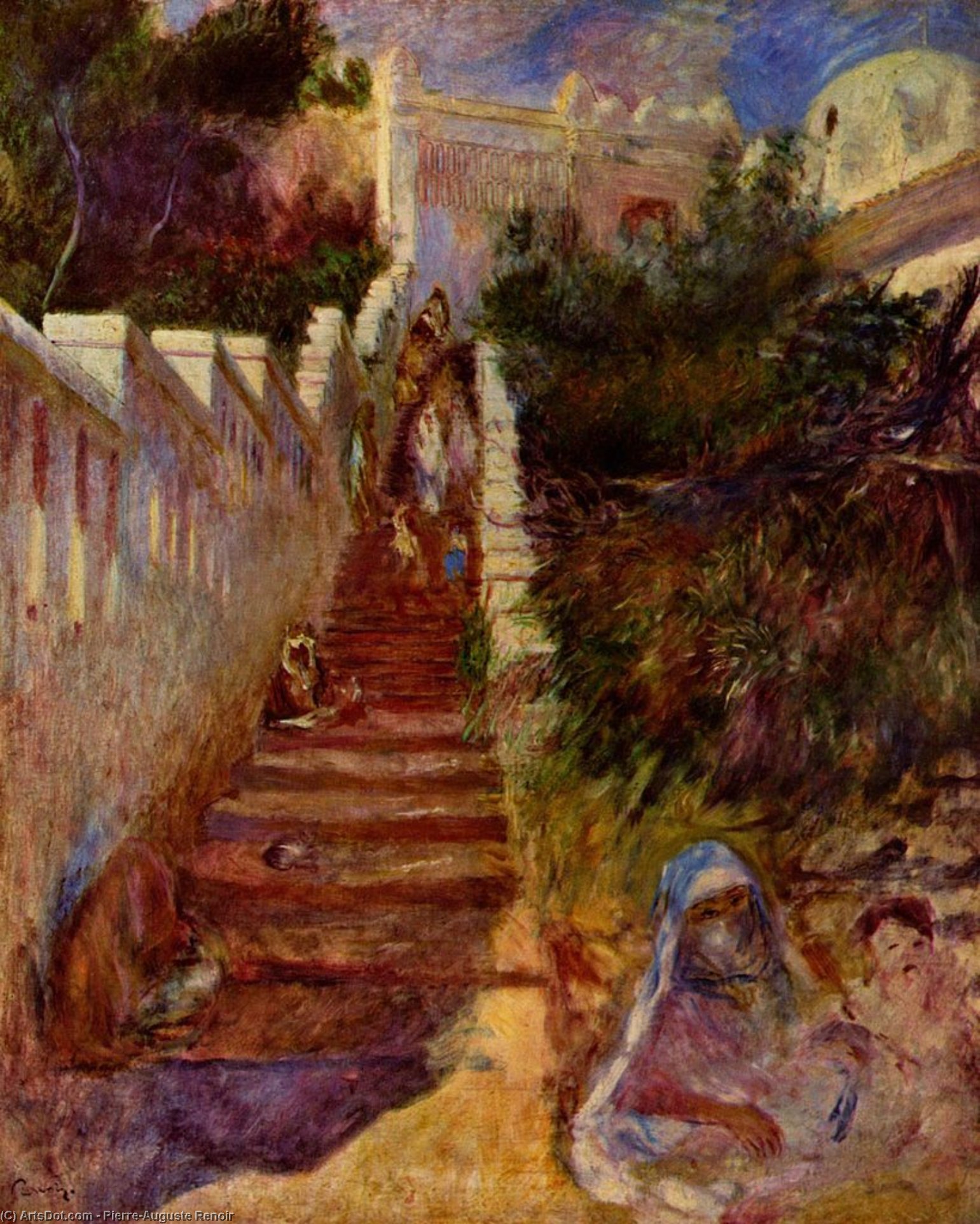
Discover Pierre-Auguste Renoir’s ‘Steps in Algiers’! This vibrant Impressionist painting captures daily life in Algiers, showcasing bustling streets and captivating figures – a timeless masterpiece.
Explore Pierre-Auguste Renoir's (1841-1919) luminous Impressionist paintings! Discover portraits, Parisian life & feminine beauty in his iconic artworks.
A Snapshot of Parisian Life: Exploring Renoir’s “Steps in Algiers”
“Steps in Algiers,” painted by Pierre-Auguste Renoir in 1882, stands as a quintessential embodiment of Impressionist aesthetics—a deceptively simple scene brimming with vibrancy and capturing the spirit of Belle Époque Paris. More than just depicting individuals ascending stairs, this artwork delves into themes of urban dynamism and fleeting beauty, offering viewers an intimate glimpse into daily life amidst the grandeur of Algiers’ Casbah district.
Composition and Technique: Mastering Light and Atmosphere
Measuring 73 x 60 cm on canvas, Renoir employed oil paint—a technique favored by Impressionists for its ability to capture subtle nuances of light—to achieve remarkable realism blended with artistic impression. The artist skillfully utilized broken brushstrokes, layering colors to create an illusion of luminescence that dominates the composition. Notice how Renoir’s gaze focuses on capturing the interplay between sunlight and shadow, transforming ordinary steps into conduits of radiant warmth. The careful positioning of figures—some closer to the viewer, others receding into the distance—creates a palpable sense of depth and perspective, drawing the eye across the canvas and immersing it in the bustling cityscape.
Historical Context: Algiers and the Impressionist Movement
Painted during the height of Renoir’s artistic career, “Steps in Algiers” reflects the broader preoccupation of the Impressionist movement with portraying modern life as experienced by ordinary people. The painting captures a moment frozen in time—a busy street scene populated by Parisians venturing out into the Algerian sun. This fascination stemmed from a desire to move beyond academic conventions and explore new artistic horizons, prioritizing sensory experience over meticulous detail. Renoir’s decision to depict Algiers wasn't merely geographical; it represented an escape from the confines of Parisian society, allowing him to observe and interpret the world around him with fresh eyes.
Symbolism: Everyday Rituals and Transient Beauty
Beyond its visual splendor, “Steps in Algiers” carries symbolic weight. The staircase itself serves as a metaphor for progress—both physical and metaphorical—as individuals ascend towards their goals amidst the complexities of urban existence. Renoir’s masterful use of color—warm yellows and oranges dominating the scene—evokes feelings of optimism and vitality, mirroring the energy of the Algerian Casbah. Furthermore, the painting's focus on capturing a fleeting moment underscores the Impressionist belief that art should strive to convey the ephemeral nature of beauty—a sentiment powerfully expressed through Renoir’s luminous brushstrokes.
Emotional Impact: Capturing the Essence of Parisian Life
Ultimately, “Steps in Algiers” succeeds in transporting viewers back to Belle Époque Paris, inviting them to contemplate the rhythms of daily life and appreciate the transformative power of light and color. Renoir's ability to distill complex emotions into a single image—a sense of movement, warmth, and understated elegance—solidifies his place as one of the most beloved artists of the Impressionist era. Owning a high-quality reproduction allows you to experience this captivating artwork firsthand, bringing a touch of Parisian charm into any interior space.