The Painting's Background
Pierre-Auguste Renoir's
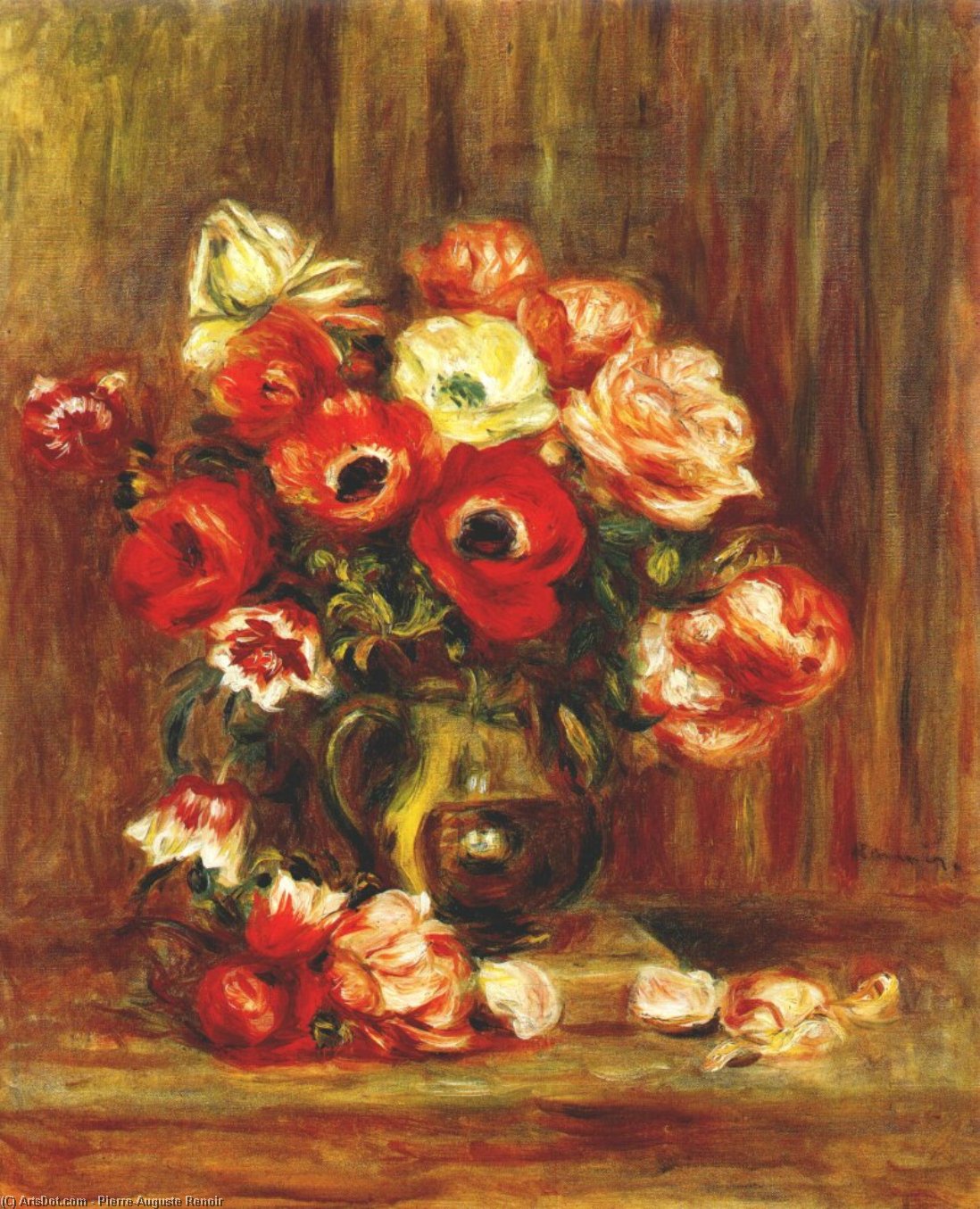
Still Life with Anemones, created in 1900, is a quintessential example of Impressionist art. This painting showcases the artist's skillful use of color and composition to create a visually stunning still life.
The Artistic Elements
The painting features a vase filled with an assortment of flowers, including red roses and pink carnations, placed on a table surrounded by various other flowers in the background. The arrangement of the flowers creates an eye-catching display that highlights Renoir's attention to detail and his ability to capture the beauty of everyday life.
Impressionist Techniques
Renoir employed Impressionist techniques such as short, broken brushstrokes and vivid colors to create a sense of movement and light in the painting. The use of these techniques gives the flowers a lifelike appearance, drawing the viewer's eye into the scene.
Artistic Influences
Renoir was influenced by his contemporaries, including
Claude Monet and
Camille Pissarro, who also explored Impressionist techniques. The influence of these artists can be seen in Renoir's use of light and color to create a sense of atmosphere in the painting.
Museum Collection
Still Life with Anemones is part of the collection at
The Museum Petit Palais in Paris, France. The museum houses an impressive collection of fine arts from the 19th and early 20th centuries.
Other Relevant Works
For those interested in exploring more Impressionist works, consider:
Conclusion
Still Life with Anemones is a captivating example of Renoir's skill in capturing the beauty of everyday life through Impressionist techniques. The painting's vibrant colors and detailed composition make it a standout piece in the world of art.
For those interested in owning a handmade oil painting reproduction of
Still Life with Anemones, visit https://ArtsDot.com to explore their collection of high-quality reproductions.