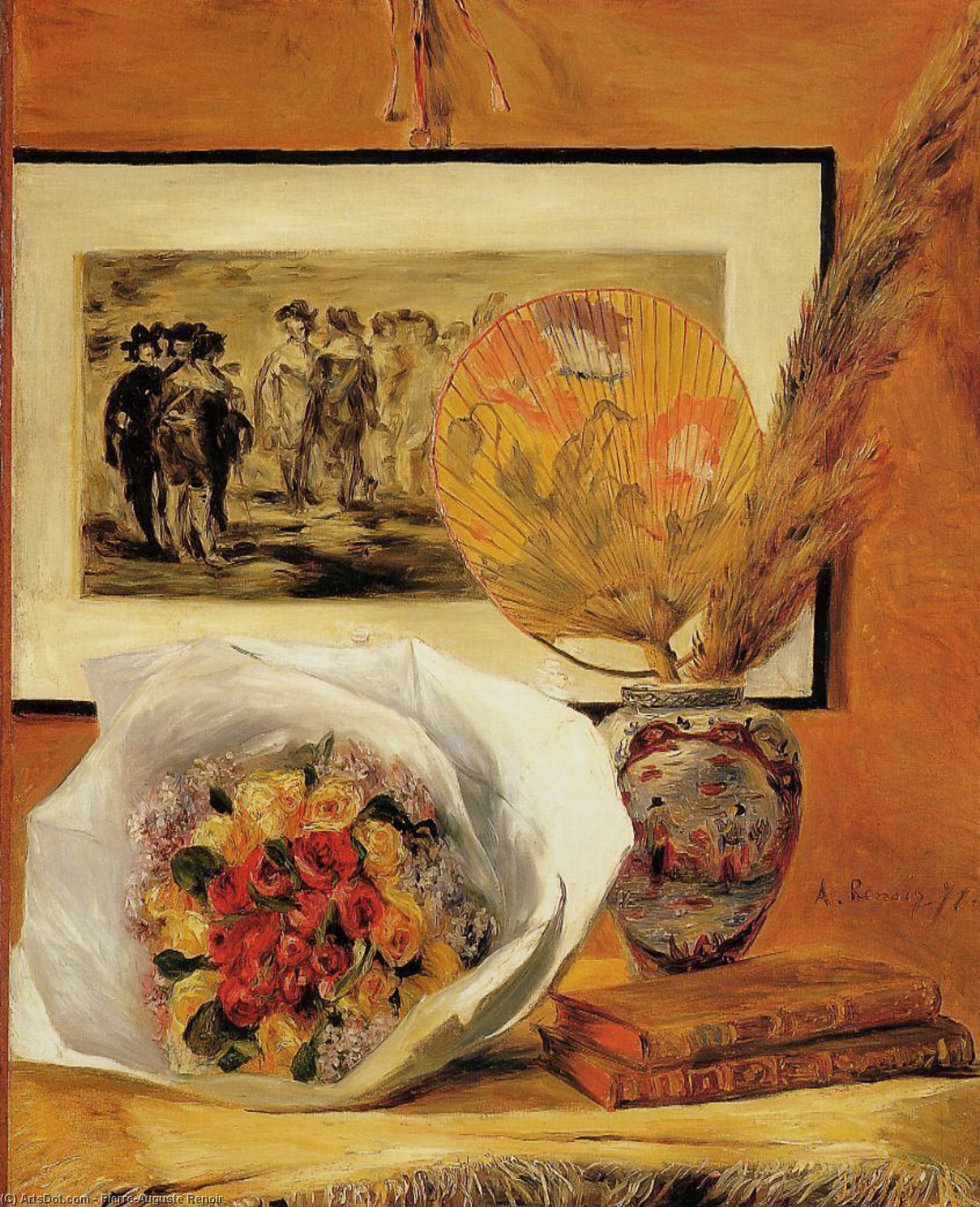
Still Life with Bouquet – A Window into Impressionist Light
Pierre-Auguste Renoir’s “Still Life with Bouquet,” completed in 1871, transcends mere depiction; it embodies the very essence of Impressionism—a movement dedicated to capturing fleeting moments of light and color. More than just a botanical study, this oil on canvas offers a glimpse into Renoir's artistic philosophy and his profound connection to the natural world. Currently residing at the Museum of Fine Arts in Houston, Texas, the painting continues to fascinate viewers with its serene beauty and masterful execution.
The Impressionist Technique: Embracing Ephemeral Beauty
Renoir’s approach to art was fundamentally shaped by his contemporaries, notably Claude Monet, who famously championed the pursuit of capturing atmospheric conditions rather than precise representation. Like Monet's “Impression, Sunrise,” Renoir prioritized conveying feeling over factual accuracy. He achieves this remarkable feat through a technique characterized by loose brushstrokes and vibrant color palettes—a deliberate rejection of academic conventions that favored meticulous detail. The artist skillfully blends hues to create an illusion of luminescence, mirroring the dappled sunlight filtering through foliage. Notice how Renoir avoids harsh outlines, allowing forms to merge seamlessly into their surroundings. This stylistic choice underscores his belief that art should evoke emotion and capture the transient beauty of life itself.
Composition and Symbolism: Layers of Meaning Within Simplicity
The arrangement within “Still Life with Bouquet” is deceptively simple yet meticulously considered. A table serves as the focal point, supporting a vase brimming with yellow roses—a deliberate selection that speaks to Renoir’s appreciation for floral beauty. Adjacent to the vase are books, subtly hinting at an intellectual sensibility and aligning the artwork with the broader artistic landscape of its time. The inclusion of literature reflects the Impressionists' interest in exploring themes beyond mere visual observation. Furthermore, the bouquet itself symbolizes elegance, grace, and the ephemeral nature of existence—a recurring motif in Renoir’s oeuvre. These elements combine to create a layered narrative that invites contemplation and rewards repeated viewing.
Influences Beyond Monet: Echoes of Baroque Tradition
Renoir's artistic vision wasn't solely defined by Impressionism; he drew inspiration from earlier masters, particularly François Boucher and Jean-Honoré Fragonard—artists who excelled in portraying aristocratic pleasure and idealized beauty during the Rococo period. Like these figures, Renoir sought to elevate art beyond mere realism, aiming instead for an emotional resonance that captivated the viewer’s senses. The influence of Diego Velázquez's “Las Meninas,” a monumental Baroque masterpiece exploring perspective and illusion—a painting that Monet himself admired—is palpable in Renoir’s careful attention to detail and his masterful manipulation of light and shadow.
A Legacy Enduring Through Reproduction
ArtsDot.com recognizes the enduring appeal of Renoir’s artistic legacy and offers exquisitely crafted oil painting reproductions of “Still Life with Bouquet.” Visit /art/list/?Filter=9GZPLU-Pierre-Auguste-Renoir-The-Boating-Party-Lunch to explore more about
Still Life with Bouquet and discover the transformative power of owning a piece of art history. Explore other masterpieces at
Artist Rovi Jesher SaleGumba.