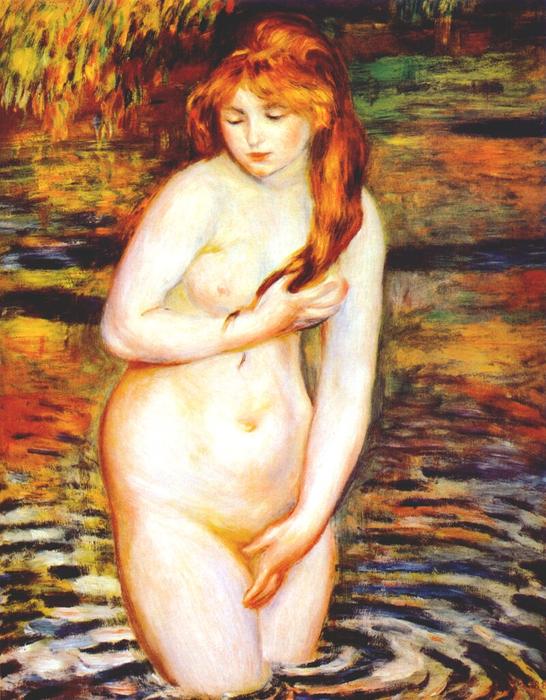
Experience Renoir's 'The Bather (After the Bath)' – a stunning Impressionist masterpiece capturing tranquility and beauty. Admire soft brushstrokes, warm colors & a serene female figure in water. Hand-painted reproductions available.
Explore Pierre-Auguste Renoir's (1841-1919) luminous Impressionist paintings! Discover portraits, Parisian life & feminine beauty in his iconic artworks.
The Allure of Tranquility: Renoir’s “The Bather (After the Bath)”
Pierre-Auguste Renoir's "The Bather (After the Bath)" – a masterpiece painted in 1888 – isn’t merely a depiction of a woman enjoying a moment of repose; it’s an immersion into a world of Impressionistic serenity. This captivating oil on canvas, housed within the esteemed collections of institutions like the Museum of Fine Arts in Boston and showcased prominently on ArtsDot.com, invites us to linger in its sun-drenched embrace, capturing the essence of leisure and quiet contemplation. The painting immediately establishes a mood of profound intimacy – a private sanctuary carved out from the bustle of Parisian life. Renoir masterfully employs soft, feathery brushstrokes, creating an almost palpable sense of texture and warmth, as if we could reach out and feel the dampness of the water on our skin. The color palette is deliberately muted yet vibrant, dominated by warm ochres, pinks, and blues that evoke the golden light filtering through a summer afternoon.
Composition and Style: A Symphony of Light and Form
At its core, “The Bather (After the Bath)” exemplifies the heart of Impressionism – a radical departure from the rigid academic traditions of the time. Renoir abandons sharp outlines and precise detail in favor of capturing fleeting moments of light and atmosphere. The composition is remarkably fluid; the woman’s form seems to melt into the surrounding water, blurring the boundaries between figure and landscape. Her pose, with her hand gently resting on her breast, exudes a sense of vulnerability and introspection – she's lost in thought, seemingly oblivious to the world around her. Notice how Renoir skillfully uses the diagonal lines created by the water’s edge and the woman’s body to draw our eye through the painting, creating a dynamic yet harmonious visual experience. The inclusion of the distant figure on the right side adds a subtle layer of narrative, hinting at a shared moment of tranquility amidst the vibrant city life.
Light and Shadow: A Dance of Impressionistic Technique
Renoir’s command of light is nothing short of breathtaking. He doesn't aim for photographic realism but rather to convey the *impression* of light – its shifting qualities, its warmth, and its ability to transform a scene. The diffused sunlight, rendered through delicate layers of paint, casts soft shadows that sculpt the woman’s body, emphasizing its curves and contours with an almost reverent tenderness. The artist's technique is particularly noteworthy; he builds up color gradually, applying thin washes of pigment that create a luminous effect. This layering of translucent colors, reminiscent of Monet’s work, contributes significantly to the painting’s ethereal quality. The influence of Courtauld Institute of Art, with its emphasis on capturing light and atmosphere, can be felt in Renoir's approach – he seeks not just to represent what is seen but to evoke how it *feels*.
Symbolism and Historical Context: A Portrait of Parisian Leisure
“The Bather (After the Bath)” offers a glimpse into the social fabric of late 19th-century Paris. The painting captures a moment of leisure – a respite from the demands of urban life – that was increasingly valued during this period. Renoir’s subject, often interpreted as a Parisian woman of modest means, embodies a sense of quiet dignity and contentment. Her relaxed posture and contemplative gaze suggest a connection to nature and a celebration of simple pleasures. The painting also reflects the broader artistic trends of the time, which were moving away from historical subjects and towards scenes of everyday life. The inclusion of the boat in the background further anchors the scene within its Parisian context, reminding us that this moment of tranquility is set against the backdrop of a thriving metropolis.
Bringing Renoir’s Vision Home: Hand-Painted Reproductions
ArtsDot offers exquisite, hand-painted oil reproductions of “The Bather (After the Bath),” allowing art lovers to experience the painting's beauty and tranquility in their own homes. These meticulously crafted replicas capture every nuance of Renoir’s original technique – the soft brushstrokes, the luminous colors, and the overall sense of atmosphere. Owning a reproduction is not simply acquiring an image; it’s bringing a piece of art history into your space, fostering a connection to one of Impressionism's most beloved masters. Explore the collection on ArtsDot.com and discover how you can own a timeless masterpiece that continues to captivate audiences today.