A Captivating Portrait of Parisian Spectacle: Pierre-Auguste Renoir’s “The Clown”
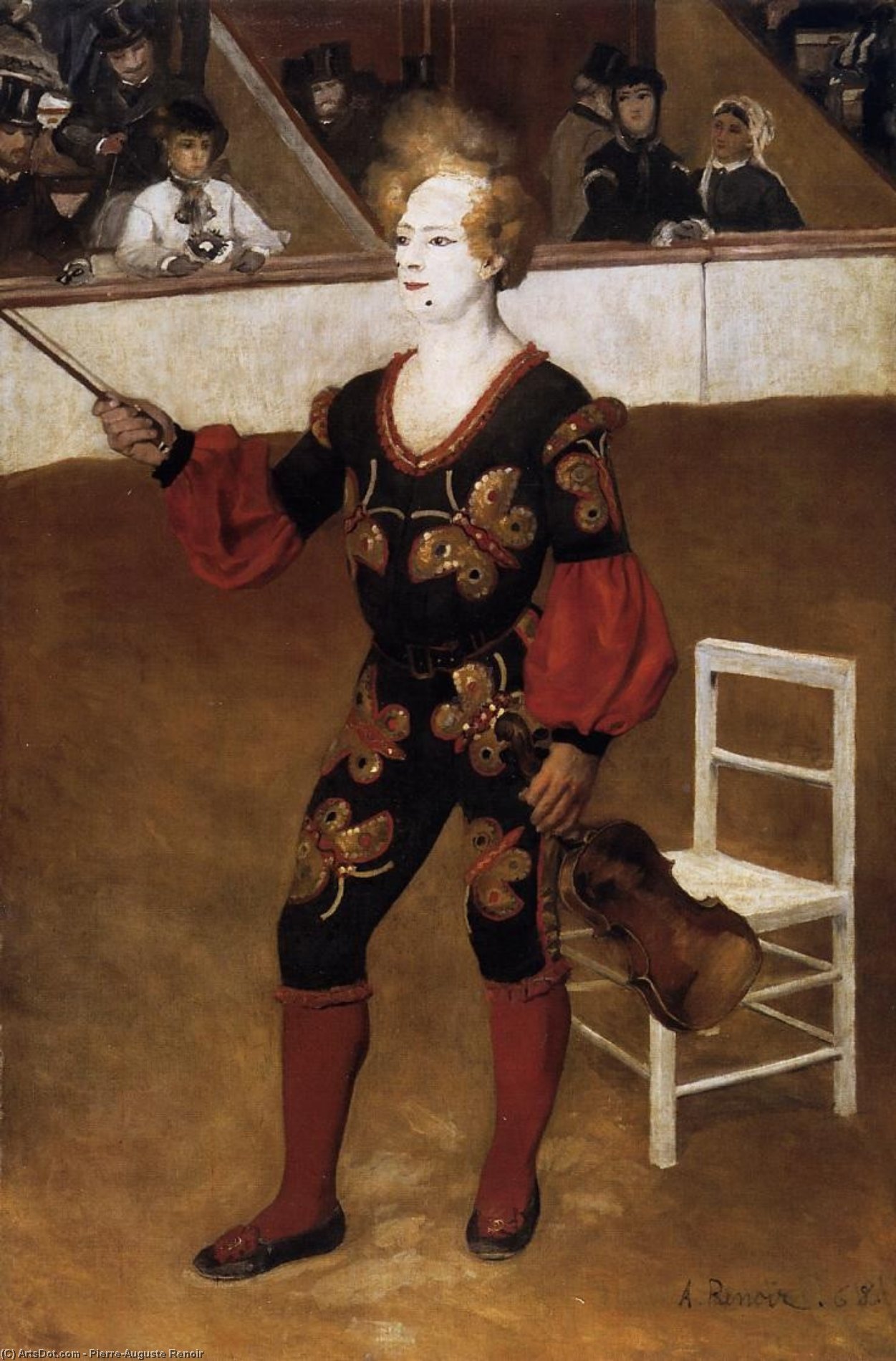
Pierre-Auguste Renoir's "The Clown," painted in 1868, is more than just a depiction of a circus performer; it’s a vibrant snapshot of Parisian life and a masterful exploration of light, color, and human emotion. Commissioned by the owner of a winter circus café, this oil on canvas transports us to a bustling ring filled with music, laughter, and the intoxicating energy of performance. The painting resides within the Kröller-Müller Museum in Otterlo, Netherlands, a testament to its enduring artistic value.
At first glance, the scene is dominated by the clown himself – James Bollinger Mazutreek, as he was known – a figure rendered with remarkable detail despite his flamboyant costume. He stands poised within the circus ring, a dark, richly embroidered suit punctuated by bold red sleeves and stockings, creating an immediate visual contrast against the warm ochre tones of the sand beneath him. The artist’s skillful use of brushstrokes captures not just the physical appearance but also the clown's intense concentration, suggesting a moment of quiet contemplation before or after his performance. A loyal dog sits faithfully by his side, adding a touch of companionship to this theatrical tableau.
Impressionist Techniques and a Dance with Light
Renoir’s mastery lies in his ability to capture the fleeting effects of light and movement – hallmarks of the Impressionist style. Notice how he employs loose, broken brushstrokes, allowing the colors to blend optically rather than through meticulous layering. This technique creates an almost shimmering quality, particularly evident in the clown's costume and the surrounding backdrop. The artist doesn’t aim for photographic realism; instead, he seeks to convey the *impression* of a scene – the feeling of warmth, excitement, and the vibrant atmosphere of the circus.
The background is deliberately less detailed, with figures rendered in softer focus, drawing attention to the central subject. A clock hangs on the wall above the stage, a subtle yet poignant symbol of time’s relentless passage and the ephemeral nature of performance itself. This detail elevates the painting beyond a simple portrait, hinting at deeper themes about life, entertainment, and the transient beauty of moments.
Contextualizing the Performance: The Winter Circus and Parisian Society
Understanding the historical context is crucial to appreciating “The Clown.” Winter circuses were immensely popular in 19th-century Paris, offering a welcome escape from the cold winter months. These elaborate spectacles drew large crowds eager for music, acrobatics, and dazzling displays of entertainment. Renoir’s commission reflects this cultural phenomenon – a desire to capture the spirit of these vibrant events within the city.
The clown, John Price (also known as James Bollinger Mazutreek), was part of the renowned ‘clown-musicians’ duo, entertaining audiences with their unique blend of music and acrobatic performances. The brothers' success speaks to the public’s appetite for novelty and entertainment during that era. Renoir’s painting immortalizes this particular performer, offering a glimpse into the lives of those who brought joy and spectacle to Parisian society.
Symbolism and Emotional Resonance
Beyond its visual appeal, “The Clown” is rich in symbolism. The clown's fixed gaze suggests both dedication and perhaps a hint of melancholy – a recognition that even the most joyful performances are ultimately temporary. The dog represents loyalty and companionship, while the circus itself symbolizes escape, fantasy, and the blurring of boundaries between reality and illusion. Renoir masterfully uses these elements to create an image that is not only visually stunning but also emotionally resonant.
For art enthusiasts seeking a captivating piece of Impressionist history, or for interior designers looking to infuse their spaces with a touch of Parisian charm, a hand-painted reproduction of “The Clown” by Pierre-Auguste Renoir offers an exceptional opportunity. It’s a window into a bygone era, a celebration of artistic skill, and a timeless reminder of the power of art to capture the essence of human experience.
To explore more works by Renoir or to view this painting in high resolution, visit ArtsDot.com and the Kröller-Müller Museum website.