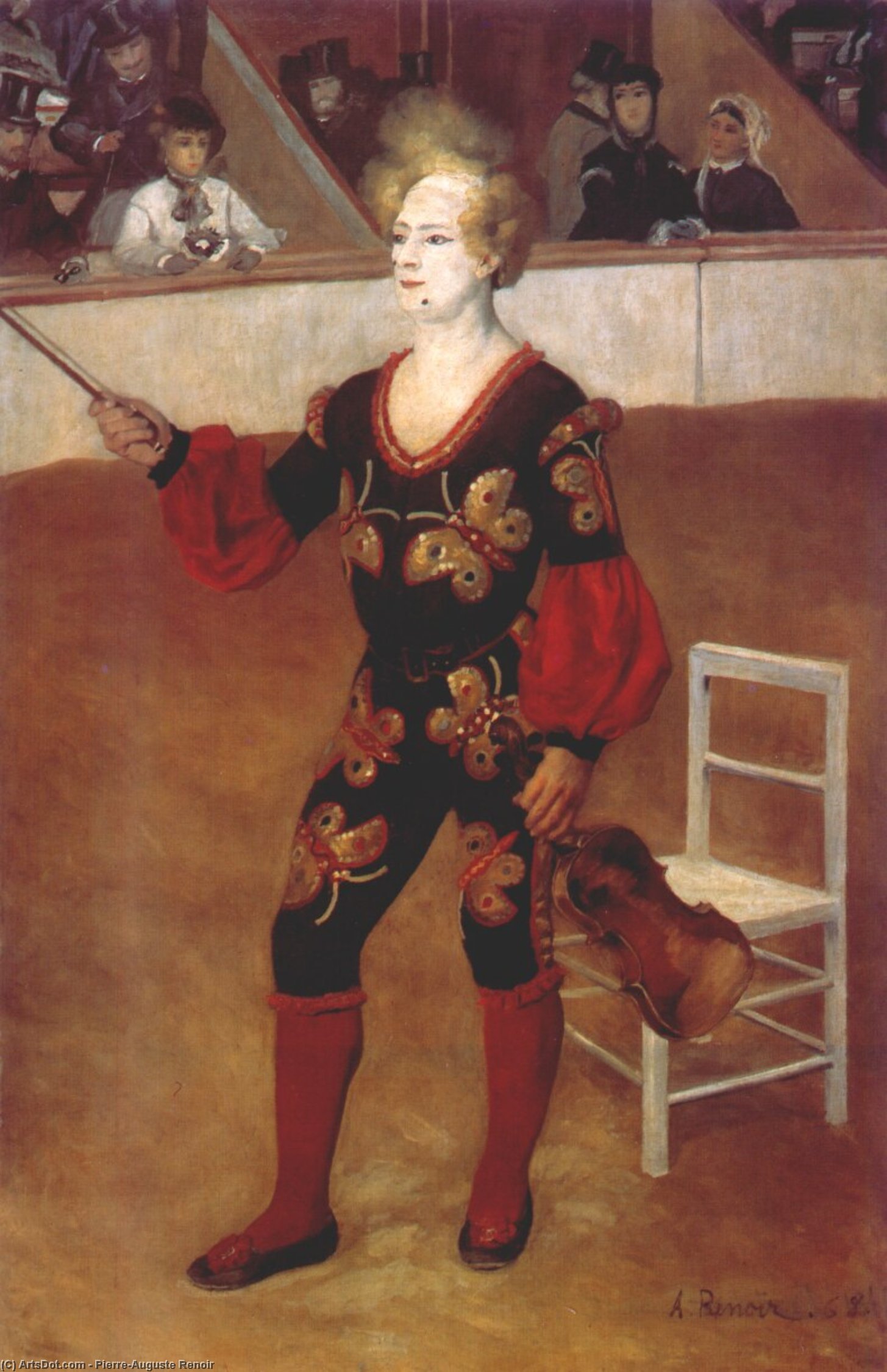
The Clown (James Bollinger Mazutreek): A Symphony of Light and Illusion
Pierre-Auguste Renoir’s “The Clown” (James Bollinger Mazutreek), completed in 1868, stands as an emblem of Impressionism's fascination with capturing fleeting moments of everyday life—specifically, the vibrant spectacle of a circus performance. More than just a portrait, it’s a distillation of Renoir’s artistic vision and his masterful command of color and light, offering viewers a glimpse into a bygone era while simultaneously resonating with timeless themes of performance and observation.
- Subject Matter: The painting depicts a solitary clown standing on a circus stage, bathed in the warm glow of artificial illumination. Unlike many portraits of his time that aimed for idealized beauty, Renoir presents a figure imbued with palpable emotion—a quiet contemplation amidst the bustle of the crowd.
- Style and Technique: Renoir’s Impressionist style is immediately apparent through his loose brushstrokes and vibrant palette. The artist eschews meticulous detail in favor of capturing the atmosphere of the scene, prioritizing the interplay of light and color over precise representation. Thick impasto—the application of paint thickly onto the canvas—creates textural richness and enhances the illusion of depth.
- Color Palette: Renoir’s masterful use of color is central to the painting's impact. Dominant hues include reds, yellows, and ochre tones that dominate the clown’s costume and stage backdrop. These colors aren’t blended smoothly but rather juxtaposed side-by-side, creating a dynamic visual experience that mimics the way light refracts off surfaces.
The historical context surrounding “The Clown” is crucial to understanding its significance within the broader Impressionist movement. Artists like Renoir were actively rejecting academic conventions and embracing spontaneity as they sought to depict modern life with unprecedented honesty. The Salon system, which favored polished classical compositions, posed a considerable challenge to Impressionists who wished to express their subjective perceptions of reality—a bold stance that ultimately paved the way for artistic innovation. As noted in “The Museum Musée Réattu in Arles,” this period witnessed a dramatic shift away from traditional aesthetics toward more expressive and emotionally resonant forms of art.
- Symbolism: The clown’s posture—arms outstretched, gazing intently—suggests both vulnerability and engagement with the audience. He embodies the performer's role as conduit for emotion and experience, inviting viewers to contemplate their own responses to beauty and spectacle.
- Light and Shadow: Renoir skillfully employs chiaroscuro—the dramatic contrast between light and shadow—to sculpt the clown’s form and create a sense of depth within the painting. This technique underscores the Impressionist preoccupation with capturing the ephemeral qualities of light, transforming it into an active element that shapes our perception of the scene.
“The Clown” transcends its subject matter to convey a profound appreciation for beauty and observation—values that continue to inspire artists and collectors alike. Its luminous colors, expressive brushstrokes, and evocative composition encapsulate the spirit of Impressionism’s quest for artistic truthfulness. As exemplified in “The Clown (also known as James Bollinger Mazutreek),” Renoir's legacy endures as a testament to the transformative power of art—a reminder that capturing a moment in time can illuminate deeper truths about human experience and emotion.
For more information on Pierre-Auguste Renoir and his works, visit
ArtsDot.com.