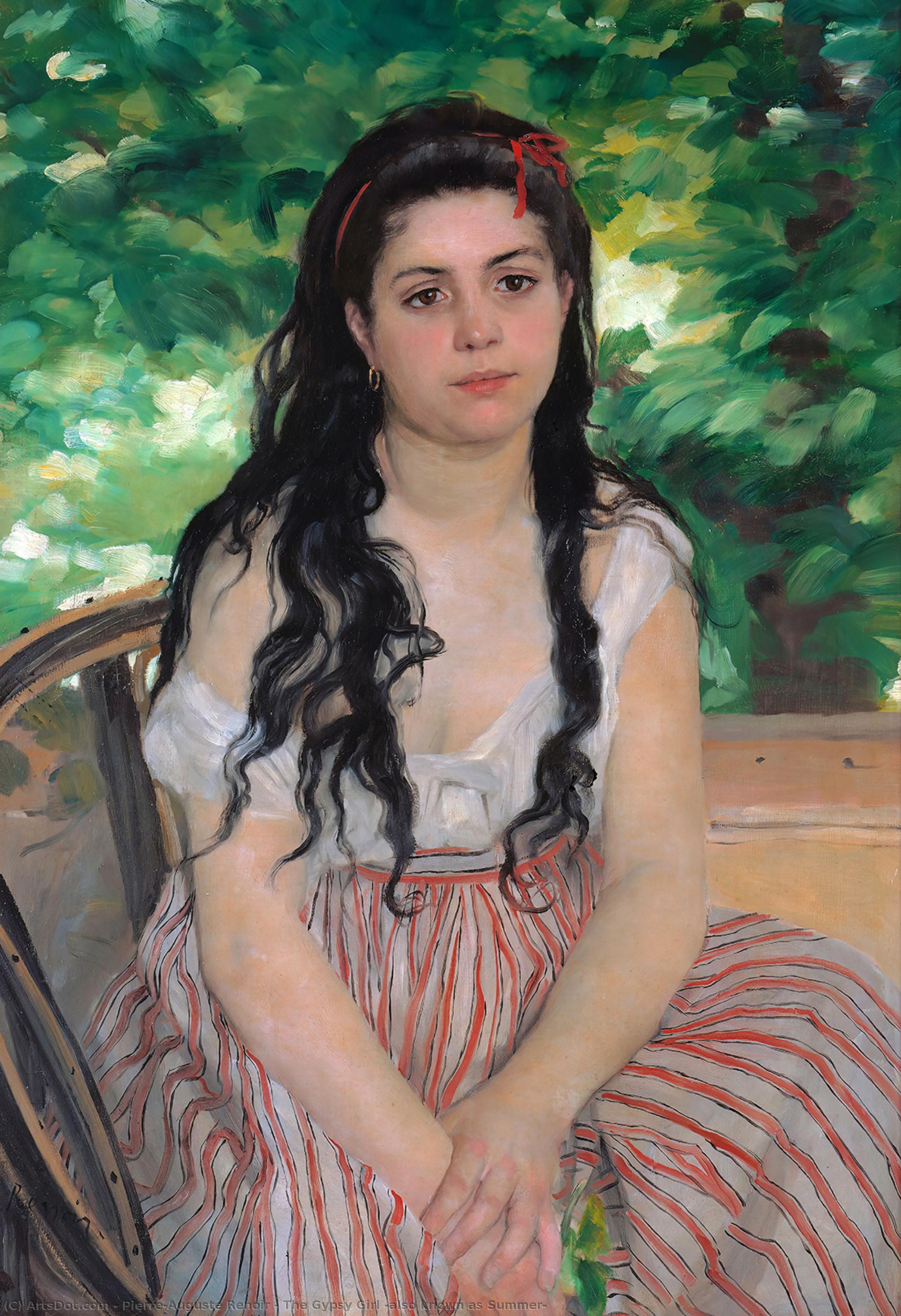
Explore 'The Gypsy Girl' by Renoir – a captivating Impressionist portrait of a young woman in nature. Discover its beauty & significance at the Staatliche Museen zu Berlin.
Explore Pierre-Auguste Renoir's (1841-1919) luminous Impressionist paintings! Discover portraits, Parisian life & feminine beauty in his iconic artworks.
A Summer’s Day Captured: Unveiling Renoir's "The Gypsy Girl"
Pierre-Auguste Renoir’s “The Gypsy Girl” (also known as “Summer”), painted in 1868, is more than just a portrait; it’s an evocation of youthful vitality and the burgeoning freedom of Impressionism. This captivating oil on canvas, now residing at the Staatliche Museen zu Berlin, presents a young woman seated casually, radiating a natural charm that was revolutionary for its time. She isn't posed in the stiff formality of traditional portraiture but appears caught in a moment of relaxed contemplation.
Decoding the Subject and Setting
The subject’s identity remains somewhat enigmatic – while titled “The Gypsy Girl,” there is debate about whether she was, in fact, Romani or simply a model embodying a romanticized notion of bohemian life. Her attire—a dark dress accented by a vibrant red bow adorning her long, flowing hair—hints at a less conventional lifestyle. The backdrop of lush trees and foliage firmly places the scene outdoors, bathed in dappled sunlight. This setting isn’t merely decorative; it's integral to the painting’s mood, suggesting warmth, leisure, and a connection with nature.
Impressionism in its Nascent Stage: Style & Technique
“The Gypsy Girl” is pivotal in understanding Renoir’s artistic development. While still exhibiting elements of academic training – evident in the realistic rendering of form – it foreshadows his embrace of Impressionist principles. Notice how Renoir prioritizes capturing *light* and its effect on color, rather than meticulous detail. The brushstrokes are visible, loose, and expressive, creating a sense of movement and immediacy. He masterfully blends tones to suggest sunlight filtering through leaves, illuminating the woman’s skin with a soft glow. This technique moves away from the highly polished surfaces favored by earlier generations, embracing a more spontaneous and vibrant aesthetic.
Historical Context: A Shift in Artistic Values
1868 was a year of significant change in the art world. The Salon, the official exhibition of the Académie des Beaux-Arts, still held immense power, but artists were beginning to challenge its conservative standards. Renoir, along with Monet, Sisley, and others, sought new ways to represent reality – focusing on fleeting moments, subjective perception, and the beauty of everyday life. “The Gypsy Girl” embodies this shift, rejecting historical or mythological subjects in favor of a contemporary scene imbued with personal feeling. It’s a painting born from a desire to capture modern life as it was lived, not as it was idealized.
Symbolism & Emotional Resonance
Beyond its aesthetic qualities, “The Gypsy Girl” carries subtle symbolic weight. The outdoor setting often represents freedom and escape, while the woman’s relaxed pose suggests contentment and self-possession. The red bow in her hair is a striking visual element that draws the eye and could symbolize passion or vitality. More broadly, the painting evokes a sense of nostalgia for a simpler time – a yearning for connection with nature and authentic experience. The overall emotional impact is one of warmth, tranquility, and gentle beauty.
Renoir’s Legacy & Collecting Considerations
“The Gypsy Girl” stands as a testament to Renoir's early genius and his pivotal role in the Impressionist movement. Its enduring appeal lies in its ability to capture not just a likeness, but a feeling – a fleeting moment of beauty and grace. For collectors and interior designers, a high-quality reproduction of this painting offers a touch of timeless elegance and artistic sophistication. Its warm color palette and inviting subject matter make it suitable for a variety of spaces, adding a sense of serenity and charm to any room. Consider pairing it with natural textures and earthy tones to complement its outdoor setting and enhance its overall impact.