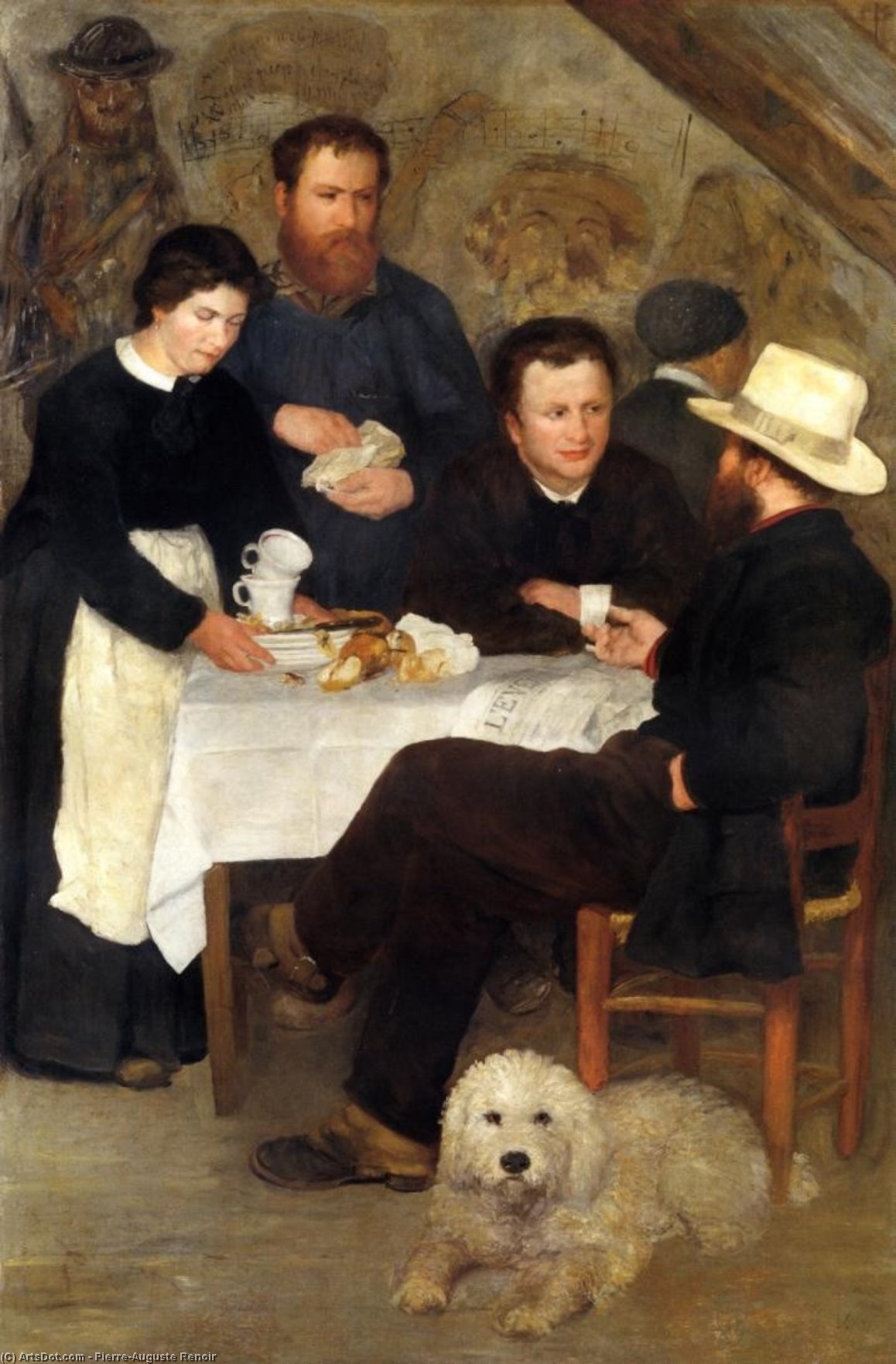
A Lively Gathering: Unveiling Renoir’s ‘The Inn of Mother Anthony’
‘The Inn of Mother Anthony’ (Le cabaret de la Mère Antony à Bourron-Marlotte), painted in 1866 by
Pierre-Auguste Renoir, is more than just a depiction of a tavern scene; it's a vibrant snapshot of 19th-century French social life, brimming with character and atmosphere. This large-scale oil on canvas (185 cm x 228 cm) currently resides at the Nationalmuseum in Stockholm, offering viewers a captivating glimpse into a bustling moment frozen in time.
Decoding the Scene: Subject & Composition
The painting portrays a lively interior of the popular roadside inn owned by Mother Anthony in Bourron-Marlotte, near Fontainebleau – a favored haunt for artists and Parisians escaping the city. A diverse group of patrons are gathered around roughly hewn wooden tables, enjoying food, drink, and companionship. Renoir masterfully captures the energy of this gathering; figures overlap and interact naturally, creating a sense of dynamic movement. Key details include a man holding a cup at the head of the table, another with a bowl nearby, a woman likely serving as a hostess, and the charming inclusion of two dogs nestled amongst the diners. Notably, several individuals depicted were Renoir’s contemporaries – artists and friends – adding a layer of personal connection to the work.
Impressionistic Roots: Style & Technique
While Renoir would become a pivotal figure in the Impressionist movement,
‘The Inn of Mother Anthony’ represents an important transitional phase in his artistic development. The painting demonstrates a clear move away from academic polish towards a more *realist* approach, influenced by artists like Gustave Courbet (whose ‘After Dinner at Ornans’ served as inspiration). Renoir's technique is characterized by loose brushwork and a focus on capturing the effects of light and shadow. He employs rich colors and textures – achieved through the layering of oil paint – to create a warm and inviting atmosphere. The visible brushstrokes contribute to the painting’s sense of immediacy, as if the scene were captured *en plein air* despite being an interior setting.
Historical Context & Bohemian Life
The mid-19th century in France was a period of significant social and artistic change. The rise of bohemian culture – characterized by unconventional lifestyles and a rejection of traditional values – provided fertile ground for artists like Renoir. Mother Anthony’s inn became a popular meeting place for this burgeoning community, offering respite and inspiration. The inclusion of figures like Jules Le Coeur and Alfred Sisley (identifiable within the painting) underscores this connection to the artistic milieu. A subtle detail—the image of novelist Henry Murger on the wall—further reinforces the theme of bohemianism, referencing his celebrated depictions of Parisian artists and their struggles.
Symbolism & Emotional Resonance
Beyond its realistic depiction of a tavern scene,
‘The Inn of Mother Anthony’ subtly conveys themes of community, conviviality, and the simple pleasures of life. The presence of the dogs adds a touch of domesticity and warmth, while the newspaper hints at the broader world beyond the inn's walls. Renoir doesn’t present an idealized vision; rather, he captures the genuine interactions and unposed moments that define everyday existence. This authenticity is what gives the painting its enduring emotional impact – it evokes a sense of nostalgia for a bygone era and invites viewers to share in the warmth and camaraderie of the scene.
A Timeless Masterpiece for Today’s Spaces
‘The Inn of Mother Anthony’ is not merely a historical artifact; its vibrant energy and relatable subject matter make it a compelling addition to any art collection or interior design scheme. The painting's warm color palette and dynamic composition lend themselves well to both traditional and contemporary settings, adding depth and character to living rooms, dining areas, or studies. A high-quality reproduction of this masterpiece offers an opportunity to bring a touch of 19th-century French charm into the modern home.
- Style: Realism transitioning towards Impressionism
- Technique: Oil on canvas, loose brushwork, rich textures
- Period: 19th Century, French Art
- Key Themes: Social gathering, bohemian life, everyday existence