A Portrait Steeped in Light: Exploring Renoir’s “The Laundress”
Pierre-Auguste Renoir's "The Laundress," painted in 1880, stands as a quintessential example of Impressionist art—a movement that revolutionized painting by prioritizing fleeting moments and capturing the sensory experience of light and color above meticulous detail. More than just a depiction of domestic labor, the canvas embodies Renoir’s fascination with portraying ordinary subjects imbued with beauty and emotion.
Subject Matter and Composition
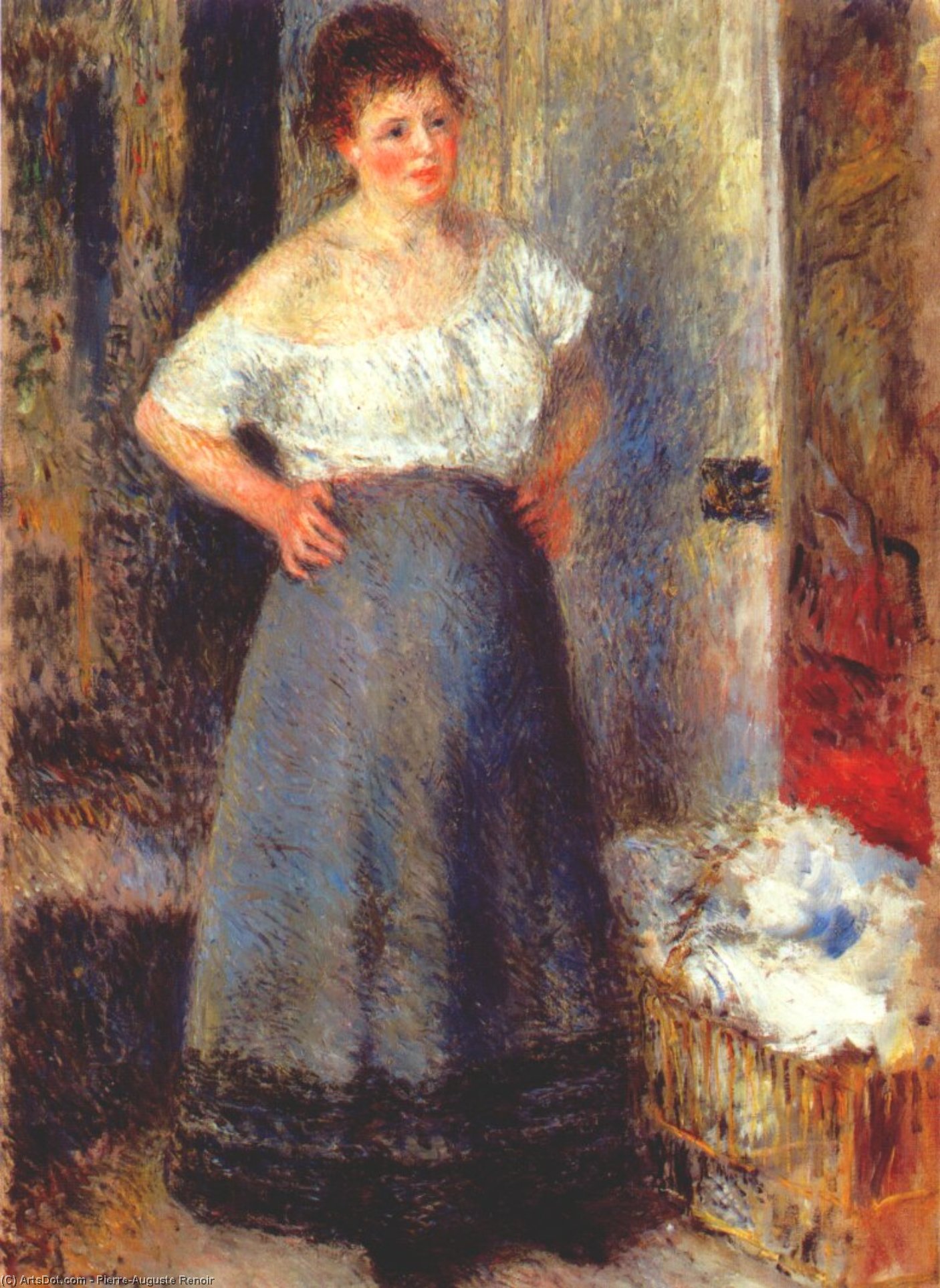
The painting centers on a woman standing before a doorway, her posture conveying confidence and poise. She holds her hips slightly elevated, gazing directly at the viewer—a bold compositional choice that establishes an intimate connection between subject and observer. Beside her rests a wicker basket overflowing with laundry clothes, subtly anchoring the scene in the realities of daily life.
Style and Technique: Impressionistic Brilliance
Renoir’s masterful technique exemplifies the core principles of Impressionism. He eschewed traditional blending methods, opting instead for short, broken brushstrokes that layered colors upon each other to create an illusion of shimmering light. The palette is dominated by pastel hues—pale yellows, creams, and muted greens—which bathe the woman and her surroundings in a soft, diffused glow. Careful observation of natural light informs every aspect of the painting’s execution.
Historical Context: Paris at the Dawn of Modernity
"The Laundress" emerged during a period of significant social and artistic transformation in Paris—the Belle Époque ("Beautiful Era"). This era witnessed unprecedented economic prosperity, fueled by industrial growth and colonial expansion, alongside burgeoning cultural innovation. Impressionism arose as a reaction against academic painting’s rigid conventions and its obsession with idealized representations; artists like Renoir sought to capture the dynamism of modern urban life and the subjective experience of perception.
Symbolism and Emotional Resonance
Beyond its visual splendor, “The Laundress” carries symbolic weight. The woman herself represents resilience and femininity—qualities celebrated by Impressionist artists as emblems of human dignity. The laundry basket symbolizes domesticity and labor, yet Renoir elevates these mundane activities into subjects worthy of artistic contemplation. Ultimately, the painting evokes a feeling of tranquility and warmth, inviting viewers to appreciate the beauty inherent in simple gestures and everyday moments.
Conclusion: An Enduring Legacy
"The Laundress" continues to resonate with audiences today as an emblem of Impressionist idealism and Renoir’s artistic genius. Its luminous colors, dynamic brushstrokes, and evocative composition exemplify the movement's commitment to capturing the fleeting beauty of the natural world—a legacy that ensures its place among the most cherished artworks of the 19th century.