A Glimpse of Parisian Life: Pierre-Auguste Renoir’s “The Little School Boy”
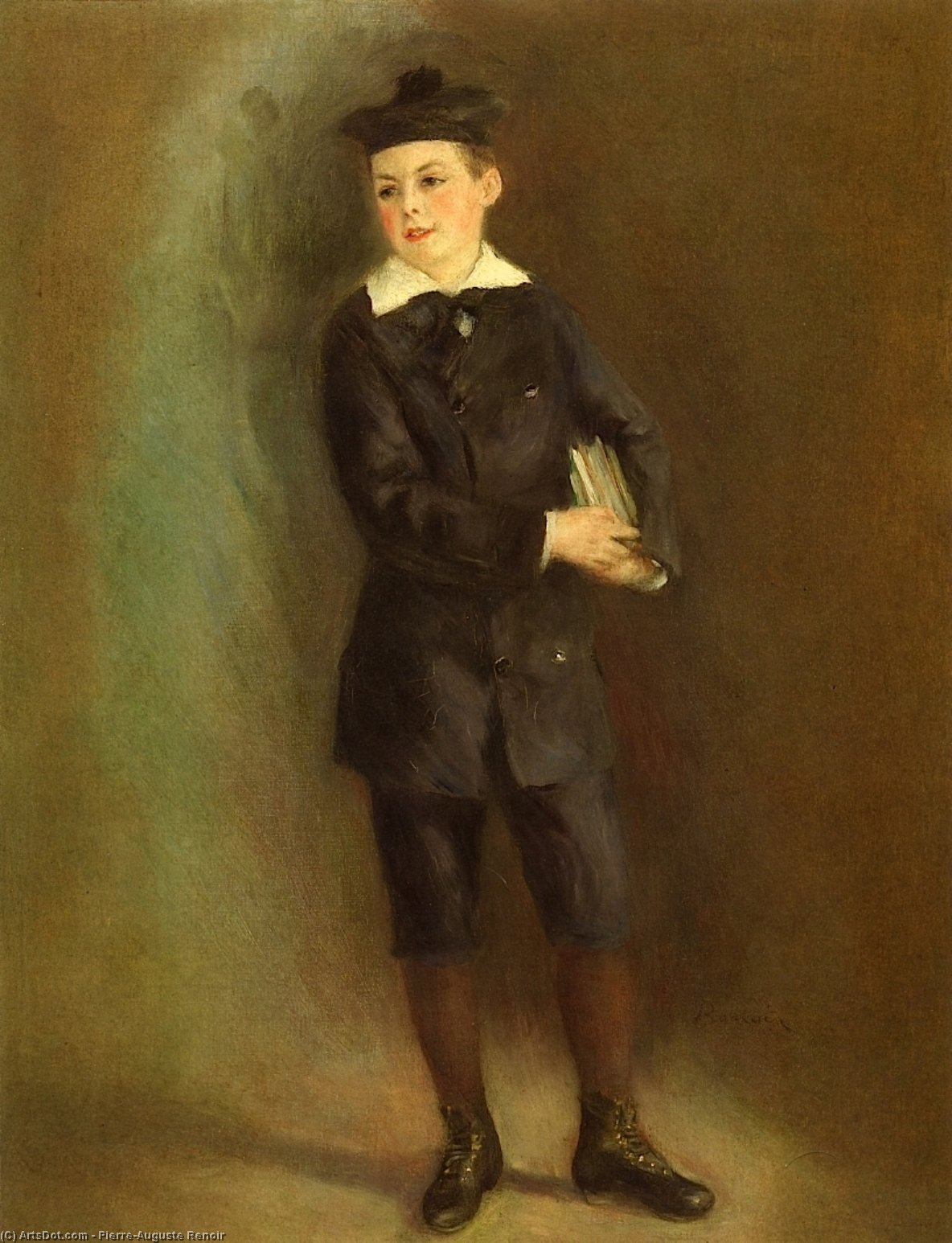
Pierre-Auguste Renoir's "The Little School Boy," painted in 1879, isn’t merely a portrait; it’s a fleeting moment captured with the vibrant immediacy characteristic of Impressionism. This intimate scene, measuring just 61 x 46 cm, transports us to a sun-drenched sidewalk in Paris, offering a tender glimpse into everyday life during the late 19th century. The painting immediately draws the eye to its young subject – a boy dressed in a crisp suit and tie, clutching a book with an air of quiet concentration. Renoir masterfully uses light and color not just to depict reality but to evoke a feeling, a sense of warmth and youthful curiosity. It’s a piece that whispers of childhood innocence and the burgeoning potential held within those formative years.
The composition is deceptively simple yet profoundly effective. The boy stands slightly off-center against a blurred backdrop of buildings, suggesting movement and capturing the transient nature of a summer afternoon. Renoir's brushstrokes are loose and broken, creating an atmospheric effect that’s both dynamic and dreamlike. Notice how he blends colors seamlessly – the warm yellows and oranges of the sunlight dance across the boy’s clothing and face, while subtle blues and greens hint at the distant cityscape. This technique is a hallmark of Impressionism, prioritizing the *impression* of light and color over precise detail.
Impressionistic Techniques: A Dance of Light and Color
Renoir was a devoted practitioner of Impressionist techniques, and “The Little School Boy” exemplifies this perfectly. He employed short, broken brushstrokes – visible if you look closely – to build up layers of color rather than applying paint in smooth, blended washes. This creates a shimmering effect, as if the light itself is dancing across the canvas. The painting’s soft focus and slightly blurred edges contribute to its dreamy quality, inviting the viewer to step into the scene and experience it firsthand. It's not about photographic accuracy; it’s about capturing the *feeling* of a moment in time.
Furthermore, Renoir’s use of color is remarkably subtle yet incredibly evocative. He doesn’t rely on stark contrasts but instead employs delicate gradations and harmonies to create depth and atmosphere. The boy's attire – a dark suit with white collar and cuffs – provides a grounding element against the brighter background, while the overall palette feels warm and inviting. The artist skillfully uses light to sculpt the boy’s features, highlighting his youthful face and conveying a sense of quiet contemplation.
Influences and Context: Cézanne's Legacy
Renoir’s artistic journey was shaped by several influential figures, notably Paul Cézanne. While often considered a precursor to Cubism, Cézanne’s innovative approach to color and form – particularly his use of planes of color and simplified shapes – profoundly impacted Renoir’s work. You can see echoes of Cézanne's influence in “The Little School Boy” through the way Renoir breaks down the boy’s clothing into distinct, overlapping planes of color. This technique adds a sense of volume and dimensionality to the painting.
It’s important to consider this painting within its historical context. Paris in 1879 was a city undergoing rapid transformation – industrialization, urbanization, and social change were reshaping daily life. Renoir's work reflects this dynamic environment, capturing the beauty and charm of everyday moments while subtly hinting at the complexities of modern society. The subject matter itself—a young boy attending school—was a common theme in 19th-century art, often used to explore themes of childhood innocence, education, and social class.
A Timeless Masterpiece: Relevance Today
“The Little School Boy” remains a captivating work of art that continues to resonate with viewers today. Its intimate portrayal of childhood, combined with Renoir’s masterful use of light, color, and technique, creates an enduring sense of beauty and nostalgia. It's a reminder of the simple joys of life – a sunny afternoon, a book, and the quiet contemplation of youth. ArtsDot offers meticulously crafted hand-painted reproductions that faithfully capture the essence of this iconic masterpiece, allowing you to bring its timeless charm into your home or office.
For those interested in exploring more of Renoir’s work, we recommend “Portrait of the Painter Emile-Henri Laport” and “House and Trees with Foothills.” To delve deeper into the principles of light in painting, visit Light in Painting. And to understand Paul Cézanne’s influence on Impressionism, explore his work at Paul Cézanne.