The Painter Alfred Sisley: A Portrait of Tranquility
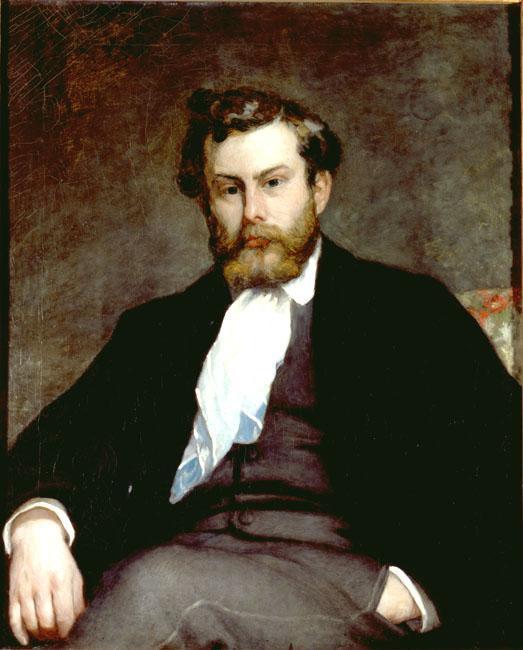
Alfred Sisley’s “The Painter Alfred Sisley,” completed in 1868, stands as a cornerstone of Impressionist art—a testament to Claude Monet and Pierre-Auguste Renoir's collaborative spirit and their dedication to capturing the fleeting beauty of the French countryside. Painted during a pivotal moment in artistic history, this oil on canvas piece transcends mere representation; it embodies the very essence of Impressionism’s core principles.
- Subject Matter: The portrait depicts Alfred Sisley himself, seated outdoors amidst a lush landscape—a deliberate choice reflecting Sisley's fascination with capturing natural light and atmosphere. He is dressed in a dark suit, conveying a sense of seriousness and contemplation, yet his relaxed posture speaks to the artist’s desire for spontaneity and immediacy.
- Style & Technique: Renoir skillfully employs Impressionist techniques—characterized by short, broken brushstrokes—to achieve remarkable textural depth and luminosity. The vibrant hues of the surrounding foliage are juxtaposed against Sisley's muted attire, creating a visual dialogue that underscores the artist’s preoccupation with capturing the subtleties of color perception.
- Historical Context: “The Painter Alfred Sisley” emerged during a period when Impressionist artists were actively challenging academic conventions. They rejected idealized depictions and instead sought to portray everyday life as it unfolded before their eyes, prioritizing observation over meticulous detail. This painting exemplifies this revolutionary approach—a bold departure from the formal traditions of the Salon system.
Symbolism & Emotional Resonance
The landscape surrounding Sisley serves as more than just a backdrop; it symbolizes the artist’s connection to nature and his inspiration for artistic creation. The dappled sunlight filtering through the trees evokes feelings of serenity and tranquility—mirroring Sisley's own inner state as he contemplates his craft. Renoir’s masterful use of color contributes significantly to this emotional impact, conveying a sense of warmth and vibrancy that captures the spirit of Impressionism.
- Color Palette: Renoir utilizes a harmonious palette dominated by greens, yellows, and blues—colors associated with freshness and vitality. These hues are blended subtly to create an illusion of depth and atmosphere, enhancing the painting’s visual appeal.
- Composition: The artist arranges Sisley's figure within the landscape in a way that emphasizes his solitude and introspection. This deliberate compositional choice underscores the importance of observation and contemplation—values central to Impressionist philosophy.
Collection & Legacy
“The Painter Alfred Sisley” is currently housed in the E. G. Buhrle Collection in Switzerland, a repository of exceptional modern art. Its inclusion alongside masterpieces by Cézanne and Manet underscores its significance within the broader artistic landscape of the late 19th century. Renoir’s influence extends far beyond this single artwork—inspiring generations of artists to embrace Impressionist techniques and explore new avenues for expressing emotion and capturing visual experience.
Further Exploration
For those eager to delve deeper into the world of Impressionism, consider visiting
Pierre-Auguste Renoir: The Painter Alfred Sisley on ArtsDot. Additionally, explore
Paul Cézanne’s artistic journey on Wikipedia to gain a comprehensive understanding of the evolution of Impressionism and its enduring impact on art history.