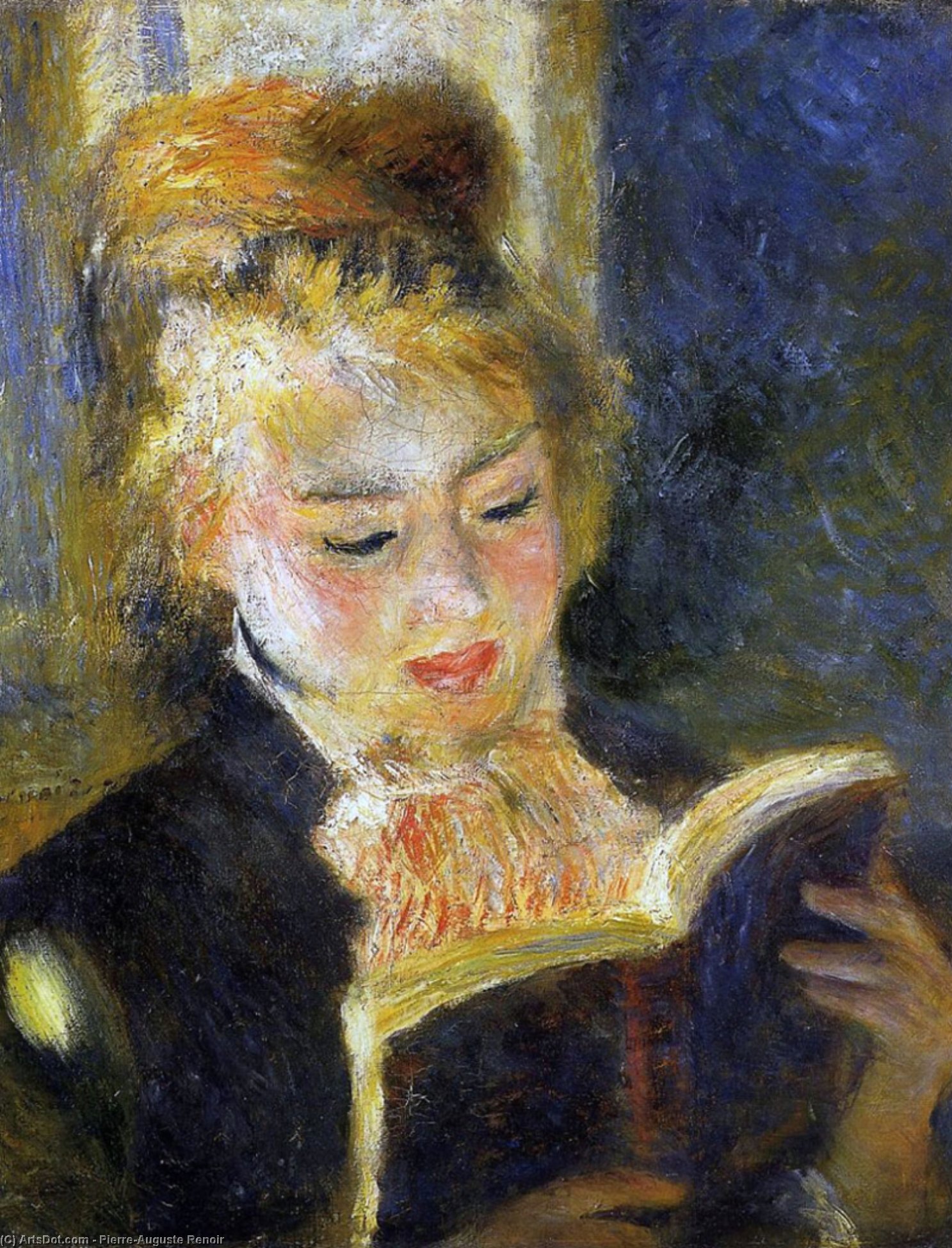
The Reader (also known as Young Woman Reading a Book)
Pierre-Auguste Renoir’s The Reader, created in 1875, transcends mere portraiture; it's a poignant meditation on memory, guilt, and the lingering shadow of history—a cornerstone of Impressionist art that continues to resonate with audiences today.
- Subject Matter: The painting depicts a young woman engrossed in reading a book, capturing a quiet moment of contemplation amidst the bustling Parisian cityscape.
- Style: Renoir’s masterful application of Impressionist techniques—characterized by loose brushstrokes and vibrant color palettes—transforms ordinary light into an ethereal glow, imbuing the scene with warmth and serenity.
- Technique: Renoir employed a distinctive layering technique, utilizing thick impasto strokes to build up texture on the canvas, particularly around the woman’s face and hair, emphasizing the materiality of paint itself.
- Historical Context: Produced during the Belle Époque—a period of optimism and artistic experimentation—The Reader reflects the Impressionists’ desire to depict everyday life with immediacy and sensitivity, rejecting academic conventions in favor of capturing fleeting sensations.
- Symbolism: The book itself serves as a symbol of knowledge, introspection, and the pursuit of understanding—themes central to Renoir's artistic vision and the broader intellectual currents of his time.
Renoir’s use of color is particularly noteworthy. He skillfully blends shades of ochre, crimson, and violet to create a harmonious composition that evokes feelings of nostalgia and quiet beauty. The diffused light illuminates the woman's face, drawing the viewer's gaze inward—a deliberate choice that underscores the painting's psychological depth.
More than just a visual representation, The Reader invites contemplation on themes of responsibility and remembrance—questions that remain relevant in our contemporary world.
For those seeking inspiration or considering a high-quality reproduction, explore Pierre-Auguste Renoir: The Reader (also known as Young Woman Reading a Book) and Pierre-Auguste Renoir: A Boy with a Cat on ArtsDot. To delve deeper into the Impressionist movement, consult Belle Époque and Paul Cézanne on Wikipedia.