The Writing Lesson: An Intimate Impressionist Study
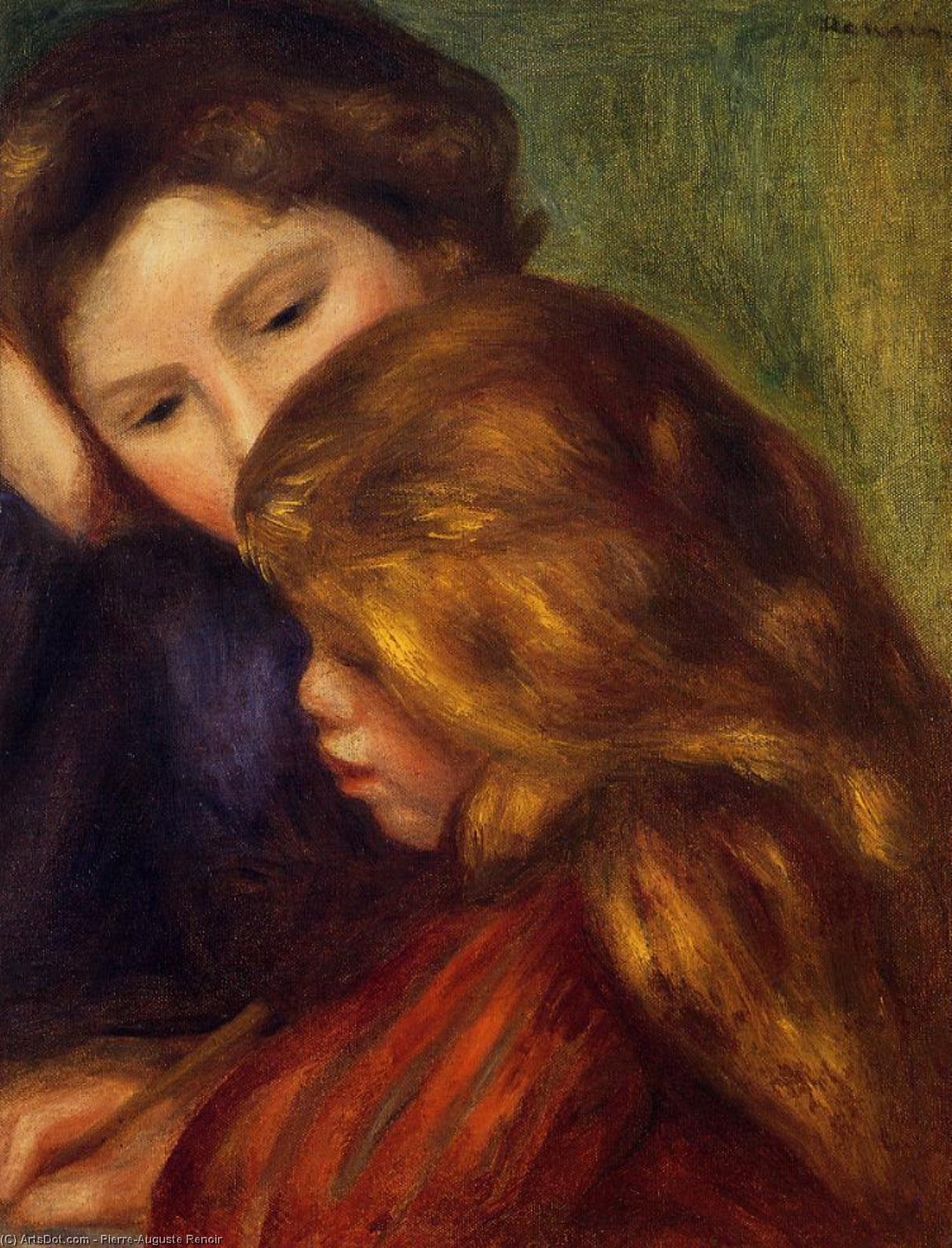
Pierre-Auguste Renoir's "The Writing Lesson" (La Leçon d’écriture), painted in 1895, is a quintessential example of his mature Impressionistic style. Measuring 41 x 32 cm, this oil on canvas captures a tender domestic scene with remarkable sensitivity and warmth. The painting resides within the broader context of late 19th-century French art, reflecting a shift towards depicting everyday life and intimate moments rather than grand historical or mythological narratives.
Subject Matter and Composition
The artwork depicts two women engaged in a quiet moment of instruction. An older woman, presumably a mother or governess, sits behind a younger girl who is diligently practicing her writing. The setting appears to be a comfortable domestic interior, suggested by the presence of a dining table laden with objects – an open book and a cup – which subtly hint at a leisurely afternoon. Renoir’s composition skillfully draws the viewer's eye to the interaction between the two figures. Their proximity and shared focus create a palpable sense of intimacy and connection. The soft lighting, characteristic of Impressionism, bathes the scene in a gentle glow, enhancing the feeling of warmth and tranquility.
Impressionistic Technique and Color Palette
Renoir’s mastery of Impressionistic technique is evident in his loose brushstrokes and vibrant color palette. He eschews sharp lines and precise details, instead opting for a more fluid and suggestive approach. The colors are predominantly warm – soft yellows, gentle browns, and muted reds – which contribute to the overall feeling of coziness and domesticity. The light plays a crucial role in the painting; Renoir captures how it filters through the room, illuminating the figures and creating subtle variations in tone. This emphasis on capturing fleeting moments of light and color is a hallmark of Impressionism.
Symbolism and Emotional Impact
Beyond its surface depiction of a simple writing lesson, the artwork carries deeper symbolic weight. The act of learning itself represents progress, knowledge, and the transmission of values from one generation to the next. The older woman's attentive gaze signifies guidance and nurturing, while the younger girl’s focused expression embodies diligence and aspiration. Renoir masterfully evokes a sense of quiet contentment and familial love. The painting resonates with viewers because it taps into universal themes of education, mentorship, and the enduring bond between mothers and daughters. It is not merely a portrait; it's an exploration of human connection and the beauty found in ordinary moments.
Historical Context and Renoir’s Artistic Evolution
“The Writing Lesson” was created during a period when Renoir was increasingly focused on portraying scenes of domestic life and portraits of family members. Having moved away from some of the more overtly experimental aspects of early Impressionism, he sought to capture the beauty and serenity of everyday existence. This painting reflects his evolving artistic style, characterized by a greater emphasis on form and composition while retaining the vibrant colors and loose brushwork that defined his Impressionistic approach. It stands as a testament to Renoir’s ability to find profound meaning and emotional resonance in seemingly simple subjects.