A Portrait of Quiet Intensity: Pierre-Auguste Renoir’s “Victor Chocquet”
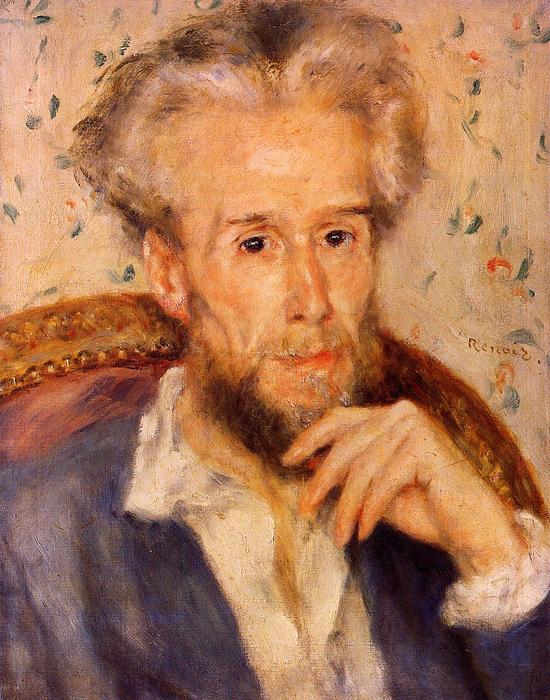
Pierre-Auguste Renoir's "Victor Chocquet," painted in 1876, isn’t merely a likeness; it’s a carefully constructed tableau of contemplation and intellectual engagement. This Impressionist masterpiece transcends the simple act of portraiture, offering a glimpse into the vibrant artistic circles of late 19th-century Paris and revealing the profound influence of a passionate art collector on the burgeoning movement. The painting captures Victor Chocquet, a pivotal figure in supporting Impressionism during its tumultuous early years, not as a grand subject but as a man deeply absorbed in thought – a quiet intensity radiating from his posture and gaze.
Chocquet’s pose is instantly arresting: his chin resting thoughtfully on his hand, a gesture that speaks volumes about introspection and considered observation. He sits within a modestly furnished room—two couches and a chair arranged with an understated elegance—creating a domestic setting that subtly anchors the portrait while simultaneously emphasizing the subject's detachment from immediate surroundings. The inclusion of a vase, strategically placed near the center, adds a touch of decorative grace, yet it doesn’t distract from the primary focus: Chocquet himself. Renoir masterfully uses light and shadow to sculpt the figure, highlighting his face and hands—the points of contact with the world—and lending an air of vulnerability and quiet dignity.
The Patron and the Movement
Understanding “Victor Chocquet” requires recognizing the context in which it was created. Victor Chocquet wasn’t just a subject; he was a fervent advocate for Impressionism, a position that initially met with considerable resistance from the established art world. As a senior editor at the Directorate-General of Customs and Indirect Taxes, he wielded influence and used his role to champion these innovative artists against ridicule and criticism. He actively defended them at exhibitions, tirelessly promoting their work and collecting pieces for his own burgeoning collection – a collection that would later become a cornerstone of Impressionist holdings in American museums.
Renoir’s decision to paint Chocquet is therefore deeply intertwined with this patronage. The portrait can be interpreted as a gesture of gratitude—a visual acknowledgment of Chocquet's crucial support. It’s a testament to the reciprocal relationship between artist and patron, where artistic recognition was often contingent upon financial backing and intellectual advocacy. The inclusion of a preparatory study by Delacroix in the background further underscores this connection, suggesting that Renoir was not only honoring Chocquet but also paying homage to the artistic lineage that shaped his own approach.
Impressionist Technique and Evocative Color
Renoir’s signature Impressionistic style is immediately apparent in “Victor Chocquet.” The brushstrokes are loose, visible, and dynamic—a deliberate departure from the smooth, polished surfaces favored by earlier generations of painters. He employs a technique known as *broken color*, applying small dabs of pure pigment directly to the canvas, allowing the colors to mingle optically and create an effect of shimmering light and atmosphere. The muted palette – dominated by soft blues, greens, and browns—contributes to the painting’s serene mood, while subtle variations in tone suggest the play of light on surfaces.
The artist's use of light is particularly noteworthy. It isn’t used to create a realistic depiction of illumination but rather to evoke a sense of atmosphere and emotion. The diffused light seems to emanate from within the scene, bathing Chocquet in a gentle glow that enhances his contemplative expression. This masterful manipulation of color and light is characteristic of Renoir's ability to capture not just the appearance of a subject but also its essence—its mood and character.
A Legacy of Quiet Reflection
"Victor Chocquet" remains a compelling work of art, offering a window into the vibrant artistic landscape of late 19th-century Paris. It’s more than just a portrait; it's a study in human psychology—a meditation on contemplation and the role of patronage in shaping the course of art history. For art enthusiasts and collectors seeking to own a piece of this pivotal era, high-quality reproductions offer an accessible way to experience the beauty and emotional depth of Renoir’s masterpiece. Reproductions like those offered by Top of Art allow you to bring this quiet intensity into your own home, celebrating the enduring legacy of both artist and subject.
Further exploration can be found through resources like Wikipedia and WikiArt, providing deeper insights into the lives of Renoir and Chocquet and the historical context surrounding this remarkable painting.