A Moment of Quietude: Exploring Renoir’s ‘Woman Reading’
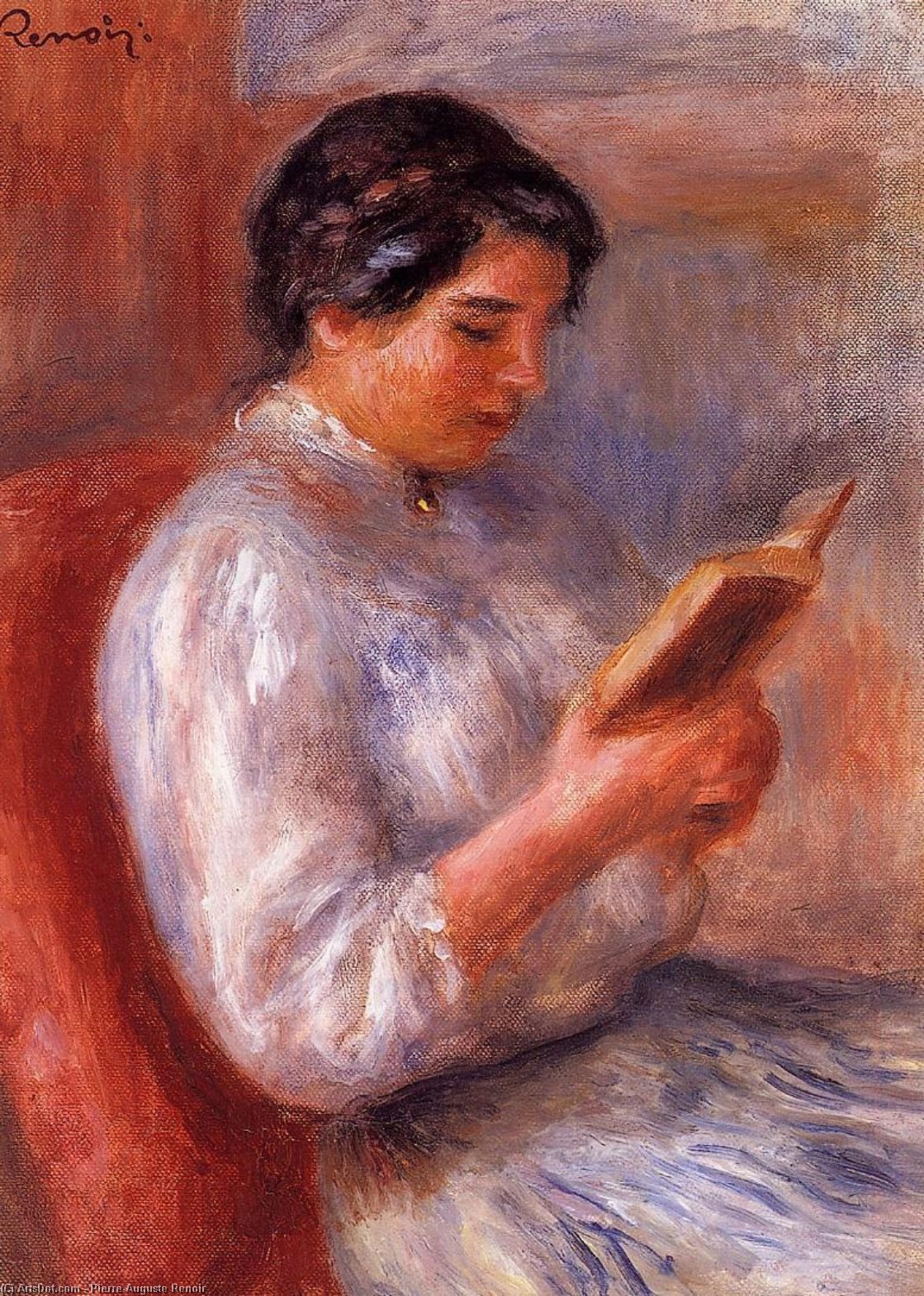
Pierre-Auguste Renoir's 1906 oil on canvas, *Woman Reading*, is a captivating glimpse into the intimate world of early 20th-century domesticity. Measuring just 31 x 23 cm, this seemingly small work possesses an expansive emotional resonance, embodying the core tenets of Impressionism while hinting at the artist’s evolving style. The painting depicts a young woman completely absorbed in her book, seated comfortably – likely in a Parisian interior – bathed in soft, diffused light.
Impressionistic Technique and Artistic Style
Renoir's mastery lies in his ability to capture fleeting moments and sensory impressions. *Woman Reading* is a prime example of this skill. The brushstrokes are loose and visible, eschewing precise detail for an overall impression of form and light. He employs a broken color technique – layering small touches of pure pigment rather than blending them on the palette – creating a luminous surface that seems to shimmer with life. Notice how the colors aren’t rigidly defined; instead, they blend optically in the viewer's eye, contributing to the painting’s ethereal quality. The warm tones dominating the composition are punctuated by subtle cool hues, adding depth and visual interest. This is not merely a portrait; it’s an *impression* of a woman reading, a distillation of light, color, and emotion.
Historical Context & Renoir's Evolution
Painted in 1906, this work falls within the later period of Renoir’s career. While firmly rooted in Impressionism, he began to move towards a more sculptural approach, influenced by his travels to Italy and his growing interest in the Old Masters. This is subtly visible in the modeling of the woman's face and hands – a departure from the flatter planes characteristic of earlier Impressionist works. The early 20th century was a period of rapid social change, yet Renoir often focused on timeless themes of beauty, leisure, and personal connection. *Woman Reading* reflects this preference for intimate scenes over grand historical narratives.
Symbolism & Emotional Impact
The act of reading itself carries significant symbolic weight. It represents knowledge, escape, introspection, and the power of imagination. The woman’s absorbed posture suggests a complete immersion in her literary world – a private sanctuary from the bustle of modern life.
The painting evokes a sense of tranquility and peaceful contemplation. Renoir doesn't present us with a dramatic narrative; instead, he invites us to share in this quiet moment, fostering a feeling of intimacy between viewer and subject. The soft lighting and harmonious color palette further enhance this mood, creating an atmosphere of serenity and warmth.
Considerations for Collectors & Interior Design
*Woman Reading* is not just a beautiful artwork; it’s a versatile piece that can complement a variety of interior styles. Its muted tones and intimate scale make it well-suited to bedrooms, libraries, or reading nooks.
Its Impressionistic aesthetic lends itself particularly well to spaces with soft furnishings and natural light. A high-quality reproduction would bring a touch of Parisian elegance and timeless charm to any home. The painting’s focus on quiet contemplation also makes it an ideal choice for creating a calming and restorative atmosphere.
- Explore more works by Pierre-Auguste Renoir at /art/list/?Filter=8XYRGU-Pierre-Auguste-Renoir-Woman-Reading.
- View a high-resolution image of *Woman Reading* at /en/art/show/art-8ewqjw-en/
- Discover the rich history of Impressionism and its influence on modern art.