A Quiet Moment Captured: Delving into Renoir’s “Woman Reading”
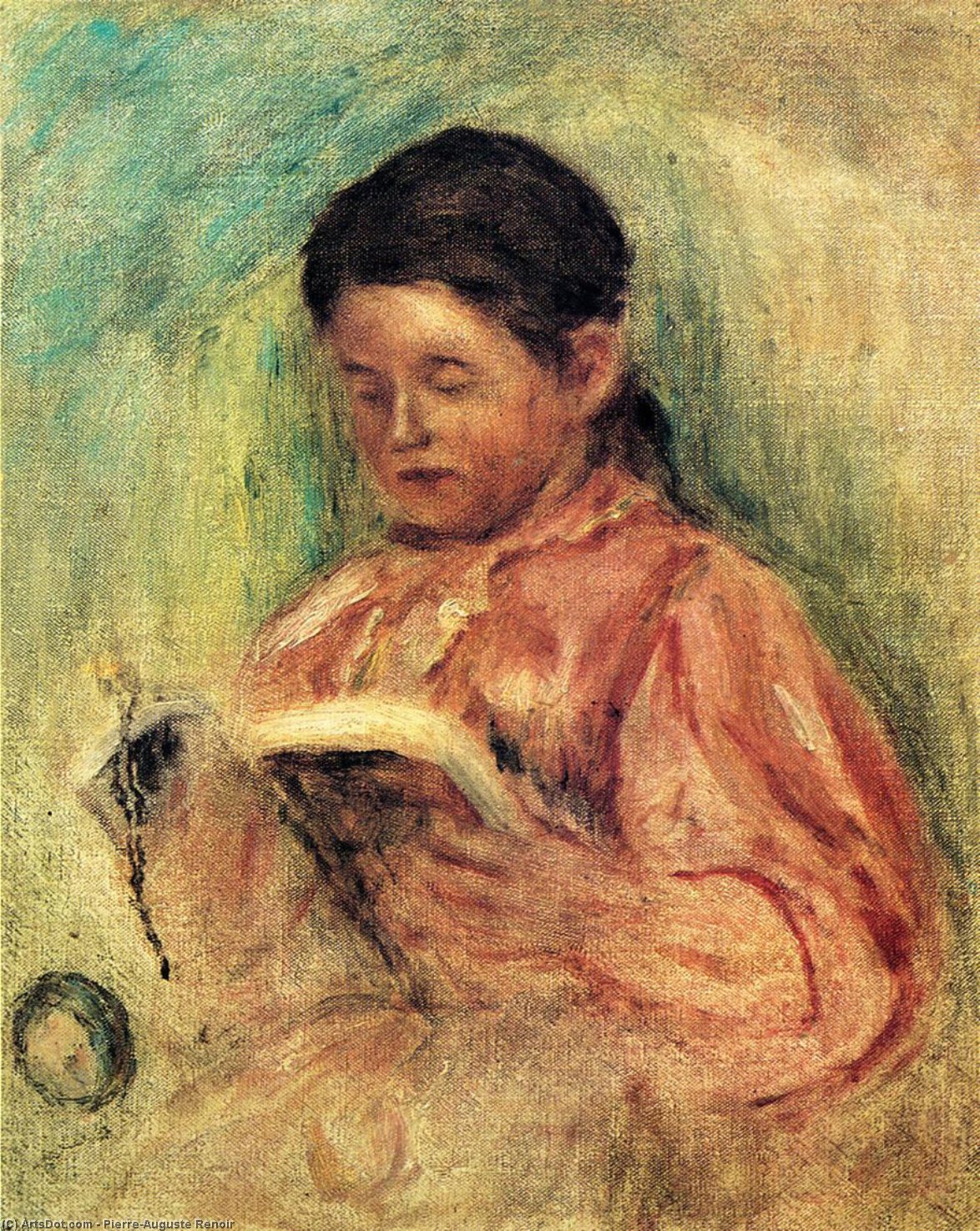
Pierre-Auguste Renoir's 1906 oil painting, “Woman Reading,” is more than just a portrait; it’s an intimate glimpse into the quietude of modern life. Measuring a modest 31 x 23 cm, this work encapsulates the artist’s enduring fascination with capturing fleeting moments of beauty and everyday existence. The scene depicts a woman completely absorbed in her book, bathed in a soft, diffused light that speaks to Renoir's mastery of Impressionist principles. Her simple pink dress and neatly arranged hair – styled in a classic bun – suggest a sense of domesticity and refined grace. The composition isn’t solely focused on the central figure; two additional figures subtly populate the background, hinting at a broader social context without distracting from the woman's contemplative state. They are present, yet secondary, reinforcing the idea that this is a moment carved out for personal reflection.
Impressionism and the Art of Light
Renoir was, of course, a pivotal figure in the Impressionist movement, alongside luminaries like Monet and Pissarro. “Woman Reading” exemplifies the hallmarks of this revolutionary style: visible brushstrokes that aren’t blended to create smooth surfaces, but rather contribute to a sense of vibrancy and immediacy; an emphasis on accurately depicting the shifting qualities of light; and a focus on capturing the *impression* of a scene rather than precise detail. In this painting, Renoir doesn't merely show us a woman reading; he conveys the feeling of being present with her in that tranquil space. The soft illumination isn’t harsh or dramatic, but gentle and enveloping, creating a warm and inviting atmosphere. This technique wasn’t simply about aesthetic preference; it was a deliberate attempt to break away from the academic traditions of the time, which prioritized precise representation over subjective experience.
A Reflection of Modern Life
Born in Limoges in 1841, Renoir's artistic journey mirrored the societal shifts occurring in France during his lifetime. His early years were marked by financial hardship and an apprenticeship as a porcelain painter, but his dedication to art led him to Paris and eventually to the heart of the Impressionist circle. Unlike earlier artists who often focused on historical or mythological subjects, Renoir turned his attention to the everyday lives of ordinary people – scenes of leisure, social gatherings, and intimate moments like the one depicted in “Woman Reading.” This focus wasn’t merely a stylistic choice; it reflected a broader cultural shift towards valuing individual experience and finding beauty in the mundane. The painting subtly suggests the growing accessibility of literature and education during this period, portraying reading not as an elite pursuit but as a source of personal enrichment available to women.
The Enduring Legacy of Renoir
Renoir’s influence extends far beyond the Impressionist movement itself. His emphasis on light, color, and the beauty of the human form paved the way for subsequent artistic developments, including Post-Impressionism and even early abstract movements like Fauvism. Artists like Paul Cézanne, deeply influenced by Renoir's approach to painting, would go on to lay the groundwork for Cubism. “Woman Reading,” with its serene atmosphere and delicate execution, continues to resonate with viewers today, offering a timeless reminder of the power of art to capture not just what we see, but how we feel. It’s a piece that invites contemplation, encouraging us to slow down and appreciate the simple pleasures of life – like losing oneself in the pages of a good book.