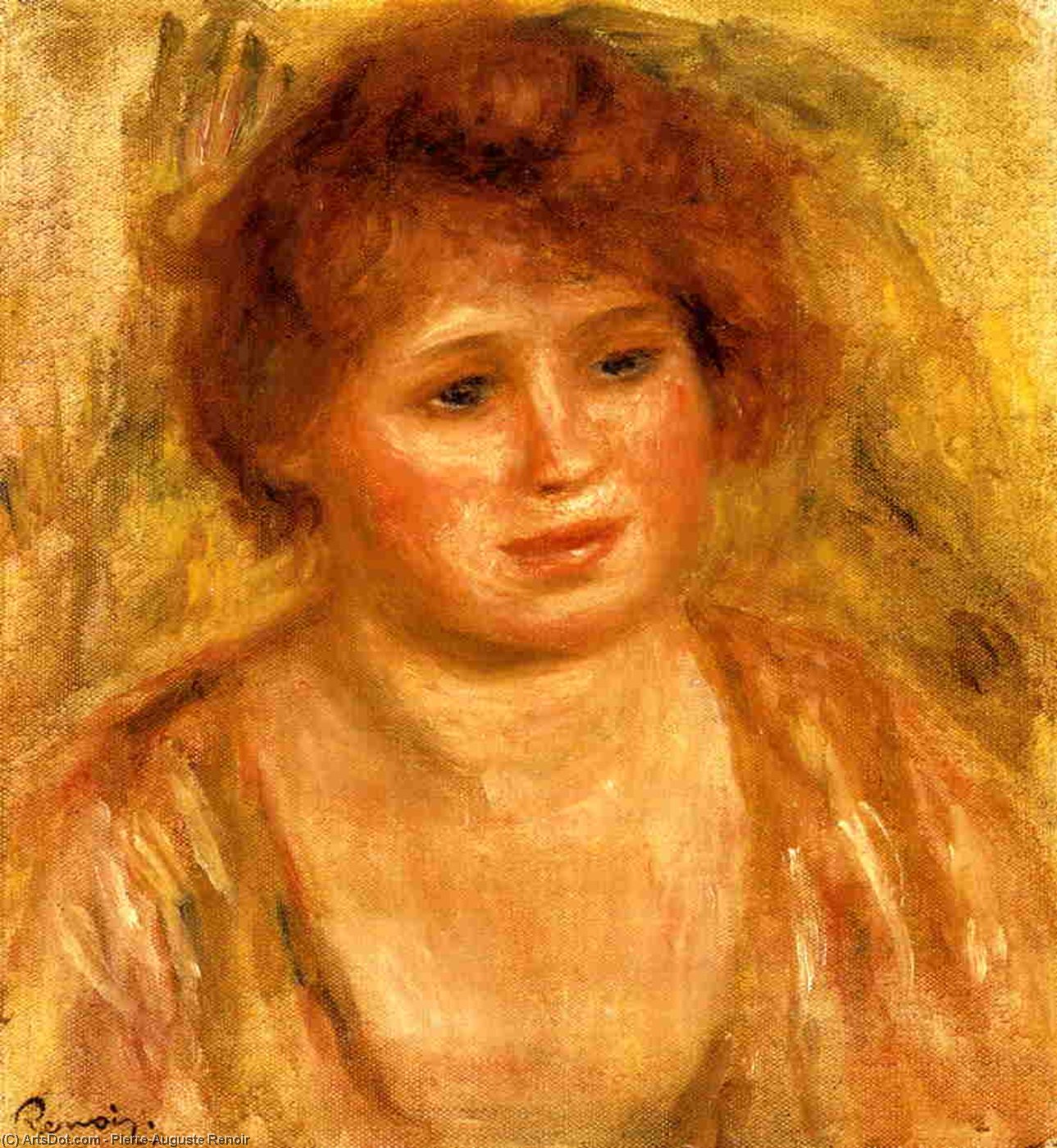
Woman's Head 2: A Portrait of Impressionistic Elegance
Pierre-Auguste Renoir’s “Woman’s Head 2” stands as a quintessential example of Impressionist artistry, capturing not merely likeness but the very essence of femininity and fleeting beauty. Painted in 1895 during Renoir's prolific period, this oil on canvas exemplifies his signature style—characterized by soft brushstrokes, luminous color palettes, and an unwavering focus on capturing the effects of light upon form. ArtsDot.com specializes in meticulously recreating masterpieces like “Woman’s Head 2,” ensuring that collectors experience the original artwork's grandeur through exceptional handmade reproductions.
The Painting: A Detailed Analysis
The portrait depicts a woman with striking red hair, dressed in simple yet refined attire—a pale yellow gown accented by delicate lace trim. Renoir skillfully renders her gaze directly toward the viewer, conveying an aura of quiet contemplation and subtle curiosity. The artist’s masterful blending of colors creates a harmonious backdrop that enhances the subject's luminosity. Notice the warm yellowish hue dominating the canvas – it wasn’t merely accidental; Renoir deliberately employed this color to imbue the scene with warmth and depth, mirroring the gentle radiance of sunlight filtering through foliage. Two birds—one positioned on the left side of the frame and another perched near the upper right corner—add an intriguing element to the composition. These avian figures aren't simply decorative additions; they symbolize freedom and aspiration, aligning perfectly with Renoir’s Impressionist ethos of celebrating natural beauty and capturing transient moments.
Impressionism and Renoir's Style
Renoir was a cornerstone of the Impressionist movement, which revolutionized painting by prioritizing observation and emotion over academic conventions. Like Monet’s “The Road to Giverny,” Renoir sought to depict scenes as they appeared to the eye—emphasizing color and light rather than precise detail. His technique involved applying paint in loose, visible strokes—a deliberate departure from traditional methods—resulting in textured surfaces that vibrate with vibrancy. This approach allowed him to convey not just what he saw but how he *felt* about what he saw, a hallmark of Impressionist painting.
Portrait Painting: A Historical Context
Portraiture has evolved dramatically throughout history, transitioning from formal commissions reserved for royalty and nobility to more accessible depictions of individuals reflecting societal values. By the mid-19th century, portrait painting enjoyed considerable popularity among the middle class, driven by a desire to commemorate personal achievements and preserve family legacies. Artists like Cézanne explored new perspectives on capturing human form—a trend that continues today as artists strive to convey emotion and personality through their canvases.
Reproductions at ArtsDot.com
ArtsDot.com offers unparalleled access to the beauty of Impressionist art through our handcrafted oil reproductions. Our dedicated artisans meticulously recreate Renoir’s “Woman's Head 2” using traditional techniques—mixing pigments by hand, applying paint with brushes, and layering glazes to achieve remarkable depth and luminosity. Each reproduction is a testament to artistic excellence, preserving the original artwork's spirit for generations to come. Explore more captivating pieces by Renoir and other masters on our website!
Experience the beauty of art with ArtsDot.com.