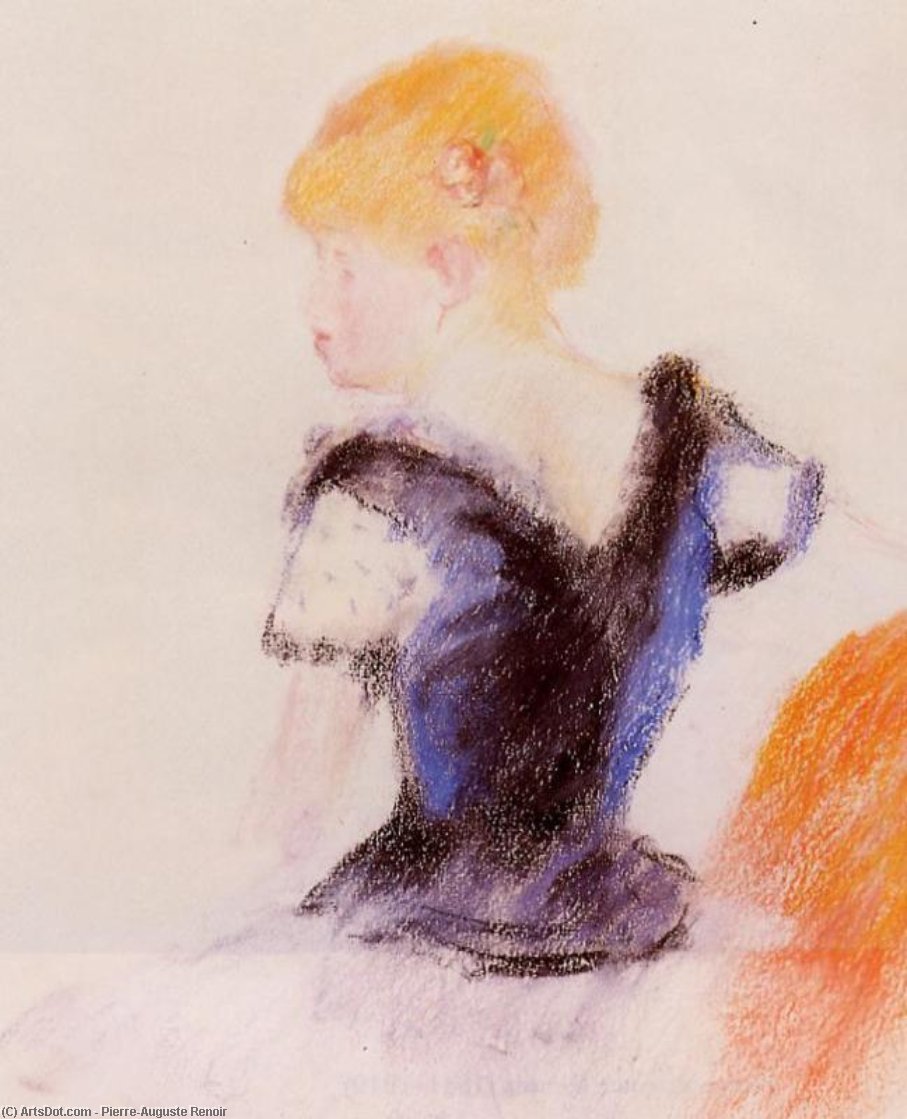
Inspired by the Louvre’s Old Masters, Renoir skillfully blended observation and emotion to create this evocative piece. Explore similar artworks at WikiArt.
Explore Pierre-Auguste Renoir's (1841-1919) luminous Impressionist paintings! Discover portraits, Parisian life & feminine beauty in his iconic artworks.
A Moment Frozen in Impressionistic Light: Exploring Renoir’s ‘Young Blond Girl’
Pierre-Auguste Renoir's “Young Blond Girl,” painted circa 1885-1890, stands as a quintessential example of Impressionism—a movement that revolutionized painting and continues to captivate audiences today. More than just a depiction of youthful beauty, this sketch offers a glimpse into the artist’s meticulous observation of light and color, reflecting his profound connection with the natural world and capturing an ephemeral moment of tranquility.
### Subject Matter & Composition: The Essence of Innocence
The painting portrays a young girl seated gracefully on what appears to be grass—likely a preparatory study for a larger canvas—her blonde hair cascading down her shoulders in loose curls. Her gaze is directed slightly upwards, conveying a sense of quiet contemplation rather than posed formality. Renoir’s masterful use of composition emphasizes the girl's stillness against a softly blurred backdrop, prioritizing atmosphere over precise detail. This deliberate simplification aligns perfectly with Impressionist principles, where artists sought to capture fleeting impressions of reality—the way light dances across surfaces and transforms colors.
### Artistic Style & Technique: Impressionistic Brilliance
Renoir’s technique is characterized by rapid brushstrokes applied in broken color patches—a hallmark of Impressionism. He eschewed traditional blending methods, opting instead for juxtaposing complementary hues to create vibrancy and luminosity. Notice the dominant shades of blue and red; these colors aren't blended together but layered side-by-side, resulting in a warm glow that envelops the girl’s figure. The artist skillfully renders textures—particularly the hair—with delicate brushwork, capturing subtle variations in tone and color to convey depth and realism without resorting to meticulous shading.
### Historical Context & Influences: Embracing Modernity
Painted during Renoir's peak creative period, “Young Blond Girl” embodies the spirit of Belle Époque Paris – a time marked by optimism, artistic experimentation, and social change. Impressionism emerged as a reaction against academic painting’s rigid conventions, prioritizing subjective experience over objective representation. Renoir drew inspiration from artists like Claude Monet and Camille Pissarro, who championed plein air painting—working outdoors directly before the easel—allowing them to capture the immediacy of natural light. The sketch reflects the broader artistic movement's fascination with capturing fleeting moments and exploring the emotional resonance of visual perception.
### Symbolism & Emotional Impact: Beauty Captured in Transient Light
Beyond its technical brilliance, “Young Blond Girl” resonates with symbolic significance. The girl herself represents innocence, purity, and youthful vitality—themes frequently explored by Impressionist artists. Renoir’s deliberate blurring of the background serves to heighten the sense of atmosphere and evoke feelings of serenity and nostalgia. Like many Impressionist paintings, this sketch invites viewers to contemplate beauty not as a static ideal but as an ever-changing phenomenon—a reminder that moments of joy and wonder are fleeting yet profoundly impactful. It's a testament to Renoir’s ability to distill complex emotions into simple visual forms, securing its place as a beloved masterpiece of Impressionistic art.