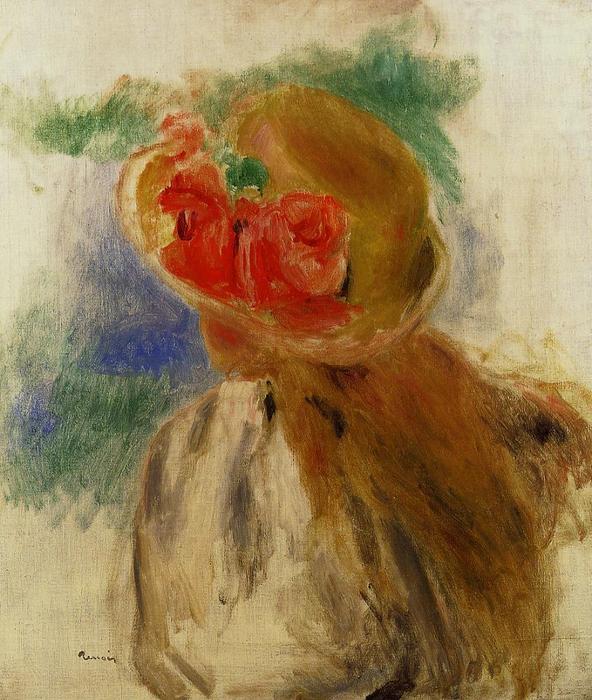
Young Girl in a Flowered Hat: An Impressionist Portrait of Innocence
The painting
Young Girl in a Flowered Hat stands as a quintessential example of Impressionist art, born from the visionary brushstrokes of Pierre-Auguste Renoir in 1900. More than just a depiction of youthful beauty, it’s a masterful exploration of light and color—elements central to the movement's core philosophy—that transports us back to a Parisian summer afternoon. This stunning piece captures a young girl gazing off into the distance, her presence imbued with an air of quiet contemplation that invites viewers to ponder upon themes of childhood wonder and fleeting moments.
Artistic Style and Influences: Renoir’s Delicate Technique
Renoir's artistic style is instantly recognizable for its soft, feathery brushstrokes—a technique honed through years of observation and experimentation. Unlike the meticulous detail favored by academic painters of his time, Renoir prioritized capturing the ephemeral qualities of light and atmosphere. In
Young Girl in a Flowered Hat, he achieves this remarkable effect by layering translucent glazes of pigment—a hallmark of Impressionism—creating an illusion of shimmering luminescence. This approach echoes the influence of artists like Rubens and Watteau, who championed idealized beauty and emotional expression, shaping Renoir’s artistic sensibilities. Furthermore, he absorbed lessons from Manet's groundbreaking realism, recognizing its importance in portraying modern life with honesty and nuance.
Historical Context: Parisian Belle Époque Elegance
The painting emerged during the Belle Époque—a period of unprecedented optimism and cultural flourishing in Paris—characterized by lavish social gatherings and a fascination with beauty and refinement. Renoir’s depiction aligns perfectly with this aesthetic sensibility, reflecting the prevailing desire to celebrate youthfulness and innocence amidst the grandeur of Parisian society. The hat adorned with vibrant roses serves as a symbol of status and femininity, highlighting the importance of decorative arts within the Belle Époque context. Consider also the broader artistic movement that influenced Renoir’s work: Proto-Cubism—a nascent exploration of geometric forms and spatial relationships—represented a subtle departure from Impressionistic conventions, foreshadowing the revolutionary developments to come in European art.
Museum and Artistic Legacy: Victoria Art Gallery's Showcase
The Victoria Art Gallery in Bath, Somerset, England, proudly houses an impressive collection of artworks spanning centuries, including notable pieces by Renoir. Visiting this gallery offers a valuable opportunity to immerse oneself in the artistic heritage of Britain and gain insight into the enduring appeal of Impressionist art. The gallery’s curators have meticulously documented Renoir's oeuvre, providing invaluable resources for scholars and enthusiasts alike. To delve deeper into Renoir’s artistic journey, explore his other celebrated paintings—such as “The Boating Party Lunch” and “Ambroise Vollard Dressed as a Toreador”—available on ArtsDot.com. These works exemplify Renoir's mastery of color and composition, solidifying his position as one of the most influential artists of the late nineteenth century.
Handmade Oil Paintings Reproductions: Bringing Renoir’s Vision Home
Handmade oil paintings reproductions of
Young Girl in a Flowered Hat are available at https://ArtsDot.com, allowing art lovers to acquire a tangible connection to Renoir’s artistic legacy—a beautiful reminder of Impressionism's enduring power to captivate and inspire. The painting’s luminous colors and serene atmosphere embody the spirit of Belle Époque elegance, transforming it into an accessible masterpiece for collectors and interior designers alike.