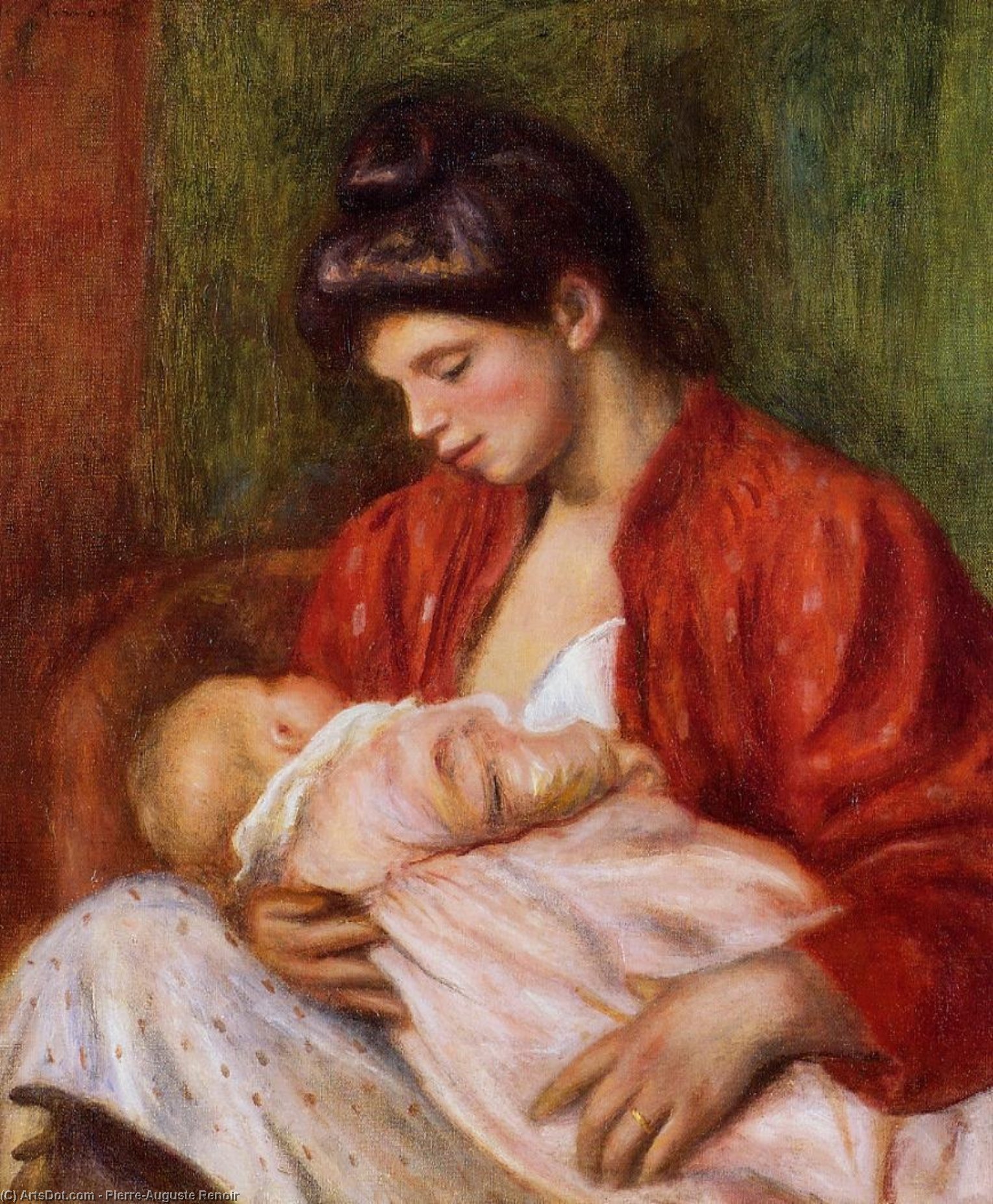
Young Mother by Pierre-Auguste Renoir
Pierre-Auguste Renoir’s
Young Mother, painted in 1898, stands as a quintessential embodiment of Impressionist aesthetics—a celebration of fleeting moments and luminous color palettes that continues to resonate with audiences today. More than just a portrait, it’s an exquisitely rendered depiction of maternal tenderness and domestic tranquility, capturing the essence of a cherished familial tableau.
Composition and Visual Narrative
The painting's composition is deceptively simple yet profoundly effective. Renoir centers his gaze on a woman seated comfortably in a chair, bathed in soft sunlight—a hallmark of Impressionist technique aimed at recreating the effects of natural light. Her posture exudes serenity as she cradles her infant child close to her breast, conveying an undeniable sense of warmth and nurturing devotion. Two additional figures flank the central subject, subtly suggesting a scene unfolding within a home environment – perhaps a family gathering or a quiet afternoon spent with loved ones. This careful arrangement guides the viewer’s eye across the canvas, fostering contemplation on themes of familial bonds and maternal care.
Renoir's Impressionistic Style: Light and Color
Renoir’s mastery lies in his ability to translate visual sensations into pigment—to capture not just what he sees but how it feels. The painting is executed in oil on canvas using a technique characterized by loose brushstrokes and vibrant hues. Renoir skillfully blends colors directly onto the canvas, eschewing meticulous blending for textural richness and capturing the dappled light filtering through foliage outside the window. Notice particularly the radiant reds of the woman’s dress—a bold choice that contrasts beautifully with the muted greens and browns of the surrounding environment. This deliberate manipulation of color contributes significantly to the painting's emotional impact, conveying a palpable sense of warmth and optimism.
Historical Context and Artistic Significance
History of Painting reveals that Renoir’s work emerged during a pivotal period in art history—the rise of Impressionism as a reaction against academic conventions. Artists like Renoir sought to depict the world as perceived by ordinary people, prioritizing subjective experience over idealized representation.
Young Mother exemplifies this ethos, aligning seamlessly with the broader movement’s preoccupation with capturing fleeting impressions of daily life and conveying emotional nuance. It cemented Renoir's reputation as a pioneer of modern art and profoundly influenced subsequent generations of painters.
Symbolism and Emotional Resonance
Beyond its formal beauty,
Young Mother carries symbolic weight. The mother-child relationship represents fundamental values—protection, compassion, and the continuity of life—themes that resonate deeply with viewers across cultures and eras. Renoir’s depiction captures not merely a visual likeness but an emotional truth—the profound connection between parent and child—making it a timeless masterpiece of Impressionist art.
Exploring Reproductions
For those wishing to experience the splendor of Renoir's vision firsthand, ArtsDot offers meticulously crafted oil painting reproductions of
Young Mother. Visit
/art/list/?Filter=8EWQME-Pierre-Auguste-Renoir-Young-Mother to discover exceptional quality reproductions that bring this iconic artwork into your home.