A Glimpse Through the Looking Glass: The Intimacy of Bonnard
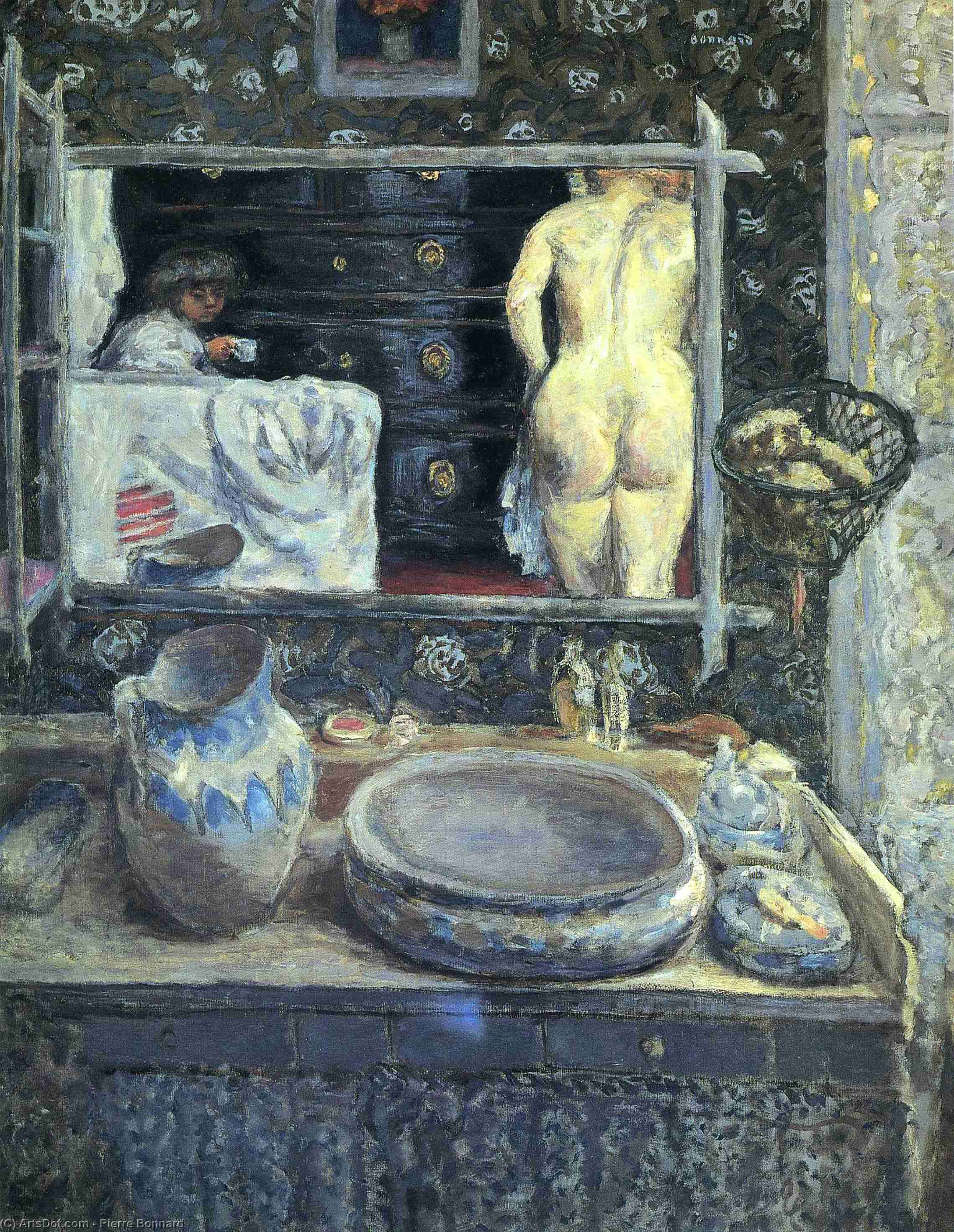
In the quiet, sun-drenched corners of domestic life, Pierre Bonnard found his most profound inspirations. Mirror on the Wash Stand, painted in 1908, serves as a breathtaking window into the private world of the French Post-Impressionist master. The scene unfolds within the tiled confines of a dressing room or bathroom, a space typically reserved for the most personal of rituals. Rather than presenting a starkly realistic depiction, Bonnard invites us into a dreamlike atmosphere where light and color dance across surfaces. At the heart of this composition lies a large mirror, which does more than merely reflect; it creates a layered visual experience, capturing the profile of a young girl and pulling the viewer into a contemplative loop of observation and self-reflection.
The painting is a masterclass in the Intimist style, a movement that sought to find the extraordinary within the ordinary. Through his loose, expressive brushwork, Bonnard avoids the rigid boundaries of academic realism, opting instead for a tactile, almost sensory application of oil paint. The texture of the canvas feels alive, with thick strokes that catch the light and suggest the dampness of the room or the smoothness of porcelain. While the geometric grid of the tiled walls provides a structured foundation, it is softened by the organic, rounded forms of the washbasin, jugs, and drapery. This tension between the structured environment and the fluid, impressionistic technique creates a sense of movement, as if we have stumbled upon a fleeting, unposed moment in time.
Light, Color, and the Soul of Impressionism
Color serves as the emotional heartbeat of this masterpiece. Bonnard employs a palette that leans toward warm, earthy tones, yet he masterfully punctuates these hues with unexpected touches of cool blues and vibrant greens. This interplay of temperature mimics the way natural light filters through a window, hitting a ceramic surface or reflecting off a glass pane. The lighting is notably dramatic; an unseen light source casts deep, velvety shadows that lend a sense of profound depth to the cluttered space. These shadows do not merely obscure; they add mystery, suggesting the hidden layers of domestic existence and perhaps even a hint of voyeurism, as if we are peering into a secret sanctuary.
For the discerning collector or interior designer, Mirror on the Wash Stand offers much more than mere decoration. It is an evocative piece that brings a sense of historical weight and sophisticated warmth to any space. The painting’s ability to balance complexity with harmony makes it a versatile centerpiece for a curated gallery wall or a standalone statement in a contemporary study. To possess a reproduction of this work is to invite the quiet, luminous spirit of 1908 into one's home—a constant reminder of the beauty found in the subtle, the reflected, and the everyday.