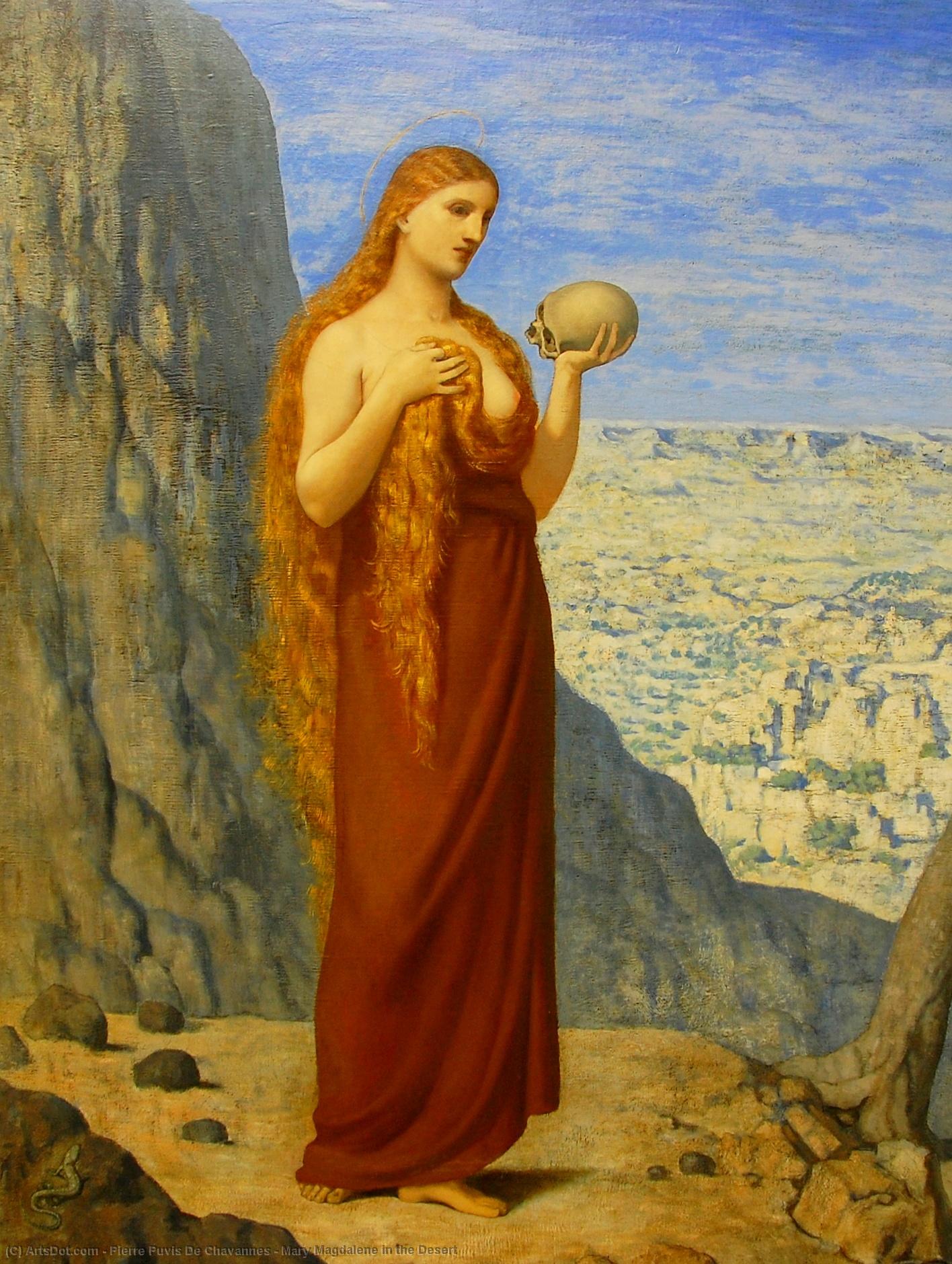
Explore 'Mary Magdalene in the Desert' by Pierre Puvis de Chavannes – a Symbolist masterpiece depicting Mary Magdalene’s solitary contemplation amidst a rocky landscape, symbolizing redemption and mortality.
Pierre Puvis de Chavannes: French painter known for monumental murals & allegorical scenes, profoundly influencing Symbolism and shaping public art in late 19th-century France.
Explore 700 years of art at the Städel Museum in Frankfurt! From Old Masters to modern masterpieces, discover stunning collections & architectural marvels on the Museumsufer.
A Visionary Encounter with Redemption: Exploring Puvis de Chavannes’ “Mary Magdalene in the Desert”
Pierre Cécile Puvis de Chavannes' "Mary Magdalene in the Desert," completed in 1869, stands as a cornerstone of Symbolist art and a poignant meditation on faith, mortality, and the transformative power of solitude. Situated within the Stadelsches Kunstinstitut’s collection in Frankfurt, Germany—a museum itself renowned for its dedication to pioneering artistic movements—the painting transcends mere representation; it embodies Puvis de Chavannes' profound belief that art could communicate emotion and intellect beyond literal depiction.
A Landscape Steeped in Symbolism: Setting the Stage for Spiritual Reflection
The desolate yet beautiful expanse of rocky hillside serves as more than just a backdrop; it’s an active participant in conveying the painting’s core themes. Puvis de Chavannes meticulously crafted this landscape using muted earthy tones—ochres, browns, and greys—creating an atmosphere of profound stillness and isolation. The jagged rocks symbolize hardship and resistance, mirroring Mary Magdalene's arduous journey toward spiritual renewal. Furthermore, the sparse vegetation hints at resilience amidst adversity, reinforcing the notion that even in darkness, beauty persists. This deliberate choice of color palette aligns perfectly with Symbolist aesthetics, prioritizing emotional resonance over photographic accuracy.
The Figure of Mary Magdalene: Embodiment of Suffering and Grace
Puvis de Chavannes’ depiction of Mary Magdalene is strikingly unconventional for its time. Rather than portraying her as a conventionally pious saint—a common artistic trope—he presents her as a woman wrestling with existential questions. Her posture exudes vulnerability yet unwavering determination, conveying the profound struggle inherent in confronting one's own mortality and embracing spiritual transformation. The artist’s masterful use of chiaroscuro—the dramatic interplay between light and shadow—intensifies Mary Magdalene’s emotional impact. Light illuminates her face, highlighting her gaze as she contemplates the skull held delicately in her hand.
The Skull: A Powerful Emblem of Mortality and Transcendence
The inclusion of a human skull is arguably the painting's most arresting element. Puvis de Chavannes doesn’t depict it merely as an object of death; he imbues it with symbolic significance—a reminder that earthly existence is fleeting, yet spiritual life offers enduring solace. The skull rests in Mary Magdalene’s palm, symbolizing acceptance of mortality and acknowledging the inevitability of decay. Simultaneously, it represents transcendence—the aspiration to rise above material concerns and embrace a higher realm of consciousness. This juxtaposition underscores Puvis de Chavannes' belief that confronting death can illuminate the path toward spiritual enlightenment.
A Legacy of Dreamlike Vision: Influence Beyond Genre Conventions
“Mary Magdalene in the Desert” cemented Puvis de Chavannes’ reputation as a visionary artist who dared to challenge artistic conventions. His style—characterized by dreamlike landscapes and figures imbued with symbolic meanings—influenced subsequent generations of artists, particularly those exploring the expressive potential of Symbolism and Art Nouveau. The painting's enduring appeal lies not only in its aesthetic beauty but also in its profound psychological depth, prompting viewers to contemplate fundamental questions about faith, suffering, and the human condition. Its presence within the Stadelsches Kunstinstitut ensures that Puvis de Chavannes’ masterpiece continues to inspire contemplation and admiration for years to come.