A Pastoral Symphony in Paint
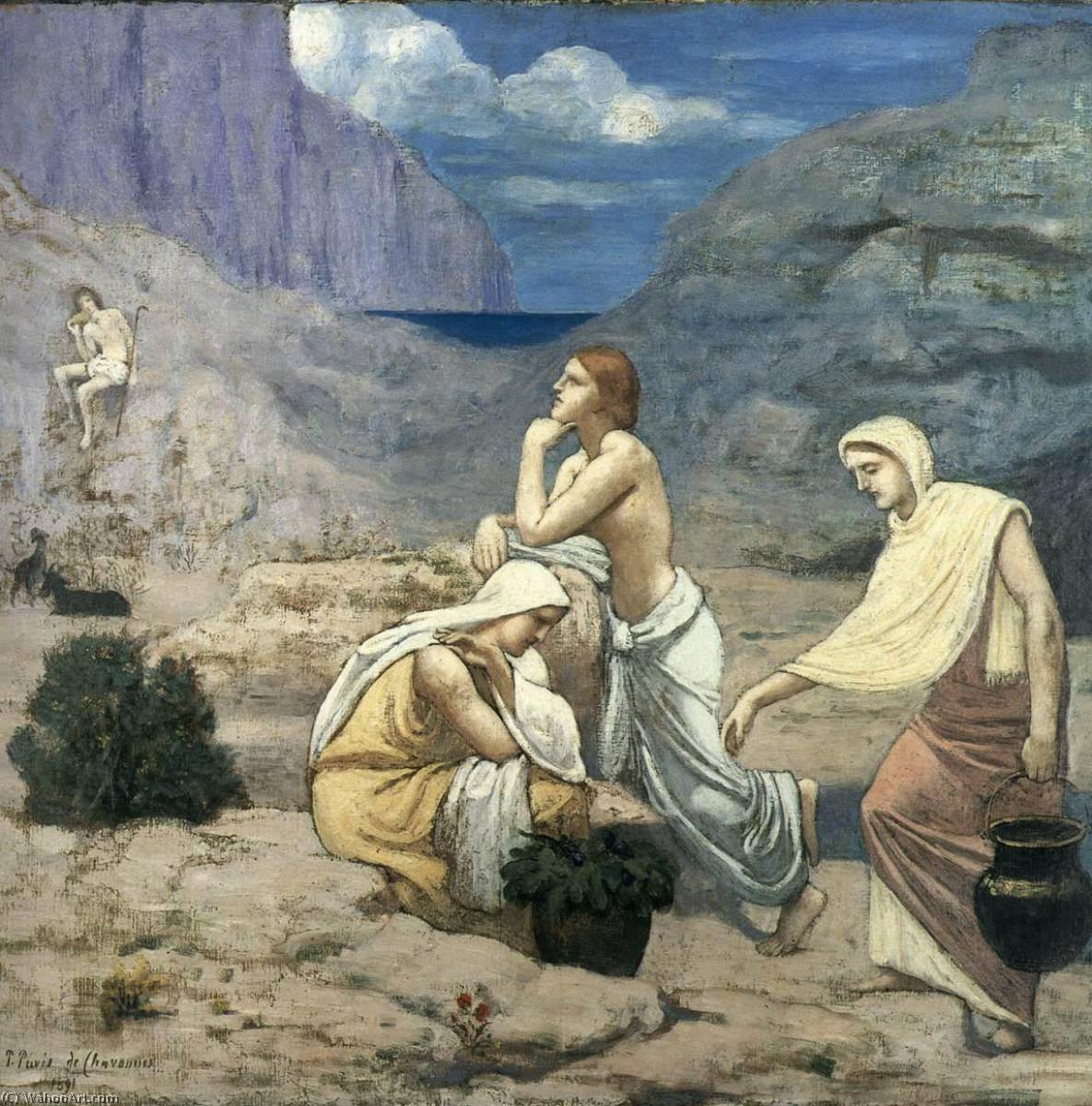
In the quietude of 1891, Pierre Cécile Puvis de Chavannes breathed life into The Shepherd's Song, creating a masterpiece that transcends the boundaries of mere landscape to become a profound meditation on human connection and natural harmony. This evocative work invites the viewer into a sun-drenched, idyllic realm where the boundaries between humanity and the earth seem to dissolve. At its heart, the composition centers on a trio of figures, their presence anchored by a sense of timelessness. One figure gazes toward an unseen horizon, perhaps lost in the melody of a distant flute or the whispers of the wind, while others engage in the gentle, rhythmic dance of quiet conversation. The scene is populated by smaller, ethereal figures that suggest a larger, communal existence, weaving a tapestry of social cohesion within the vast, breathing landscape.
The technique employed by Puvis de Chavannes is nothing short of masterful, characterized by his signature approach to mural-like composition and a muted, almost fresco-like palette. He avoids the frantic energy of Impressionism, opting instead for a smoothed, rhythmic application of paint that lends the figures a sculptural, monumental quality. This deliberate restraint allows the subtle gradations of light and shadow to guide the eye across the canvas, from the delicate textures of the potted plant in the foreground to the soft, atmospheric depth of the background. The presence of humble objects, such as a simple bowl resting upon the earth, serves to ground the ethereal subject matter, providing a tactile reality that makes the dreamlike atmosphere feel profoundly reachable.
Symbolism and the Spirit of the Belle Époque
Beyond its surface beauty, The Shepherd's Song serves as a window into the Symbolist movement's preoccupation with the internal landscape of the soul. Puvis de Chavannes was not merely painting a pastoral scene; he was constructing a visual poem about peace, stability, and the idealized rhythms of life. The shepherd, a perennial symbol of innocence and stewardship, acts as a bridge between the wildness of nature and the structured world of man. Every element, from the placement of the figures to the stillness of the air, is imbued with a sense of nostalgic longing for a lost Arcadia. For the modern collector, this piece offers more than decoration; it offers an emotional sanctuary, a way to introduce a sense of contemplative calm into the contemporary living space.
For interior designers and connoisseurs of fine art, this reproduction presents an unparalleled opportunity to anchor a room with historical gravity and aesthetic grace. The painting’s ability to harmonize with both classical and modern decor makes it a versatile centerpiece for those seeking to evoke sophistication and tranquility. Whether placed in a sunlit gallery or a moody, library-inspired study, The Shepherd's Song commands attention through its quiet strength, reminding us of the enduring power of beauty to soothe the restless spirit and connect us to the timeless cycles of the natural world.