Pierre Narcisse Guérin: Bridging Neoclassicism and Romantic Sentiment
The artistic landscape of early 19th century France was undergoing a dramatic transformation—a slow but insistent shift away from the rigid formalism of Neoclassicism towards the expressive dynamism of Romanticism. Amidst this evolving aesthetic dialogue stood Pierre Narcisse Guérin (1774-1833), an artist whose oeuvre exemplifies this pivotal transition, capturing both the grandeur of classical ideals and the profound emotional currents that defined his era. His success in securing one of the prestigious Grand Prix awarded at the Salon of 1796—a victory born from a competitive spirit rekindled after the revolutionary hiatus—established him as a voice resonating with renewed artistic ambition.
- The Salon of 1799 and *Marcus Sextus*: Guérin’s monumental canvas, *Marcus Sextus*, debuted at the Salon of 1799, immediately proclaiming his allegiance to Romantic principles. Depicting a Roman veteran returning to Rome burdened by grief—a poignant reflection of the revolutionary upheaval—the painting transcends mere historical representation; it delves into the depths of human emotion and psychological complexity.
- A Masterful Blend: Guérin’s technique showcased an impressive command of oil paint, utilizing layering and glazing techniques to achieve remarkable luminosity and textural nuance. He skillfully employed chiaroscuro—the dramatic interplay of light and shadow—to heighten the emotional impact of his compositions, mirroring the Romantic fascination with sublime landscapes and intense psychological states.
Symbolism Within Grief: Aurora and Cephalus – A Mythological Allegory
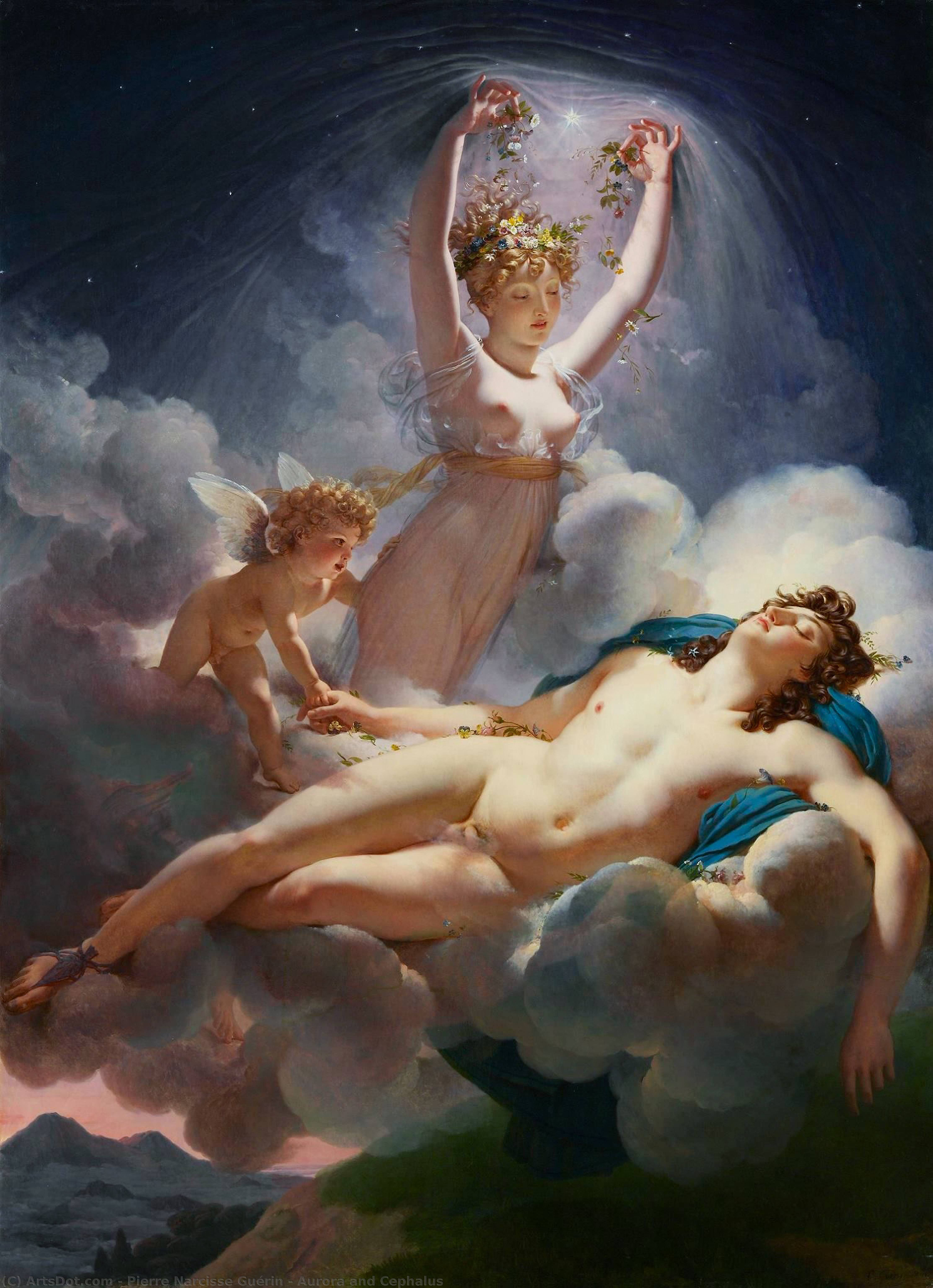
Guérin’s most celebrated work, *Aurora and Cephalus*, exemplifies this synthesis of classical form and Romantic sentiment. Inspired by the Greek myth recounting Aurora's love affair with Cephalus and their subsequent encounter with a divine messenger bearing news of Cephalus’s wife’s demise—a narrative laden with symbolism—the painting transcends its mythological origins to explore universal themes of loss, remembrance, and spiritual solace. The depiction of Aurora, bathed in ethereal light amidst swirling clouds, embodies feminine grace and resilience—a counterpoint to the sorrowful countenance of Cephalus, grappling with unbearable grief.
- Celestial Atmosphere: Guérin meticulously crafted a celestial atmosphere, utilizing pastel hues—particularly pinks and blues—to evoke a sense of otherworldly beauty and tranquility. This deliberate stylistic choice underscores the painting’s spiritual dimension, suggesting that solace can be found in contemplation of transcendent ideals.
- Angelic Presence: The inclusion of angelic figures hovering above the couple serves as a visual reminder of divine compassion and intervention—a hallmark of Romantic artistic expression. These celestial beings symbolize hope and reassurance amidst despair, reinforcing the painting’s overarching message of spiritual redemption.
Emotional Resonance and Artistic Legacy
*Aurora and Cephalus*, like Guérin's broader oeuvre, continues to captivate audiences with its profound emotional resonance. Its masterful execution—characterized by luminous color palettes, nuanced textural detail, and a compelling narrative framework—solidifies Guérin’s position as a pivotal figure in the transition from Neoclassicism to Romanticism. His work stands as an enduring testament to the transformative power of art—capable of conveying complex psychological states and exploring universal themes of human experience with breathtaking beauty and sensitivity. It remains an inspiration for artists and collectors alike, demonstrating that true artistic achievement lies not merely in technical proficiency but also in the ability to evoke genuine emotion and illuminate the depths of the human spirit.