A Poetic Tug-of-War Between Virtue and Desire
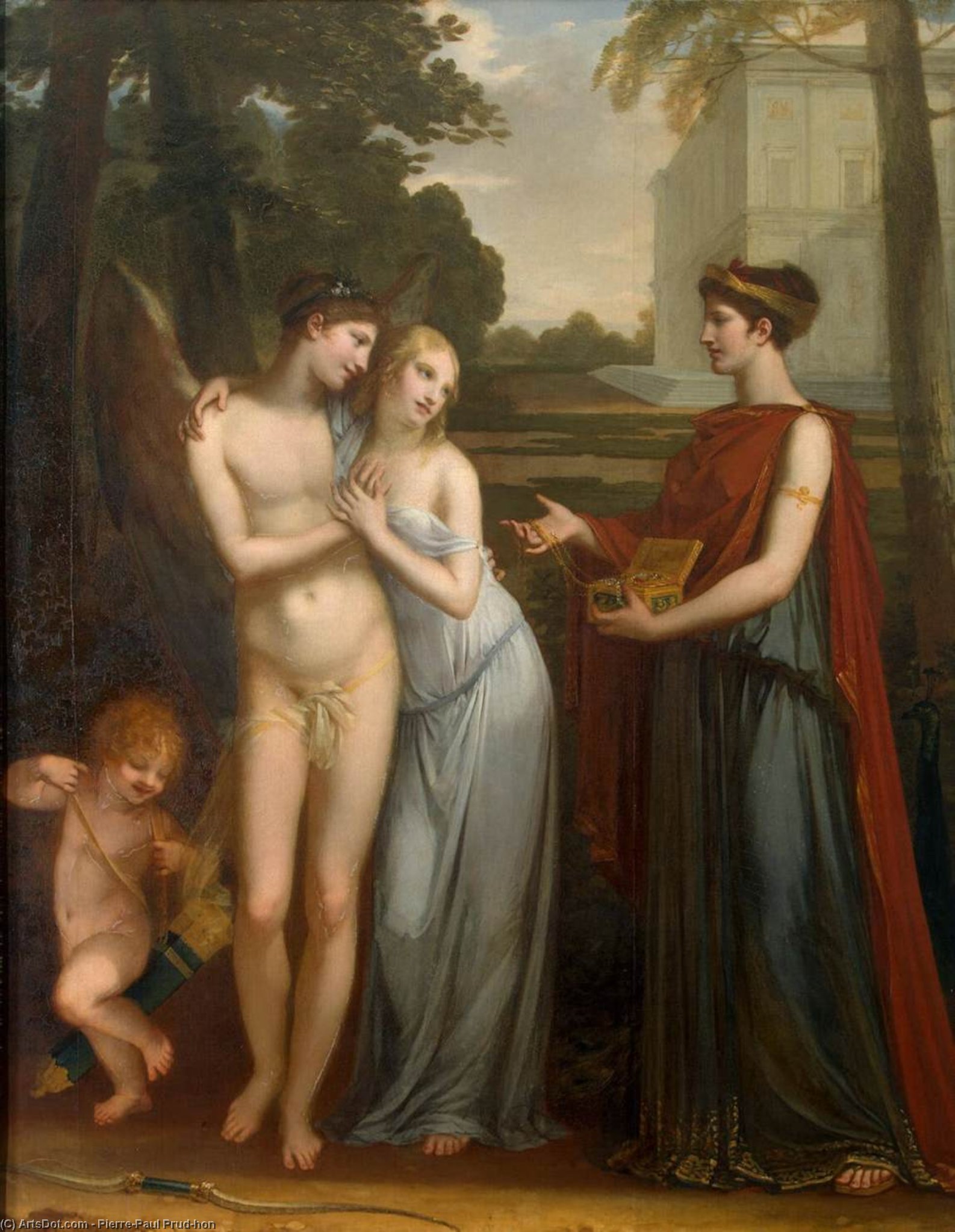
In the delicate interplay of light and shadow that defines Pierre-Paul Prud’hon's 1804 masterpiece, “Innocence Preferring Love to Wealth,” we encounter a profound meditation on the human condition. This captivating allegorical work serves as a bridge between the disciplined restraint of Neoclassicism and the burgeoning emotional depth of the Romantic era. At its heart, the painting captures a pivotal moment of moral contemplation: a young woman, personifying Innocence, stands at a crossroads of the soul. While she physically embraces Love—manifested as a tender Cupid—her gaze betrays a subtle, wistful longing toward the glittering allure of Riches. It is a scene that transcends its era, speaking directly to the timeless struggle between spiritual fulfillment and material temptation.
The composition is a masterclass in chiaroscuro, a technique where Prud’hon employs dramatic contrasts between light and dark to sculpt his figures with breathtaking three-dimensionality. The luminous skin of Innocence seems to glow from within, creating an ethereal presence that commands the viewer's attention, while the deeper shadows provide a sense of mystery and gravity. This interplay of light does more than just define form; it directs the emotional narrative, guiding our eyes from the purity of the central figure toward the opulent, shadowed world of material wealth. The collaboration between Prud’hon and his talented student and partner, Constance Mayer, adds an extra layer of technical brilliance, resulting in a surface where meticulous detail meets soft, atmospheric grace.
Symbolic Resonance and Allegorical Depth
Every element within this frame is imbued with profound symbolic meaning, designed to provoke thought in the viewer. The central figure of Innocence acts as the moral compass of the piece, her embrace of Cupid signifying a devotion to genuine affection and spiritual truth. Yet, the painting does not present a simple victory of virtue; rather, it explores the complexity of temptation. To one side, a woman draped in luxurious Grecian robes offers a chest overflowing with golden baubles, representing the seductive power of wealth. The presence of an angel figure on the periphery serves as a silent sentinel of divine grace, reminding us of the moral guidance that exists even amidst earthly distractions.
For the discerning collector or interior designer, this artwork offers much more than mere decoration; it provides a focal point of intellectual and emotional substance. The painting’s ability to balance heavy symbolic themes with an aesthetic of extreme elegance makes it a versatile choice for sophisticated spaces. Whether placed in a library, a formal salon, or a curated gallery setting, a high-quality reproduction of this piece brings with it an aura of classical wisdom and romantic beauty. It invites conversation, prompting guests to reflect on their own values and the delicate balance required to navigate a world filled with both enduring love and fleeting riches.