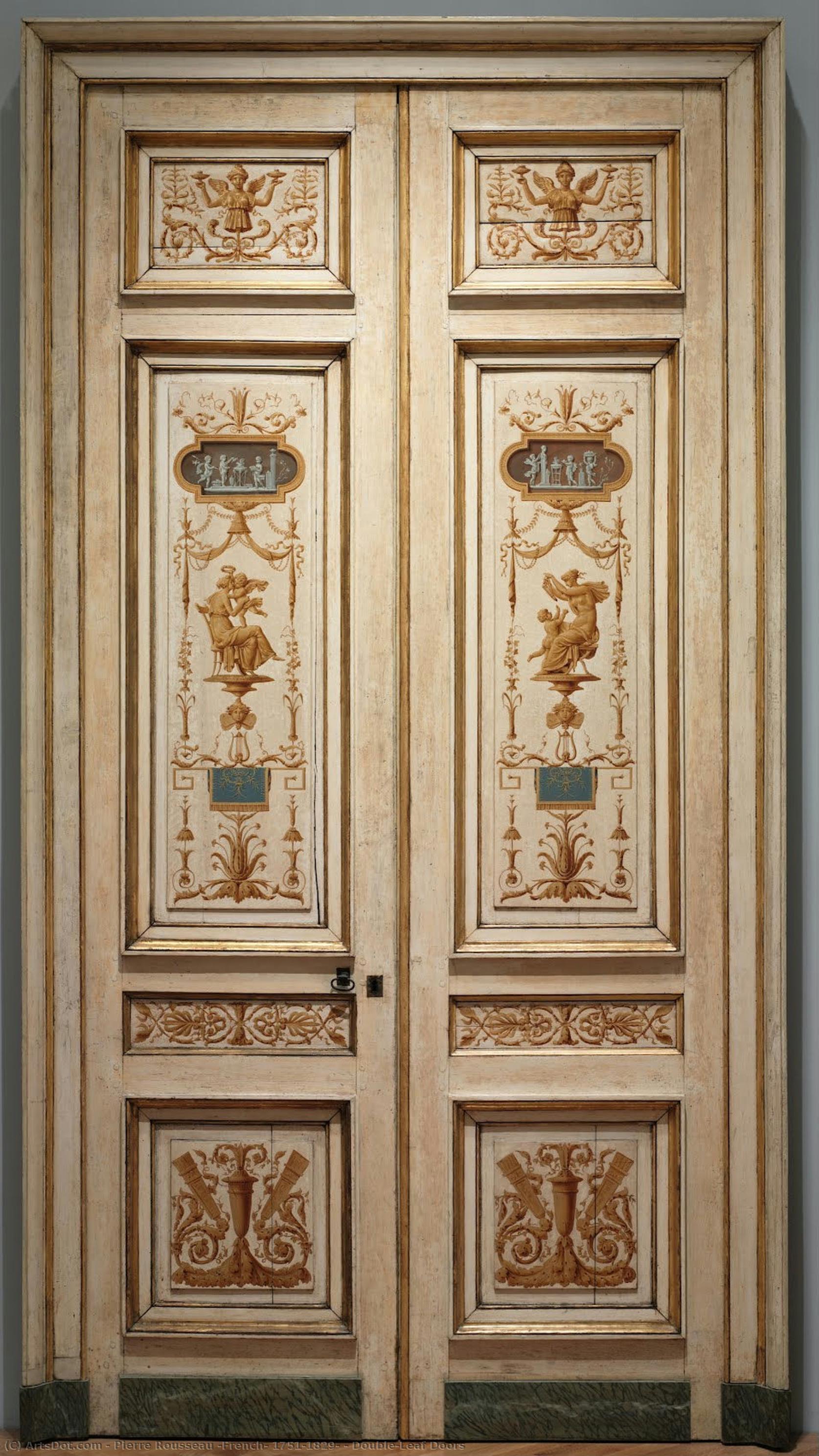
Shifts in style and taste often result in changes to original architectural details. Rousseau painted these doors with imitation dark wood grain. Another craftsman later scraped off the dark color surrounding the classical designs. This set was conserved in 1979 and retains more traces of the original graining than the other doors by this artist in the museum's collection.
Pierre Rousseau
Double
Explore Pierre Rousseau (1751-1829), a French Neoclassical artist known for his architectural designs & sobriety in art. Discover his masterpieces like 'Double-Leaf Doors'.
Explore the Cleveland Museum of Art's diverse collection spanning continents & eras! Free admission, stunning architecture, and engaging exhibits await – a cultural gem in University Circle.
Double-Leaf Doors: A Testament to Neoclassical Elegance
The painting “Double-Leaf Doors” by Pierre Rousseau (1751-1829), created in Nantes, France, circa 1790, stands as a remarkable example of neoclassical architecture and artistic craftsmanship. Currently housed at the Cleveland Museum of Art, this monumental piece—measuring 287 x 154 cm—captures not merely physical form but embodies the intellectual fervor of its era. Rousseau’s meticulous attention to detail elevates it beyond a simple depiction of doors; it's an exploration of timeless beauty rooted in classical ideals.
A Style Defined by Restraint and Proportion
Rousseau’s artistic style firmly aligns with the neoclassical movement, which reacted against the opulent excesses of the Baroque and Rococo periods. Unlike those styles characterized by flamboyant ornamentation and dramatic curves, neoclassicism championed simplicity, geometric precision, and harmonious proportions—drawing inspiration directly from ancient Greece and Rome. Rousseau skillfully achieves this aesthetic through a deliberate use of straight lines and forms like the pediment and colonnade, reflecting the belief in reason and order prevalent during the Enlightenment. The artist’s choice of wood as his medium underscores this commitment to fundamental materials and enduring design principles.
Technique and Material Considerations
The painting itself showcases Rousseau's mastery of technique. He employed a wood panel as his canvas, utilizing meticulous carving to reproduce the intricate patterns found on the doors themselves. Furthermore, the incorporation of gold leaf accents—a hallmark of aristocratic taste—adds an element of luxurious brilliance without overwhelming the overall composition. The artist’s painstaking application of gold leaf highlights not only its visual appeal but also its symbolic significance: representing divinity and conveying prestige – a deliberate nod to classical iconography. Careful observation reveals subtle variations in graining, hinting at the original craftsmanship and demonstrating Rousseau's dedication to capturing the essence of his subject matter.
Historical Context and Artistic Legacy
“Double-Leaf Doors” was conceived during a pivotal moment in French history—the reign of Louis XVI—a period marked by intellectual curiosity and artistic experimentation. The neoclassical style gained prominence as artists sought to revive the grandeur and moral virtues associated with antiquity, rejecting the perceived decadence of previous styles. Rousseau’s work exemplifies this trend, contributing significantly to the architectural landscape of Paris and establishing a lasting legacy for French design. As evidenced by its conservation in 1979—where traces of original graining remain—the painting continues to inspire admiration for its artistic integrity and timeless appeal.
Emotional Resonance: Beauty Beyond Decoration
Ultimately, “Double-Leaf Doors” transcends mere decorative artistry; it communicates a profound appreciation for beauty rooted in rational harmony. Rousseau’s depiction invites contemplation on the enduring power of classical forms to elevate the human spirit—a sentiment that resonates powerfully with viewers today. Its understated elegance speaks volumes about the artist's belief that true artistic excellence lies not in ostentation but in conveying fundamental truths about proportion, balance, and aesthetic refinement.