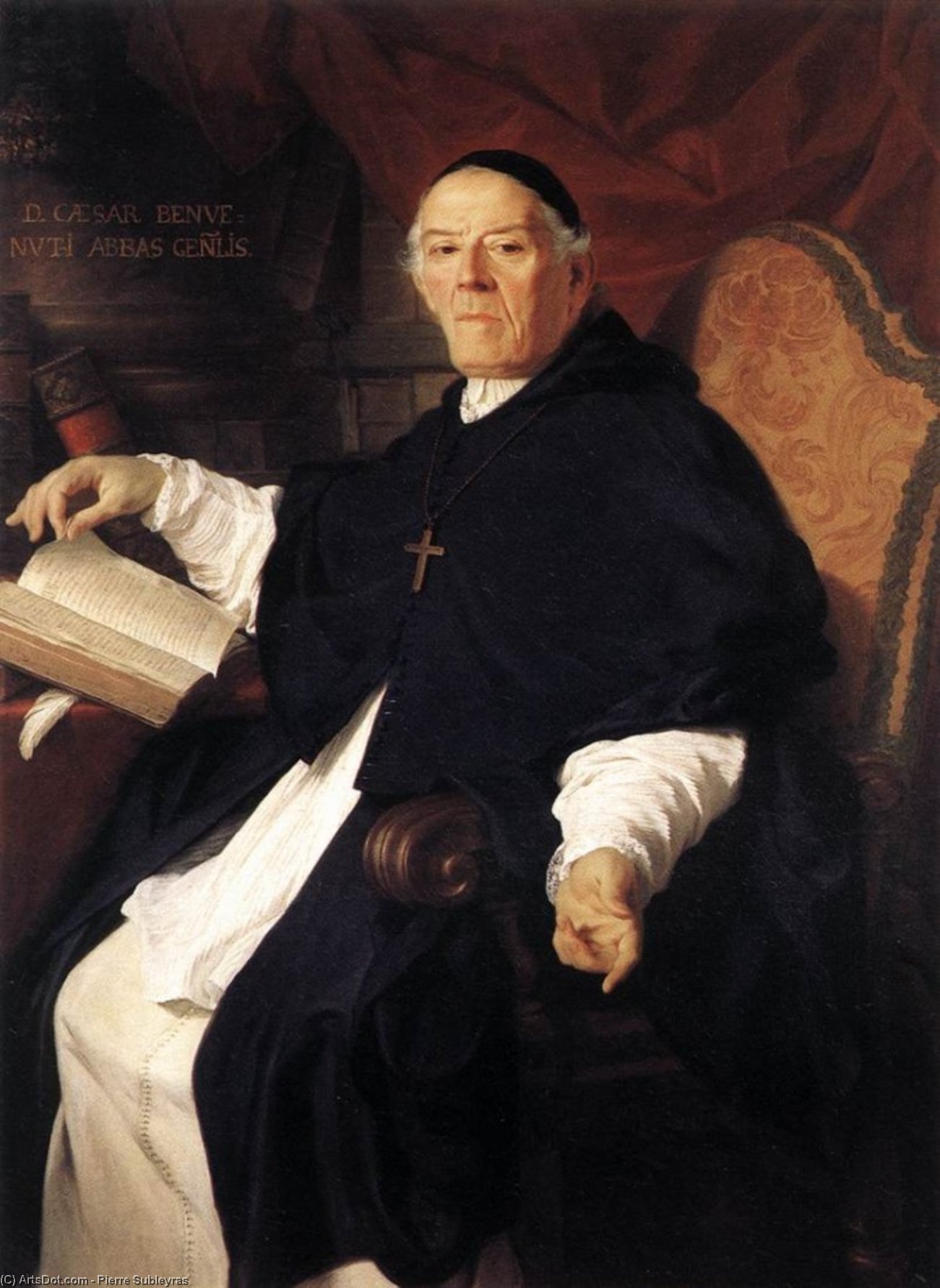
Don Cesare Benvenuti by Pierre Subleyras: A Portrait of Quiet Reflection
Pierre Hubert Subleyras’s “Don Cesare Benvenuti,” completed in 1742, stands as a testament to the burgeoning Neoclassical style emerging from Rome during the mid-18th century. Now housed within the Musée du Louvre, this oil on canvas masterpiece captures not merely likeness but an essence of contemplative dignity—a hallmark of Subleyras’s oeuvre and a captivating glimpse into aristocratic life.
The Artist's Vision: Pierre Subleyras (1699-1749) ascended to prominence thanks to the prestigious Prix de Rome, securing him invaluable access to artistic training and fostering his distinctive style. He swiftly established himself within Rome’s vibrant art scene, becoming a member of Accademia di San Luca and earning patronage from influential figures like Frederick Christian Saxe, elector of Saxony.
A Detailed Examination: The painting depicts Don Cesare Benvenuti, a clergyman distinguished by his serene countenance and scholarly pursuits. He sits upright in a chair, illuminated by soft light emanating from the left side—a compositional choice that lends an intimacy to the scene and directs the viewer’s gaze towards the subject's inner world.
Technical Mastery: Subleyras’s meticulous attention to detail is evident throughout “Don Cesare Benvenuti.” The artist skillfully employs chiaroscuro – dramatic contrasts between light and shadow – to sculpt the figure’s form, emphasizing musculature and conveying a palpable sense of stillness. Notice the subtle folds in his robe, rendered with painstaking accuracy, mirroring the prevailing stylistic trends of the period.
Symbolism and Context: The pectoral cross adorning Benvenuti's neck symbolizes religious authority and piety—a common motif in portraits commissioned by ecclesiastical patrons during this era. Furthermore, the Latin texts visible on the wall behind him subtly reinforce the painting’s intellectual atmosphere, reflecting the Enlightenment’s emphasis on reason and erudition.
Emotional Resonance: “Don Cesare Benvenuti” transcends mere representation; it evokes a feeling of quiet contemplation—a profound reflection on faith and intellect. The artist's ability to capture this intangible quality elevates the portrait beyond a simple likeness, transforming it into an enduring symbol of aristocratic dignity and intellectual serenity.
Further Exploration: For deeper insights into Pierre Subleyras’s artistic journey and his contribution to Neoclassical art, visit Wikipedia. You can also discover more about the artist's life and style on Wikidata.
To immerse yourself in the Musée du Louvre’s impressive collection of artworks, explore Discovering the Artworks of Kendal Museum, United Kingdom.