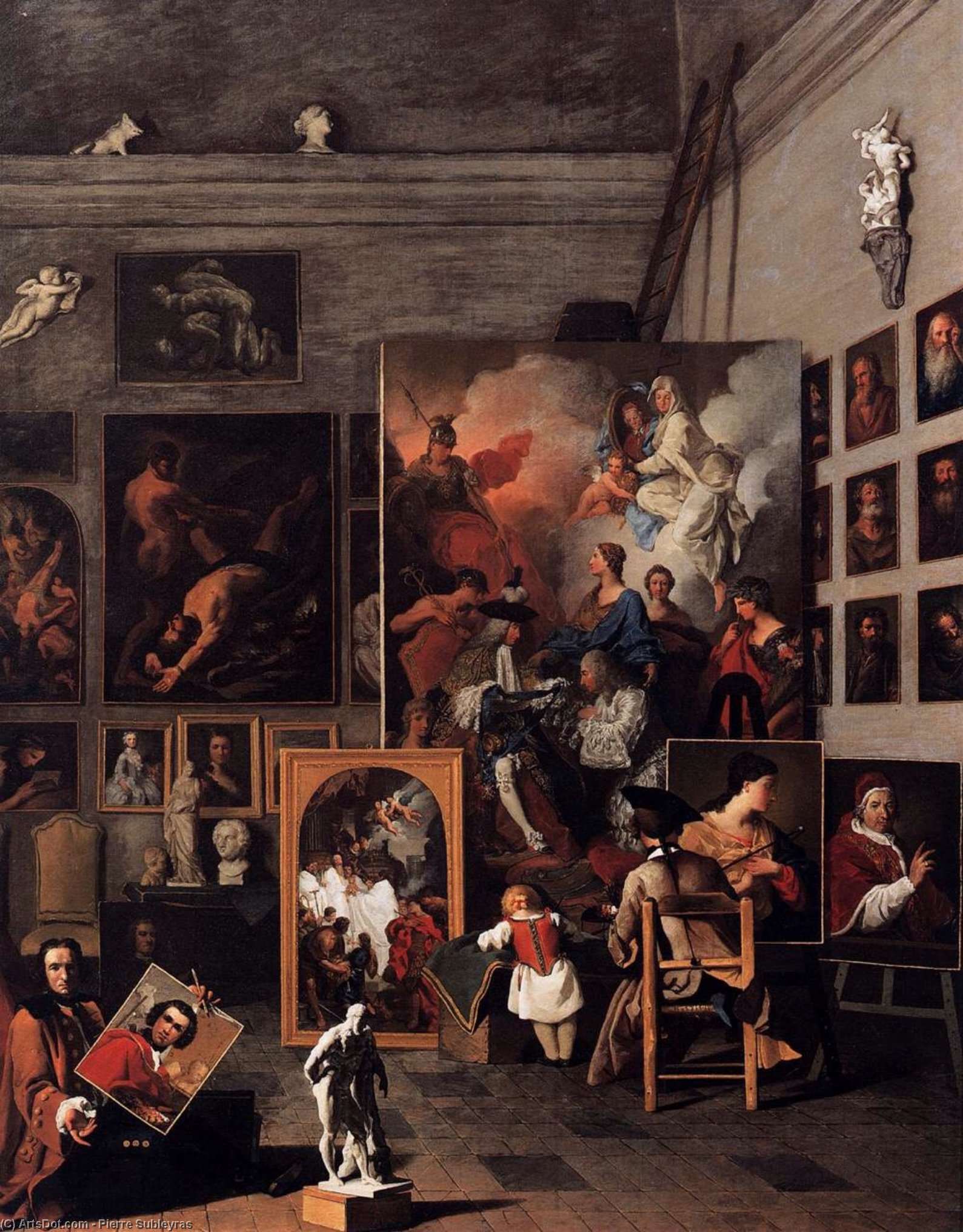
Pierre Subleyras (1699-1749) was a French painter renowned for his late-Baroque & early Neoclassical religious scenes, portraits, and genre works in Rome. Discover his masterful compositions & incisive style!
Explore the Akademie der bildenden Künste Wien, Austria’s prestigious art school since 1688! Discover masterpieces by Rubens & Bosch, delve into art history and witness inspiring contemporary exhibitions.
A Window Into Artistic Patronage and Roman Influence
The painting “The Studio of the Painter,” attributed to Pierre Subleyras (1699 – 1749), offers more than just a visual depiction of an artist’s workspace; it's a meticulously crafted tableau that encapsulates the spirit of Baroque art transitioning into the nascent influences of Neoclassicism. Executed in 1746, this impressive canvas measures 125 x 99 cm and resides within a museum or gallery setting—a deliberate choice reflecting the artistic sensibilities of its time. The scene unfolds with remarkable detail, capturing a room brimming with artworks – canvases stacked against walls adorned with sculptures and framed prints – creating an immersive experience for the viewer.
- Subject Matter: The composition centers around a painter’s studio, showcasing not only his creative endeavors but also the broader artistic environment of the era. It's a space dedicated to contemplation and creation, populated by objects that speak volumes about intellectual curiosity and aesthetic appreciation.
- Style: Subleyras skillfully blends Baroque grandeur with emerging neoclassical elements. The opulent drapery, rich colors, and dramatic lighting characteristic of Baroque painting coexist harmoniously with the simplified forms and restrained palette favored by Neoclassical artists. This duality underscores the artistic dialogues occurring during the period.
- Technique: Subleyras employed oil paint on canvas—a technique prevalent throughout Europe at the time—allowing for nuanced tonal gradations and luminous effects that heighten the sense of realism. Careful attention to detail is evident in the rendering of textures, from the smooth surface of polished marble statues to the folds of fabric draped across furniture.
Historical Context: The Prix de Rome and Artistic Reform
The painting’s significance extends beyond its aesthetic qualities; it's inextricably linked to the Prix de Rome—a prestigious scholarship established by the French Academy in 1728. Subleyras secured this prize, propelling him to Rome where he immersed himself in the artistic traditions of antiquity. This journey coincided with a broader movement toward artistic reform, driven by Enlightenment ideals and a renewed fascination with classical art forms. Artists like Subleyras sought inspiration from Greek and Roman sculptures and architectural designs, striving for clarity, balance, and idealized beauty—values that would define Neoclassical aesthetics.
Symbolism: Objects of Reflection and Artistic Inspiration
Each element within “The Studio of the Painter” carries symbolic weight. The numerous paintings adorning the walls represent the artist’s intellectual pursuits and his engagement with artistic history. Statues—particularly those depicting mythological figures—symbolize moral virtue and intellectual contemplation, mirroring the humanist values championed by the Enlightenment. Furthermore, the inclusion of a dining table suggests a connection to scholarly discourse and convivial gatherings – spaces where ideas were exchanged and artistic sensibilities nurtured.
Emotional Impact: Capturing the Essence of Artistic Genius
Ultimately, Subleyras’s masterpiece succeeds in conveying an atmosphere of serene intellectualism and creative fervor. The subdued lighting casts gentle shadows across the room, fostering a contemplative mood that invites viewers to appreciate the beauty and complexity of artistic endeavor. “The Studio of the Painter” serves as a poignant reminder of the transformative power of art—its ability to inspire reflection, stimulate imagination, and capture the very essence of human intellect.