Composition III with Blue, Yellow and White – A Symphony of Geometric Harmony
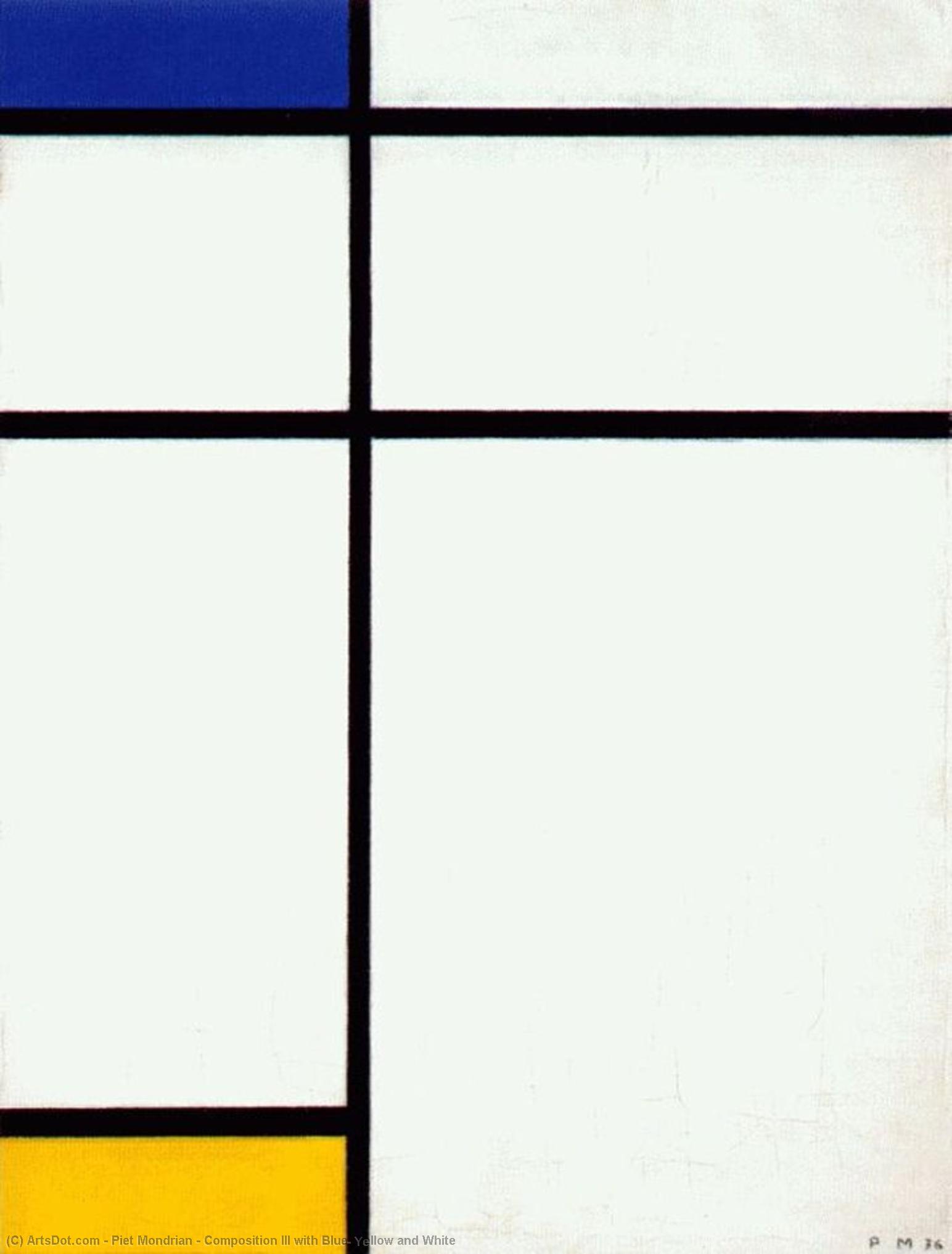
Piet Mondrian’s “Composition III with Blue, Yellow and White,” created in 1936, stands as a monumental achievement within the Neoplasticism movement—a bold declaration of simplicity, universality, and visual balance. Measuring 43 x 33 cm, this oil on canvas work transcends mere pigment; it embodies an intellectual framework rooted in Dutch De Stijl philosophy.
Neoplasticism: The Essence of Reduction
Born Pieter Cornelis Mondriaan in 1872, in Amersfoort, Netherlands, Mondrian’s artistic journey began with landscapes steeped in Impressionistic influences—pieces like *The Red Mill* demonstrating a meticulous study of nature. Yet, even early explorations hinted at a deeper desire: to distill the visual world into its purest form. Theo van Doesburg founded De Stijl in 1917, articulating this ambition – prioritizing geometric abstraction and universality through horizontal and vertical lines combined with primary colors.
A Visual Dialogue: Composition III
“Composition III” exemplifies this reductive approach brilliantly. The canvas is divided into nine equally sized rectangles—three horizontally and three vertically—each filled with shades of blue, yellow, and white. These squares aren’t merely colored; they are meticulously positioned to create a dynamic equilibrium that captivates the eye. The lower section introduces subtle variations – interspersed yellow squares punctuating the dominant blues and whites – enhancing the overall visual rhythm.
Influences Beyond Geometry
Mondrian’s vision wasn't solely derived from geometric abstraction. He drew inspiration from Cubism, recognizing its fragmentation of form as a crucial step toward unlocking new perspectives. However, Mondrian forged his own path—rejecting representational imagery altogether and focusing instead on exploring the fundamental relationships between line, shape, and color. This unwavering commitment to pure abstraction solidified his position as one of the pioneers of modern art.
Legacy: Shaping Modern Aesthetics
Mondrian’s influence extends far beyond the canvas itself. His uncompromising aesthetic championed by De Stijl profoundly impacted subsequent generations of artists and designers, shaping the visual language of architecture, graphic design, and furniture—a testament to his enduring legacy.