Discover Piet Mondrian (1872-1944), pioneer of abstract art & De Stijl. Explore Neoplasticism, geometric paintings, and his lasting impact on modern design.
Explore SFMOMA's iconic modern & contemporary art collection – featuring Matisse, Picasso, Warhol & more! Discover groundbreaking exhibitions and architectural marvels in San Francisco’s SoMa district.
A Geometric Harmony: Exploring Piet Mondrian’s Composition (no. III) blanc-jaune
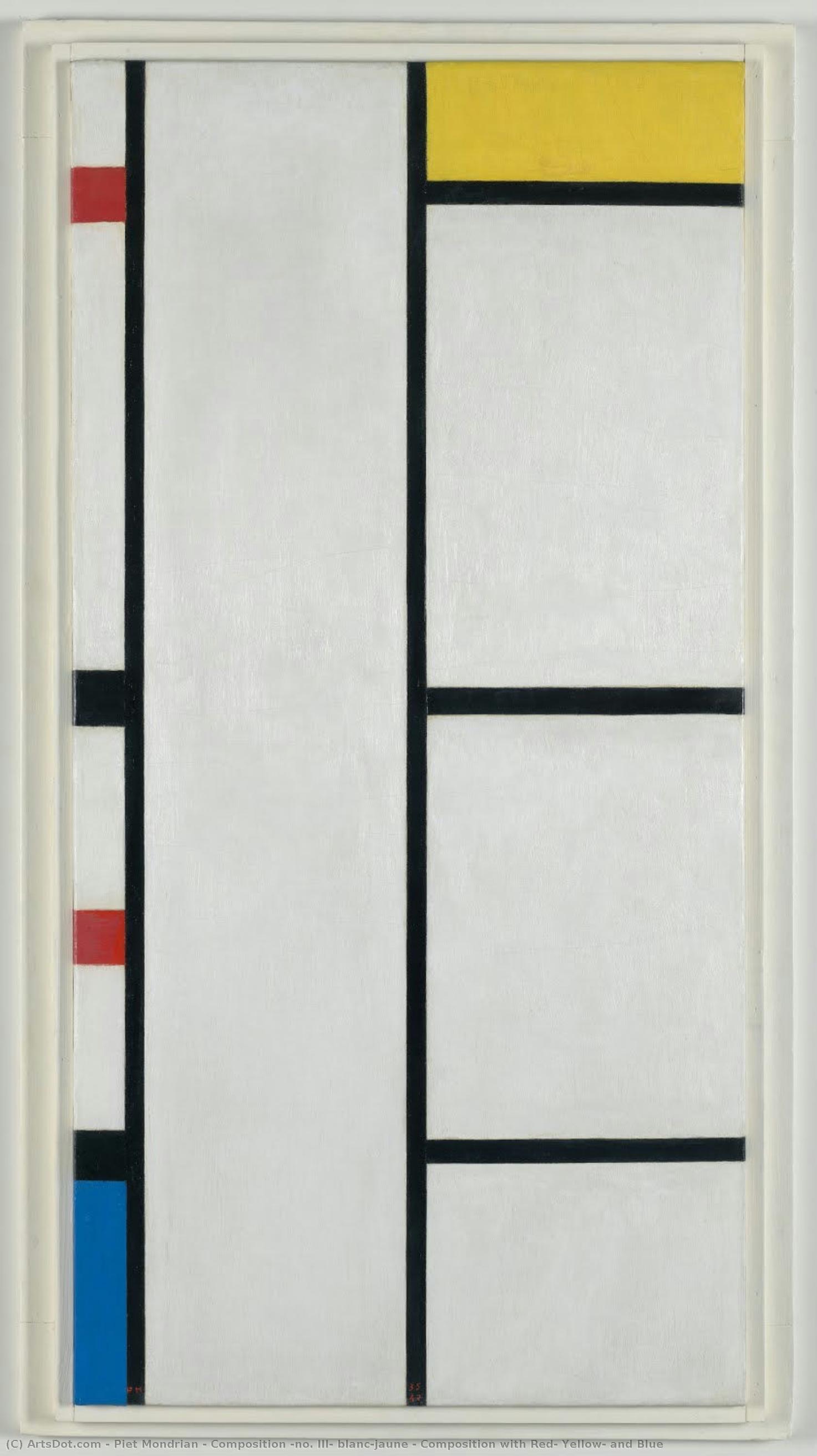
The painting *Composition with Red, Yellow, and Blue*, created in 1942 during the tumultuous years of World War II, stands as a testament to Piet Mondrian's unwavering pursuit of pure abstraction – a radical departure from representational art that nonetheless retains an astonishing sense of balance and serenity. Captured in a striking black and white photograph, this artwork embodies the core tenets of De Stijl movement, reflecting Mondrian’s profound belief in simplifying visual language to its fundamental elements: straight lines and squares of primary colors—red, yellow, and blue.
- Subject Matter & Composition: Unlike landscapes or portraits that strive to depict observable reality, *Composition (no. III)* abandons any illusionistic depiction altogether. Instead, it presents a meticulously crafted grid structure dominated by large squares of color. The placement of these squares—yellow on the left and blue on the right—creates an asymmetrical balance that is deceptively simple yet remarkably effective.
- Style & Technique: Mondrian’s approach aligns perfectly with De Stijl's philosophy, which sought to liberate art from subjective emotion and psychological expression. He achieved this goal through a rigorously controlled technique – applying thin layers of oil paint onto primed canvas—resulting in surfaces that appear almost matte and devoid of texture. This deliberate restraint underscores the painting’s focus on geometric forms and their harmonious relationships.
The historical context surrounding *Composition (no. III)* is crucial to understanding its significance. Produced during the Second World War, a period marked by immense upheaval and fear, Mondrian's artwork represents an act of defiance against chaos—a conscious effort to impose order onto a world consumed by conflict. The stark monochrome palette amplifies this effect, stripping away distracting hues and emphasizing the purity of form.
Symbolism & Emotional Impact: For Mondrian, these geometric shapes weren’t merely decorative elements; they possessed symbolic weight. Red, yellow, and blue were considered fundamental colors representing spiritual energy—a quest for universal harmony and transcendence. The grid itself symbolizes rationality and structure, mirroring the artist's belief in a universe governed by mathematical principles. Viewing *Composition (no. III)* evokes feelings of calm contemplation and intellectual stimulation – inviting viewers to appreciate the beauty inherent in simplicity and the power of geometric abstraction to convey profound ideas.
- Interior Design Considerations: The painting’s minimalist aesthetic lends itself beautifully to contemporary interior design, serving as a striking focal point against neutral backgrounds or complementing other geometric patterns.
- Collector's Appeal: Its enduring influence on modern art ensures that *Composition (no. III)* remains highly sought after by collectors who appreciate Mondrian’s pioneering contribution to abstraction and his unwavering commitment to artistic integrity.
Ultimately, *Composition with Red, Yellow, and Blue* transcends its formal elements to communicate a deeper message about human aspiration—a yearning for order, balance, and spiritual enlightenment. It stands as an enduring emblem of De Stijl’s vision and Mondrian's legacy as one of the most influential artists of the 20th century.