A Glimpse Behind the Precision: Piet Mondrian’s “Composition with Double Lines and Yellow (unfinished)”
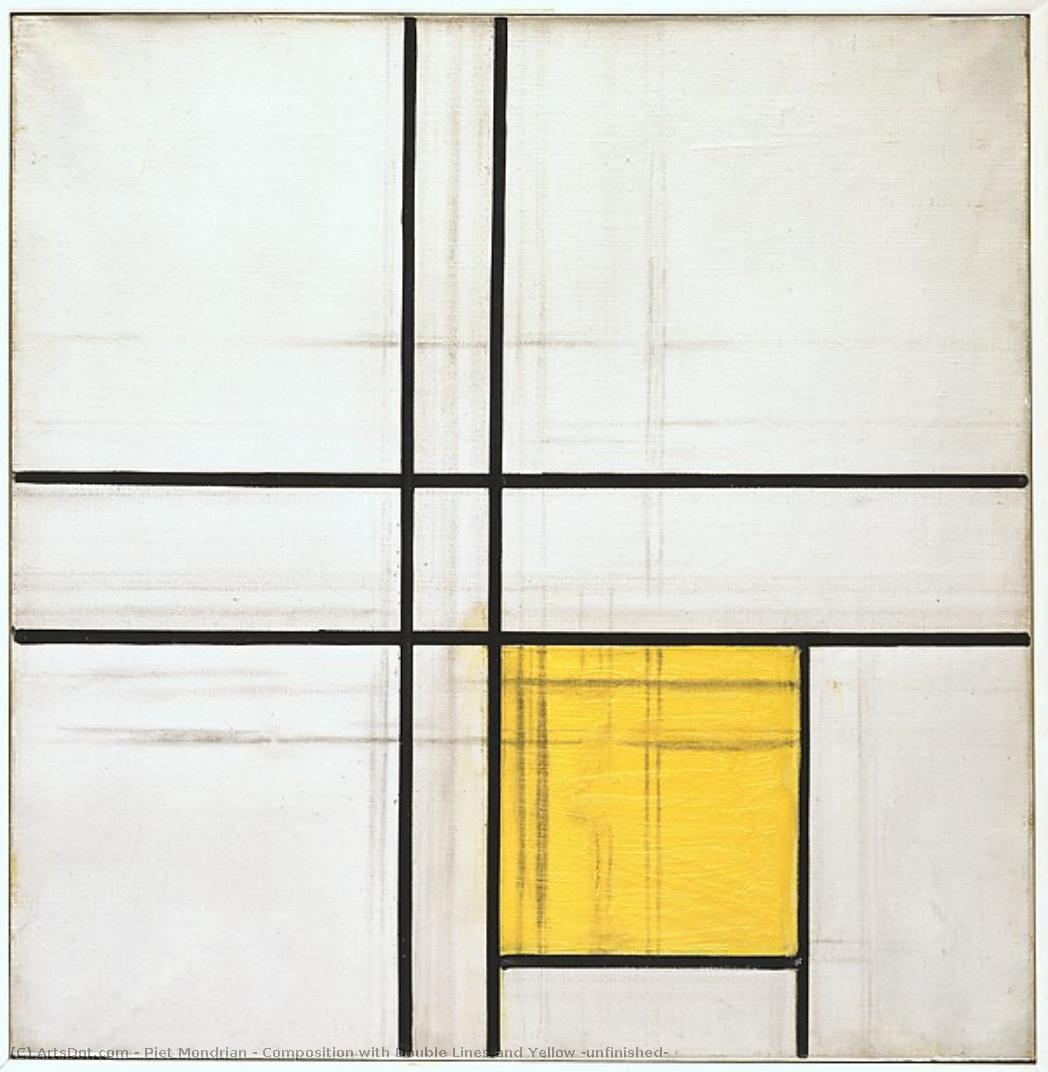
Piet Mondrian's "Composition with Double Lines and Yellow (unfinished)" offers an extraordinary window into the creative process of one of 20th-century art’s most influential figures. More than just a finished painting, this work—measuring 86 x 87 cm and created in 1934—is a testament to Mondrian's relentless pursuit of equilibrium through geometric abstraction. It’s a tangible record of experimentation, revealing the layers of charcoal lines, preliminary sketches, and even a hesitant square of yellow paint that ultimately coalesced into his signature Neoplastic style. The canvas isn’t merely a depiction; it’s an artifact of artistic exploration, inviting us to witness the evolution of an idea.
Mondrian's ambition wasn’t simply to represent the world but to distill its essence—to capture universal harmony through the rigorous application of pure form. This pursuit led him away from naturalistic landscapes and towards a radically simplified vocabulary: straight lines, primary colors (red, blue, yellow), and their non-colors – black, white, and gray. His early work, reminiscent of the Hague School’s evocative depictions of Dutch countryside, hinted at this desire for simplification, but it was in the 1930s that he truly embraced Neoplasticism, believing it held the key to a new kind of spiritual art. This particular piece exemplifies that journey – a deliberate step away from complete finality towards a dynamic exploration of form and color.
The Process Unveiled: Trial, Error, and the Beauty of Imperfection
Unlike many of Mondrian’s later works, renowned for their flawless precision, “Composition with Double Lines and Yellow (unfinished)” bears the visible marks of his creative process. Shifting charcoal lines, some overlapping the yellow rectangle, reveal a deliberate act of experimentation. The artist wasn't striving for immediate perfection; instead, he was actively testing arrangements, exploring spatial relationships, and allowing himself to deviate from his established rules. Letters from Mondrian during this period—particularly those penned in early 1935—detail his struggle with illness, which significantly hampered his ability to complete paintings. This work, therefore, becomes a poignant reminder of the dedication required to realize his artistic vision, showcasing an artist fully engaged in the iterative nature of creation.
The presence of untouched areas of primed canvas further emphasizes this process. Mondrian’s meticulous layering technique—allowing each color layer to dry completely before applying the next—is evident in the subtle variations and textures visible on the surface. This deliberate slowness, a stark contrast to the perceived speed of his finished paintings, highlights the immense care he invested in achieving the desired balance and harmony. It's a fascinating glimpse into the artist’s studio, revealing that even the most iconic works are born from countless iterations and adjustments.
Decoding the Geometry: Lines, Color, and Symbolic Resonance
The composition itself is deceptively simple yet profoundly complex. The interplay of black lines—both single and double—creates a dynamic tension within the predominantly white space. These lines aren’t merely decorative; they are fundamental elements in Mondrian's system for achieving equilibrium. The placement of the yellow rectangle, a bold splash against the stark background, introduces an element of warmth and vibrancy, subtly challenging the dominance of the black and white. The use of overlapping lines creates depth and suggests movement, while the careful arrangement of squares evokes a sense of order and stability.
Mondrian’s philosophy extended beyond mere aesthetics; he believed that his art could express universal values and create a pathway to spiritual understanding. The geometric forms—particularly the square—represented a fundamental building block of reality, while the lines symbolized the dynamic forces that shaped the universe. The deliberate restriction of color to primary hues and non-colors was intended to eliminate distractions and allow viewers to focus on the essential relationships between form and space. “Composition with Double Lines and Yellow (unfinished)” is therefore not just a painting; it’s a visual meditation on order, harmony, and the search for universal truth.
A Reproduction Worthy of Display: Bringing Mondrian's Vision Home
ArtsDot offers meticulously hand-painted reproductions of “Composition with Double Lines and Yellow (unfinished),” capturing the essence of this pivotal work. Our skilled artists replicate Mondrian’s technique, faithfully recreating the subtle nuances of charcoal lines, the delicate layering of paint, and the overall textural quality of the original canvas. Whether you're an art enthusiast, a collector seeking to expand your collection, or simply someone looking for a striking piece of modern art to enhance your interior space, our reproduction provides an authentic representation of this iconic work.
Consider how Mondrian’s reductive style—the emphasis on essential lines and colors—can complement a variety of design aesthetics. The clean geometry and restrained palette create a timeless appeal, lending sophistication and serenity to any room. A ArtsDot reproduction allows you to bring the intellectual rigor and emotional depth of this masterpiece into your home, celebrating the enduring legacy of Piet Mondrian.