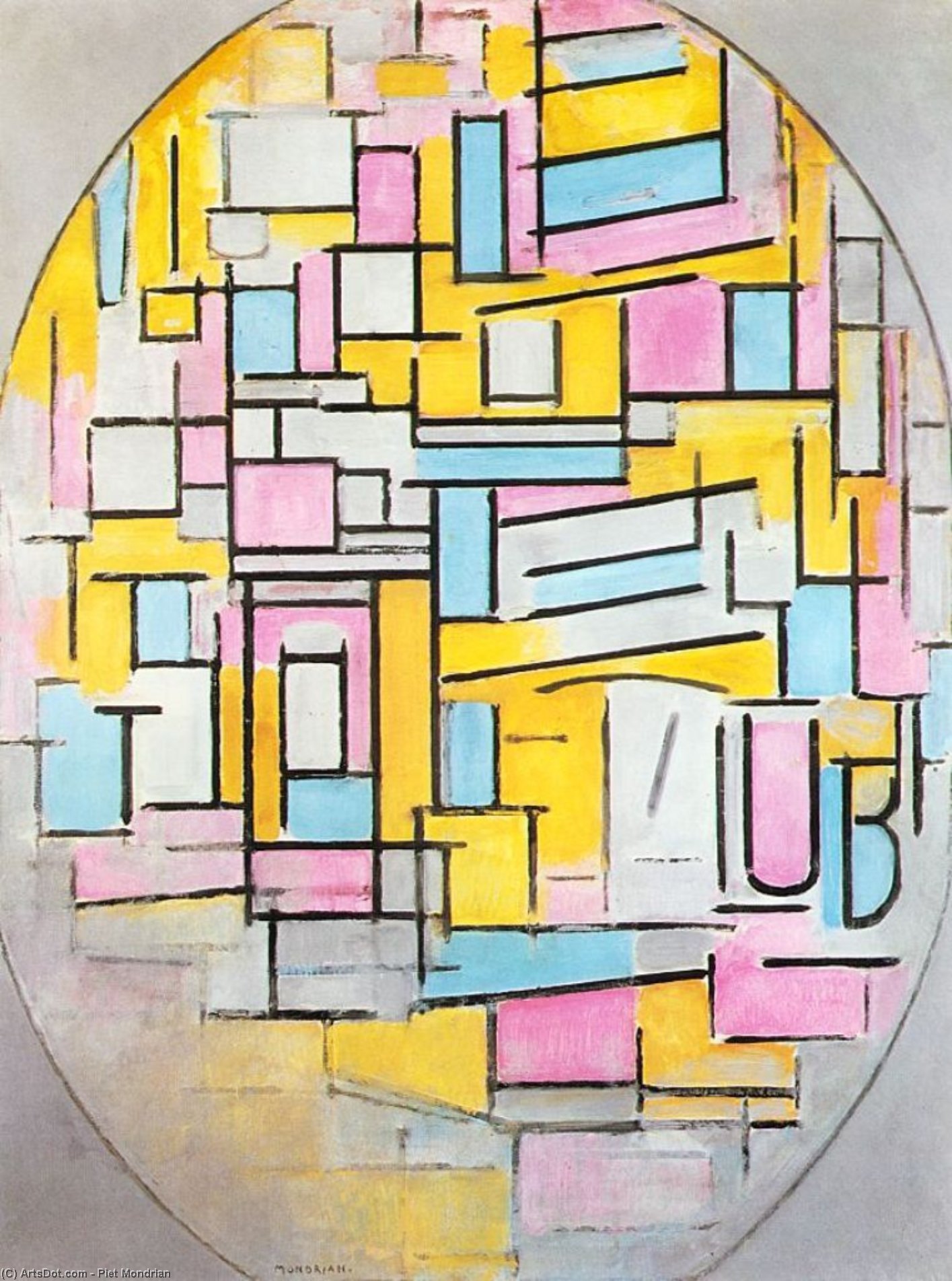
Composition with Oval in Color Planes II – A Pioneer of Geometric Abstraction
Piet Mondrian’s “Composition with Oval in Color Planes II,” painted in 1914, stands as a cornerstone of Neoplasticism—a movement that fundamentally reshaped the landscape of early twentieth-century art. More than just a visual spectacle, this artwork embodies Mondrian's relentless pursuit of pure form and color, reflecting his profound intellectual influences and signaling a decisive break from representational painting.
- Subject Matter: The canvas presents a deceptively simple arrangement—a central oval enveloped by horizontal and vertical lines rendered in shades of yellow, blue, and pink. This deliberate reduction aims to transcend the illusionistic qualities of traditional art, focusing instead on fundamental geometric shapes as conduits for conveying emotion and spiritual truth.
- Style: Mondrian’s style is unmistakably Cubist, albeit filtered through the lens of his evolving aesthetic sensibilities. Unlike Picasso's fractured perspectives, Mondrian prioritizes clarity and stability, striving to achieve a harmonious balance between opposing forces—horizontal and vertical—representing earth and sky respectively.
- Technique: Executed in oil on canvas, “Composition with Oval in Color Planes II” demonstrates Mondrian’s mastery of meticulous brushwork. Thin layers of pigment are applied with precision, creating subtle gradations of color that contribute to the painting's overall luminosity and depth. The artist’s unwavering commitment to flatness—a characteristic hallmark of Neoplasticism—is achieved through careful consideration of surface texture and tonal variation.
Historical Context: Created during a period of intense artistic experimentation, “Composition with Oval in Color Planes II” emerged from Mondrian's engagement with philosophical currents such as Theosophy and the pioneering work of Kazimir Malevich—particularly Malevich’s Suprematism. These thinkers championed radical simplification as a path toward spiritual enlightenment, influencing Mondrian’s conceptual framework and fueling his desire to express universal harmony through geometric abstraction.
Symbolism: The oval represents wholeness and unity, symbolizing the cosmos or divine presence—a concept central to Mondrian's metaphysical beliefs. The horizontal and vertical lines embody opposing forces—stability and dynamism—reflecting the interconnectedness of nature and spirituality. These elements coalesce into a visual language that transcends literal depiction, communicating profound ideas about order, balance, and transcendence.
Emotional Impact: Despite its austere appearance, “Composition with Oval in Color Planes II” possesses an undeniable emotional resonance. The harmonious interplay of color and form evokes feelings of serenity and contemplation—a testament to Mondrian’s conviction that art could serve as a vehicle for accessing higher consciousness. It invites viewers to engage in a dialogue with the artwork itself, prompting reflection on fundamental questions about existence and beauty.