A Beacon of Geometric Harmony: Exploring Piet Mondrian’s Lighthouse in Westkapelle
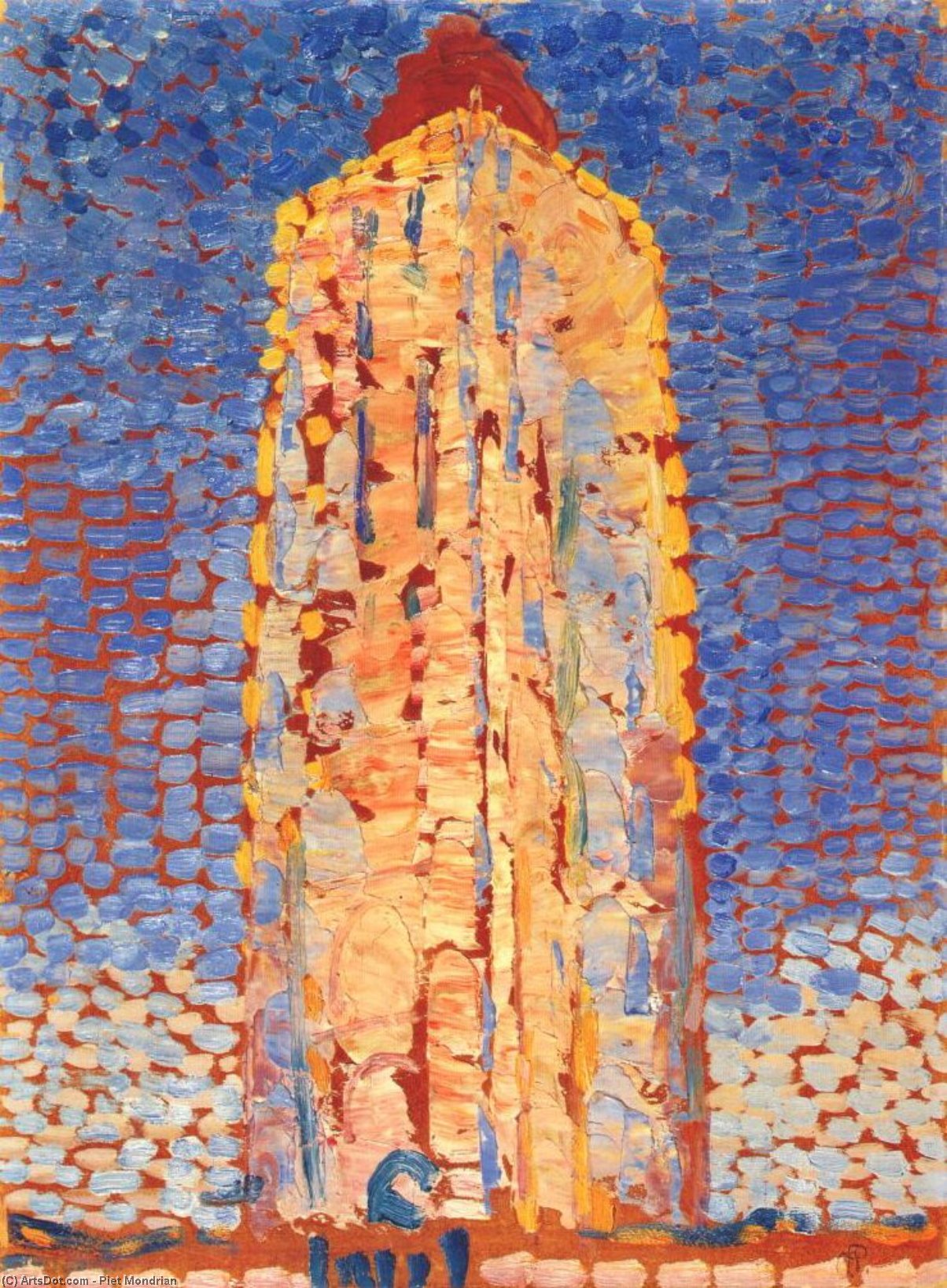
The painting *Lighthouse in Westkapelle*, created by Piet Mondrian in 1909, stands as a pivotal moment in the artist's evolving artistic journey—a testament to his relentless pursuit of abstraction and a captivating glimpse into the nascent stages of Neo-Plasticism. Initially drawn to landscape painting under the influence of Dutch Impressionism and the Hague School, Mondrian’s early works demonstrate a careful observation of nature alongside a burgeoning desire for simplification that would ultimately define his groundbreaking style. The photograph captures a vibrant blue and yellow mosaic depicting a lighthouse with a prominent red roof—a striking visual contrast that immediately draws the eye.
- Subject Matter: The painting focuses on an iconic maritime structure, the lighthouse of Westkapelle, located in Schleswig-Holstein, Germany. This choice wasn’t arbitrary; Mondrian sought to represent not just a physical object but also its fundamental qualities—stability and illumination—through geometric abstraction.
- Style: *Lighthouse in Westkapelle* firmly establishes Mondrian's stylistic trajectory toward Neo-Plasticism, which would solidify his reputation as one of the most influential artists of the 20th century. Unlike representational art, this piece abandons illusionistic depth and perspective, prioritizing flat planes of color arranged according to strict geometric principles.
Technique: Embracing Precision and Color Palette
Mondrian’s technique is characterized by meticulous precision—a hallmark of his approach throughout his career. He employed a mosaic technique, meticulously applying colored squares and rectangles onto the canvas. The dominant hues are bold blues and yellows, juxtaposed against a stark white background. This deliberate color scheme wasn't merely decorative; it was carefully considered to convey emotional resonance. Blue symbolizes tranquility and contemplation, while yellow embodies optimism and energy—elements Mondrian believed essential for achieving spiritual harmony.
- Mosaic Composition: The artist’s painstaking attention to detail is evident in the precise placement of each colored square, creating a harmonious balance that transcends mere visual appeal. This meticulous process reflects Mondrian's belief in the transformative power of geometric abstraction—a method he considered superior to traditional painting techniques.
- Material Considerations: The use of mosaic tiles contributes to the artwork’s textural quality, adding depth and dimension to the otherwise flat surface. It speaks to Mondrian’s desire to move beyond superficial appearances, delving into the underlying structure of visual experience.
Historical Context & Symbolism: A Response to Artistic Tradition
Created in 1909, *Lighthouse in Westkapelle* represents a decisive break from artistic conventions prevalent at the time. Mondrian’s contemporaries were largely preoccupied with Impressionism and Post-Impressionism—styles that prioritized capturing fleeting moments of sensory experience. However, Mondrian rejected these approaches, arguing that they failed to capture the essence of reality. Instead, he sought inspiration in Eastern philosophy and Islamic art—sources that emphasized geometric patterns and spiritual contemplation.
- Geometric Reduction: The lighthouse itself serves as a symbol of stability and enlightenment—concepts Mondrian believed crucial for achieving inner peace. By reducing the image to its fundamental geometric elements, he aimed to liberate it from the constraints of representational art and elevate it to a higher level of abstraction.
- Neo-Plasticist Roots: This artwork foreshadows the development of Neo-Plasticism—Mondrian’s revolutionary artistic movement that would emerge in the following decade. It embodies his unwavering conviction that art should strive for universal harmony and express spiritual truth through pure geometric forms.
Emotional Impact & Artistic Legacy
Ultimately, *Lighthouse in Westkapelle* transcends its subject matter to convey a profound emotional impact—a sense of calm contemplation amidst vibrant color. It invites viewers to consider the relationship between form and content, prompting them to question conventional notions of beauty and artistic expression. Mondrian’s pioneering work continues to inspire artists and designers today, demonstrating the enduring power of geometric abstraction to communicate complex ideas and evoke powerful emotions. Its meticulous execution and symbolic resonance solidify its place as a cornerstone of modern art history.