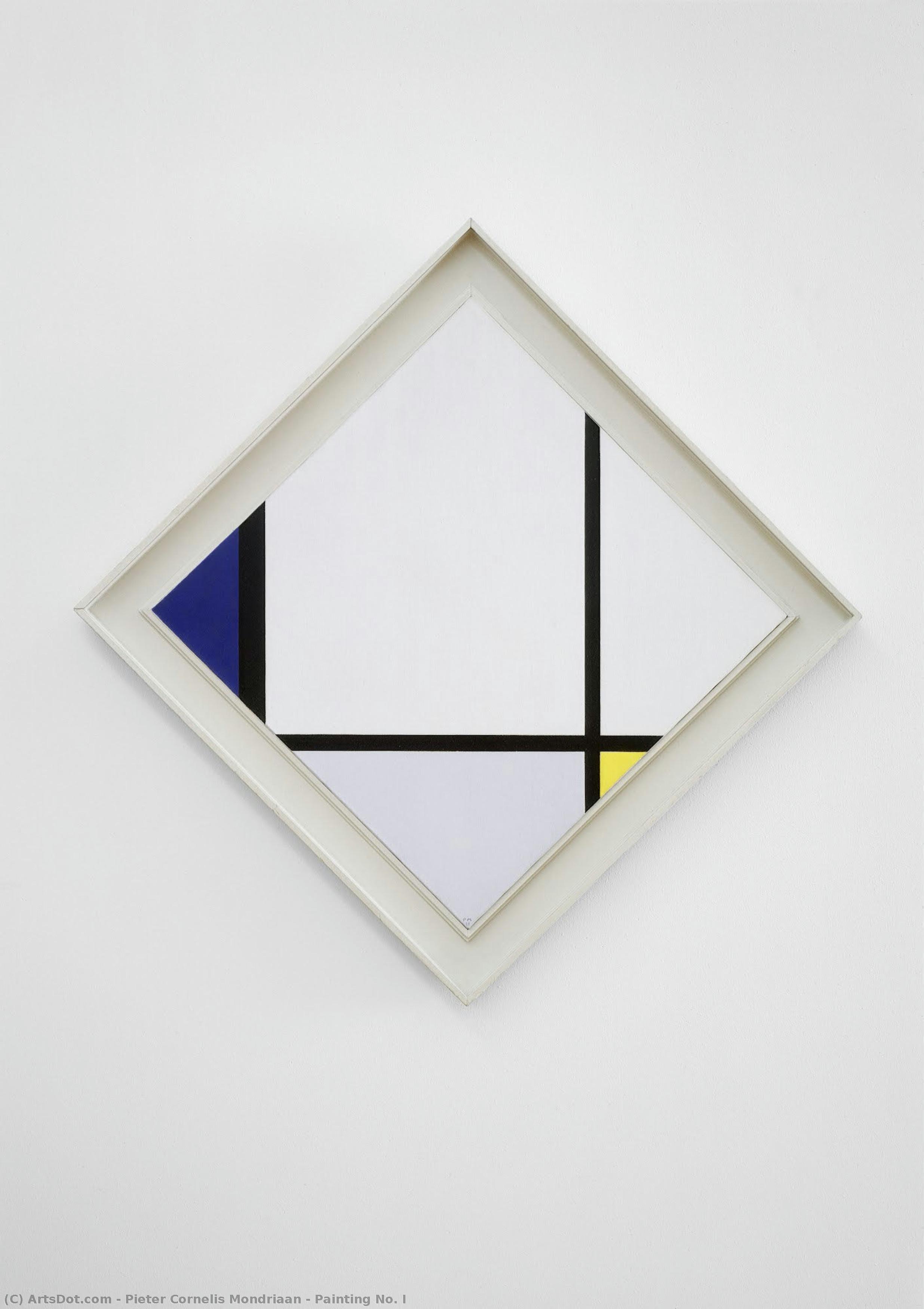
Experience the radical geometric harmony of Piet Mondrian's 1925 masterpiece Painting No. I, a cornerstone of De Stijl abstraction that invites you to bring timeless modern elegance into your personal art collection.
Discover Piet Mondrian (1872-1944), pioneer of abstract art & De Stijl. Explore Neoplasticism, geometric paintings, and his lasting impact on modern design.
Explore the Kunsthaus Zürich's diverse collection spanning centuries! From Monet to Giacometti & modern masterpieces, experience Swiss and international art in a stunning architectural setting.
A Pioneer of Geometric Abstraction: Exploring Mondrian’s “Painting No. I”
The artwork "Painting No. I" by Piet Mondriaan, created in 1925, stands as a cornerstone of modern art—a testament to the radical simplification championed by De Stijl movement and an embodiment of its core principles. More than just pigment on canvas; it’s a carefully constructed visual manifesto reflecting Mondrian's profound belief in universal harmony achieved through reductive geometric forms. Examining this iconic piece reveals layers of artistic intention, historical significance, and enduring emotional resonance.
The Essence of De Stijl: Form Follows Function
Born in Amersfoort in 1872, Piet Mondrian’s early artistic endeavors leaned toward traditional landscape painting, mirroring the stylistic influences of the Hague School and Impressionism – a grounding experience that would ultimately inform his groundbreaking approach. However, he quickly recognized the limitations of representing nature faithfully; instead, he sought to distill its fundamental essence into pure abstraction. This pursuit led him directly to De Stijl, a Dutch artistic movement founded in 1917 alongside Theo van Doesburg, which advocated for a complete break from representational art. The guiding philosophy was “Form Follows Function,” prioritizing geometric shapes—primarily rectangles and squares—and primary colors (red, blue, yellow)—along with black lines on a white background. Mondrian viewed this austere aesthetic as liberating, freeing artists from the constraints of illusionism and allowing them to express spiritual truths through pure visual language.
Decoding the Composition: Geometry and Color Harmony
“Painting No. I” exemplifies De Stijl’s meticulous execution. The artwork is dominated by a large central diamond shape filled with alternating bands of blue and black, encircled by four yellow squares positioned equidistant from each other. Thick black lines delineate these shapes, creating a grid-like structure that reinforces the overall balance and stability of the composition. This seemingly simple arrangement belies a complex consideration of color theory—specifically Grisaille, a technique emphasizing tonal variations to achieve visual harmony. Mondrian meticulously calibrated the hues and intensities of color to create an experience of equilibrium and contemplation. The smooth surface of the canvas contributes to this sense of serenity, reflecting Mondriaan’s desire for clarity and purity in artistic expression.
Symbolism Beyond Representation
While devoid of recognizable imagery, “Painting No. I” is laden with symbolic meaning rooted in Mondrian's spiritual convictions. He believed that geometric forms represented fundamental building blocks of the universe—the tetrahedron, cube, octahedron—and their harmonious arrangement mirrored the divine order. The white background symbolizes purity and transcendence, representing a blank canvas upon which to project spiritual contemplation. The black lines demarcate boundaries, signifying separation yet simultaneously uniting the disparate elements within the composition. By rejecting representational depiction, Mondrian aimed to bypass sensory distractions and connect directly with the viewer’s intellect—a deliberate strategy designed to evoke feelings of peace and contemplation.
A Legacy Enduring Inspiration
“Painting No. I” continues to captivate audiences today not merely as an aesthetically pleasing artwork but as a pivotal moment in art history. Its influence extends far beyond De Stijl, shaping subsequent movements like Bauhaus and Minimalism. Reproductions of this seminal piece offer collectors and interior designers alike the opportunity to experience Mondrian’s vision—a timeless exploration of geometric abstraction and its capacity to inspire profound emotional responses. It stands as an enduring reminder that beauty can reside in simplicity, and that art possesses the power to transcend mere visual perception into a realm of spiritual contemplation.