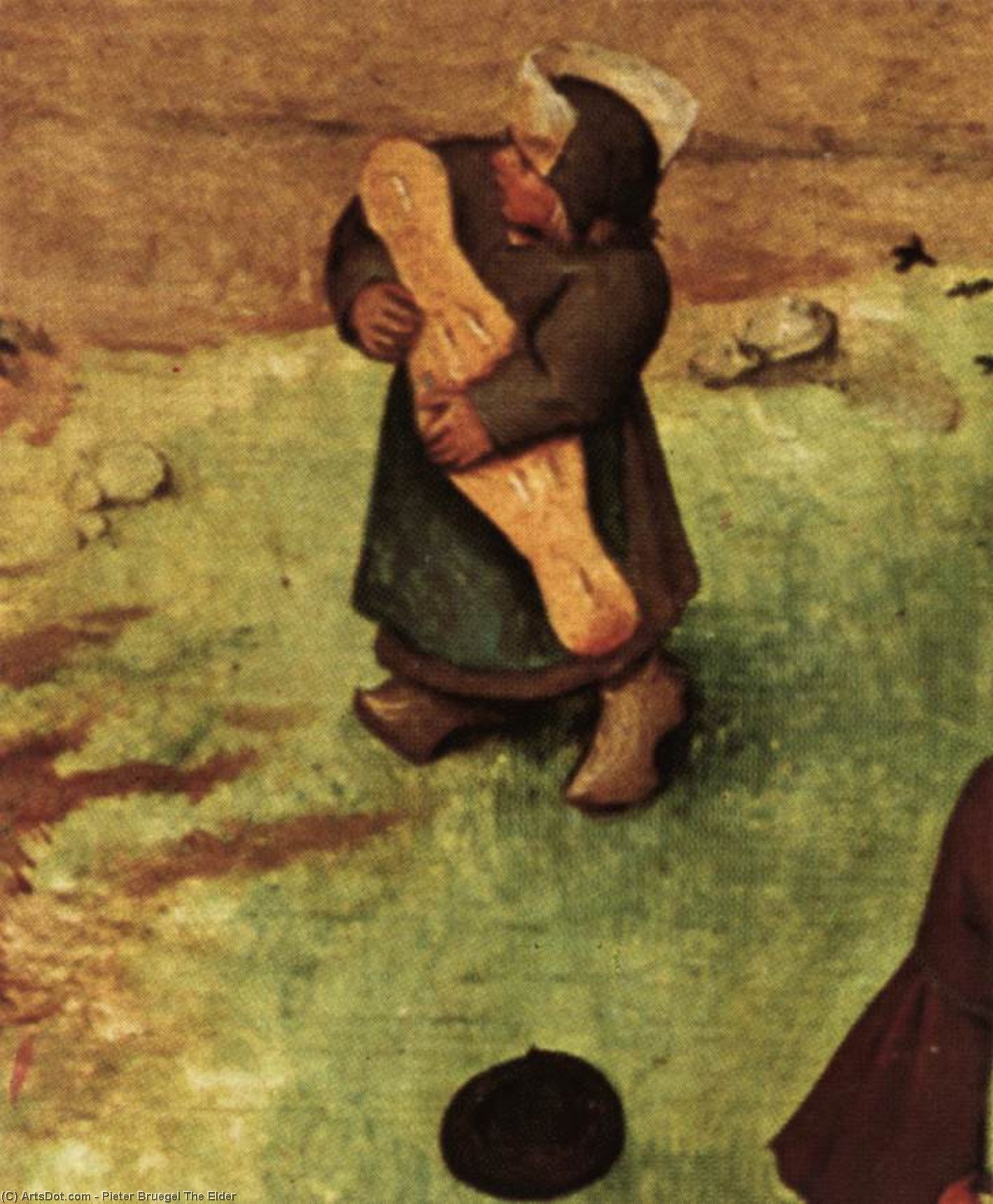
A Window into Renaissance Childhood: Analyzing Pieter Bruegel’s “Children’s Games” (detail)
Pieter Bruegel the Elder, a titan of Flemish Renaissance painting, stands apart from his contemporaries for daring to portray the everyday realities of peasant life and, crucially, the vibrant spirit of childhood. Among his most celebrated works is “Children’s Games,” painted in 1560 and now residing within the Kunsthistorisches Museum in Vienna—a canvas brimming with observation and imbued with a profound understanding of human experience.
This particular detail – “Children’s Games (detail) (12)” – offers an unparalleled glimpse into Bruegel's artistic vision. It captures not merely a scene of children playing, but rather a microcosm of Renaissance society itself. The panel depicts a lively square populated by approximately ninety distinct games enjoyed by youngsters during the era, reflecting Bruegel’s commitment to documenting the tangible world around him.
The Painting: Capturing Innocence and Observation
At first glance, the image presents a seemingly simple tableau: children engrossed in playful activities centered around a large loaf of bread. However, beneath this surface lies a masterful execution of technique—oil paint on panel—that exemplifies Bruegel’s innovative approach to composition. Notice the meticulous rendering of textures – from the rough bark of trees to the smooth surfaces of wooden toys – demonstrating Bruegel's dedication to realism.
- Composition: The artist employs a panoramic perspective, drawing the viewer into the bustling square and emphasizing the scale of the scene.
- Color Palette: Vibrant hues dominate the palette, conveying warmth and energy—a deliberate choice that underscores the joyous atmosphere of childhood.
- Detailing: Bruegel’s painstaking attention to detail is evident in every element of the composition, from the expressions on the children's faces to the intricate patterns woven into their clothing.
Artistic Significance and Context
Bruegel’s decision to depict peasant life—a departure from the prevailing artistic trends of his time—was revolutionary. Unlike many artists who focused on religious iconography, Bruegel turned his gaze outwards, documenting the social customs and traditions of ordinary people. “Children’s Games” serves as a testament to this humanist impulse, presenting a snapshot of daily life that speaks volumes about Renaissance values.
Furthermore, consider the broader historical context: The painting emerged during a period marked by religious upheaval—the Protestant Reformation—and burgeoning economic prosperity in Flanders. Bruegel’s depiction of communal play subtly reflects these societal shifts, highlighting the importance of social interaction and shared experience.
Symbolism and Emotional Resonance
The loaf of bread itself holds symbolic significance – representing sustenance, generosity, and perhaps even a commentary on economic realities. More profoundly, “Children’s Games” evokes a powerful emotional response—a nostalgic yearning for innocence, joy, and the carefree spirit of youth.
Bruegel's legacy extends far beyond his artistic achievements; he fundamentally altered the trajectory of Northern European painting, inspiring generations of artists to embrace realism and explore themes of everyday life. To delve deeper into Bruegel’s remarkable oeuvre, visit Pieter Bruegel The Elder: Children's Games (detail) (8) on ArtsDot for comprehensive biographical information and additional artworks.
For a richer understanding of the Kunsthistorisches Museum’s collection, explore The Hofmuseum Vienna, Austria on ArtsDot.