A Gathering of Souls: Unveiling Bruegel’s “The Sermon of St John the Baptist”
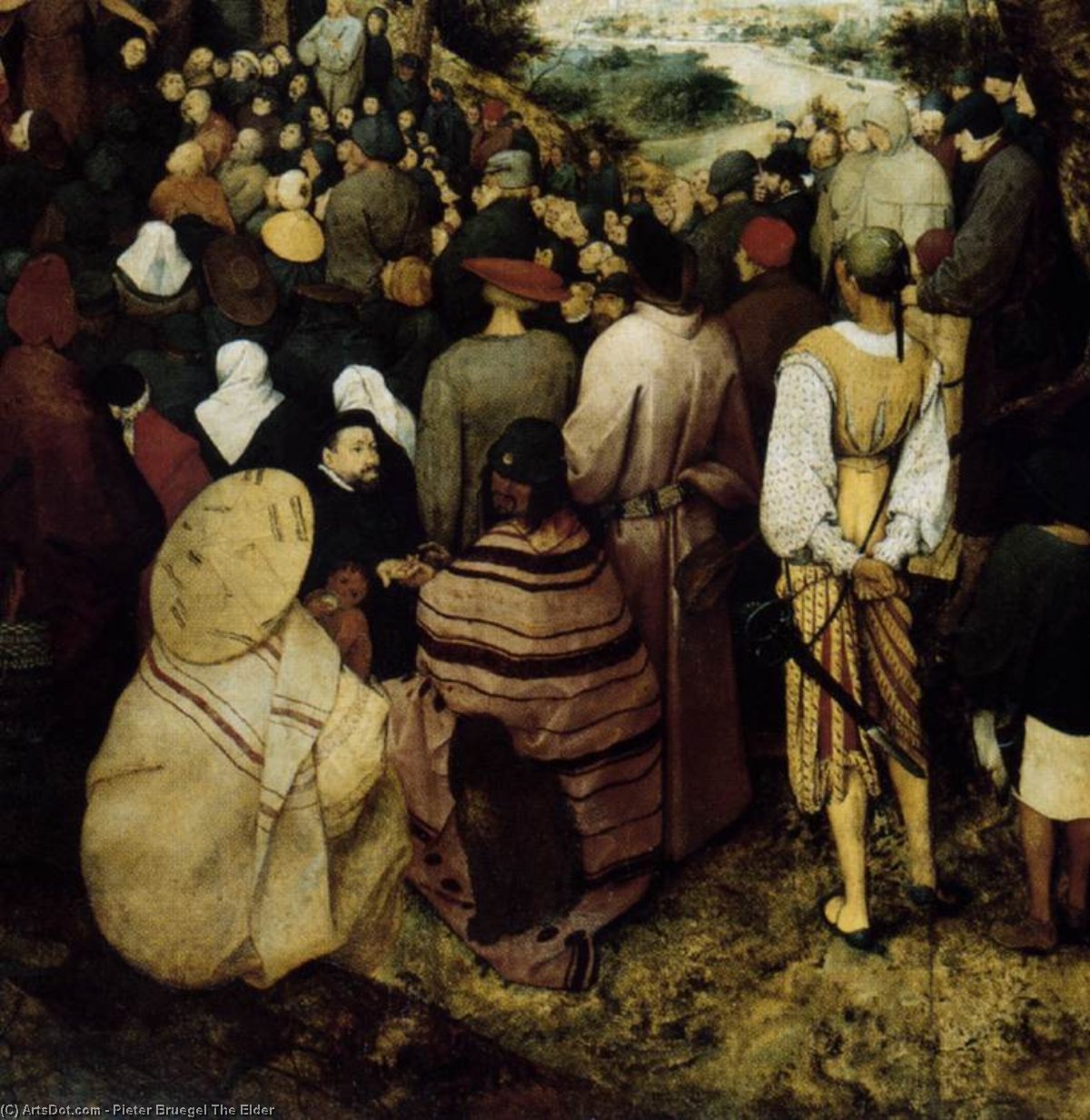
Pieter Bruegel the Elder's 1566 masterpiece, “The Sermon of St John the Baptist,” is far more than a simple depiction of a religious event; it’s a vibrant tapestry of 16th-century life, meticulously woven with social commentary and subtle symbolism. This painting, currently housed in the Museum of Fine Arts in Budapest, draws the viewer into a bustling crowd gathered to hear the prophetic words of John the Baptist. But Bruegel doesn't present a scene of pious reverence as one might expect. Instead, he offers an incredibly detailed panorama of humanity – a cross-section of society preoccupied with earthly concerns even amidst spiritual discourse. The sheer density of figures, each rendered with individual character and expression, is immediately striking. It’s not merely a crowd; it's a world in miniature, teeming with life, distraction, and the complexities of human nature.
A Renaissance Mirror to Society
To understand “The Sermon of St John the Baptist,” one must consider the turbulent historical context in which it was created. The Netherlands during Bruegel’s time were undergoing profound religious and political upheaval. Under Spanish rule, Protestant movements were suppressed, forcing gatherings like these – potentially representing clandestine Calvinist meetings – to occur somewhat surreptitiously. Some scholars believe that Bruegel subtly encoded a message of resistance within the painting, portraying the open gathering as a symbol of defiance against oppressive authority. The artist’s travels throughout Europe, particularly his time in Italy, profoundly influenced his artistic development. He absorbed Renaissance ideals but rejected idealized beauty in favor of raw realism and keen observation. Bruegel wasn't interested in glorifying religious figures; he was fascinated by the people themselves – their habits, their flaws, and their everyday existence. This focus on genre scenes, depicting ordinary life, was revolutionary for its time.
Decoding the Details: Symbolism and Technique
Bruegel’s masterful technique is evident in every brushstroke. He employs a high vantage point, allowing us to survey the entire scene with an almost godlike perspective. This panoramic view emphasizes the vastness of the crowd and the relative insignificance of any single individual. The composition is carefully structured, guiding our eye through layers of figures towards John the Baptist, who, notably, isn’t prominently displayed. He blends into the landscape, a humble figure amidst the throng. Look closely, and you'll discover a wealth of symbolic details: a purse dangling from a woman’s hand hinting at worldly possessions, swords suggesting potential violence or conflict, and figures engaged in fortune-telling, representing skepticism towards faith. The artist’s use of color is also significant; muted tones dominate the scene, reflecting the somber mood and the gravity of the message being preached. However, subtle splashes of brighter colors draw attention to specific details and characters, adding depth and complexity to the composition.
An Enduring Emotional Resonance
“The Sermon of St John the Baptist” continues to captivate viewers centuries after its creation because it speaks to universal truths about human nature. It’s a painting that invites contemplation – not just on the religious message, but on our own place within society and the distractions that prevent us from truly connecting with something greater than ourselves. The emotional impact is subtle yet profound; there's a sense of both hope and melancholy, reverence and skepticism. Bruegel doesn’t offer easy answers or moral judgments. Instead, he presents a complex and nuanced portrait of humanity in all its messy glory. A reproduction of this work brings not only artistic beauty into a space but also a powerful reminder of the enduring questions that have preoccupied humankind for generations.