Pieter Bruegel the Elder (c. 1525-1569): Renaissance master of landscapes & peasant life. Explore his detailed scenes, innovative chiaroscuro, and lasting influence on Dutch art. Discover iconic works!
The Frick Collection
(New York City, United States of America)
Discover art & architecture at The Frick Collection – a Gilded Age mansion showcasing masterpieces by Vermeer, Rembrandt & more. Explore European art in NYC's stunning setting.
A Study in Medieval Resilience: Pieter Bruegel’s “The Three Soldiers”
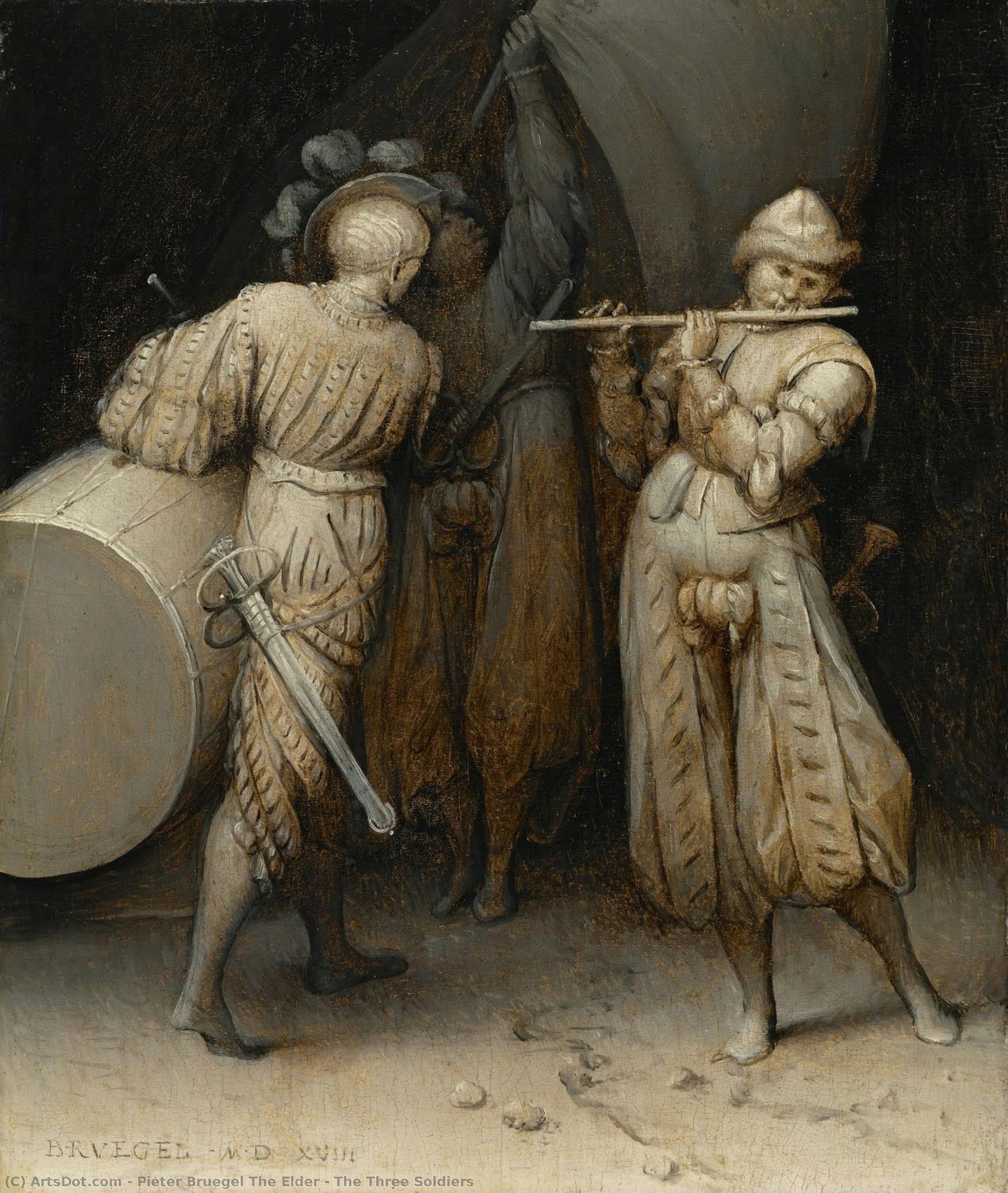
Pieter Bruegel the Elder's "The Three Soldiers," painted in 1568, stands as a poignant emblem of Northern Renaissance artistic sensibilities—a deceptively simple composition brimming with layered meanings and reflecting the anxieties of its time. Originally housed within the royal collection of Charles I of England, this grisaille panel offers a glimpse into Bruegel’s masterful ability to distill complex narratives into visual form, prioritizing psychological depth over mere decorative grandeur. It's a piece that speaks volumes about human vulnerability amidst the backdrop of military ambition and societal upheaval.
The Visual Narrative: Form Meets Function
At first glance, the painting presents three figures clad in medieval armor—a drummer boy, a piper, and a soldier bearing a shield—standing together against a bleak winter landscape. The stark monochrome palette – predominantly shades of grey – underscores the solemnity of the scene and emphasizes Bruegel’s deliberate choice to eschew vibrant color for tonal harmony. This technique, characteristic of grisaille painting, was favored for religious commissions where subtlety and spiritual contemplation were paramount. Notice how Bruegel meticulously renders textures—the rough fabric of the armor, the weathered bark of a tree—demonstrating an unwavering commitment to realism despite its stylized presentation. The inclusion of a backpack adds a touch of everyday detail, grounding the figures in a recognizable human experience.
Historical Context: Mercenaries and Moral Reflection
“The Three Soldiers” emerged during a turbulent period marked by religious conflict between Protestants and Catholics—a time when mercenary armies dominated European politics. Bruegel’s depiction captures not merely the visual spectacle of these warriors but also subtly probes their moral state. The drummer boy, holding aloft his drum, symbolizes youthful enthusiasm and perhaps naive idealism, juxtaposed against the grim reality of war. Similarly, the piper's instrument represents solace and comfort amidst hardship—a poignant reminder that even in times of strife, human connection and artistic expression endure. The bleak winter landscape serves as a powerful metaphor for mortality and decay, prompting viewers to contemplate the fragility of life and the inevitability of death.
Symbolism Beyond Appearance: Layers of Meaning
Beyond its immediate visual elements, “The Three Soldiers” resonates with broader symbolic concerns prevalent in Bruegel’s oeuvre. The trio represents humanity grappling with existential questions—questions of faith, duty, and purpose—amidst the pressures of societal expectations. The desolate winter scene symbolizes spiritual barrenness and challenges viewers to confront uncomfortable truths about human nature. Furthermore, scholars have interpreted the figures' postures as indicative of a profound awareness of their own vulnerability and mortality—a theme that echoes throughout Bruegel’s artistic output.
Emotional Resonance: A Timeless Meditation on Human Condition
Ultimately, “The Three Soldiers” transcends its formal conventions to deliver an enduring emotional impact. The painting compels contemplation about the human condition—about our capacity for both resilience and despair—and invites viewers to consider the significance of individual responsibility within a larger context. Its quiet solemnity and masterful execution continue to captivate audiences today, cementing Bruegel’s legacy as one of the most perceptive and emotionally resonant artists of his era. It's a reproduction that allows us to appreciate not just the beauty of the artwork itself but also the profound wisdom embedded within its deceptively understated imagery.