A Tapestry of Human Folly: The World of Bruegel
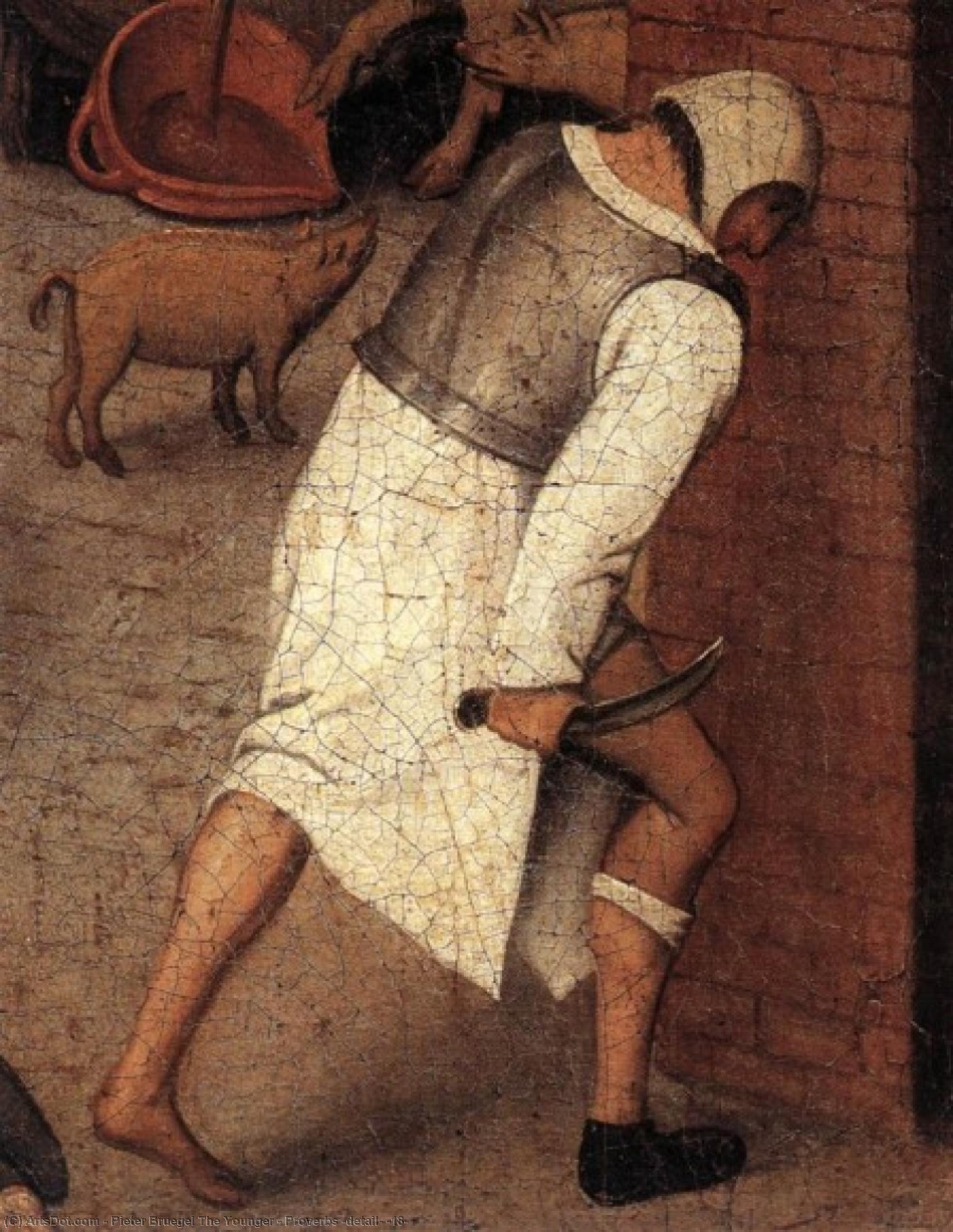
In the intricate detail of Proverbs (detail) (18), we are invited into a chaotic yet meticulously orchestrated universe where every gesture and figure serves as a window into the human condition. This fragment of Pieter Bruegel the Younger’s profound vision captures a moment of visceral tension: a man, clad in stark white, grips a large knife with a predatory intent, poised to strike another nearby. Yet, this singular act of violence is merely one thread in a much larger, more complex tapestry of life. As your eyes wander through the composition, you encounter a bustling landscape populated by dogs, laborers with spades, and figures tending to bowls, all existing within a whirlwind of activity that feels both timeless and deeply rooted in the 16th-century Flemish tradition.
The style of this work is a masterclass in Northern Renaissance narrative complexity. Bruegel the Younger, working within the legacy of his illustrious father, utilizes a technique that favors clarity of form to deliver heavy symbolic weight. Each character is not merely a person, but a living proverb. The interplay between the bright whites of the central figures and the earthy, muted tones of the surrounding peasants creates a visual rhythm that guides the viewer through the madness. For the discerning collector or interior designer, this piece offers more than just decoration; it provides a focal point of intellectual depth, where the brushwork invites close inspection to uncover the hidden allegories embedded in the scene.
Symbolism and the Echoes of History
To gaze upon this detail is to engage in a historical dialogue. The era of the 16th century was one of profound social transition, and Bruegel’s workshop was instrumental in disseminating these complex moral lessons through highly detailed copies and workshop productions. The symbolism here is layered; the knife represents not just physical aggression, but the potential for sudden, unthinking folly that characterizes much of human behavior. The presence of the dogs and the scattered laborers adds a layer of "genre painting" realism, grounding the high-concept allegories in the recognizable, gritty reality of peasant life.
For those seeking to infuse a space with character, this reproduction brings an atmosphere of storytelling and contemplative gravity. It is a piece that demands engagement, sparking conversations about morality, social order, and the cyclical nature of human error. Whether placed in a curated gallery setting or as a sophisticated accent in a classic study, Proverbs (detail) (18) serves as a profound reminder of the enduring power of art to mirror our own complexities back to us through the lens of history.