Pieter de Hooch’s Masterpiece: Capturing Quietude and Refinement
Pieter de Hooch (1629–1694), a luminary of the Dutch Golden Age, stands as one of the foremost painters of interior scenes—a genre that profoundly shaped artistic sensibilities during his era. His oeuvre is characterized by an unwavering dedication to realism, masterful use of light and shadow, and an ability to distill complex emotions into deceptively simple compositions. “A Woman and Two Men in an Arbor,” created around 1657–58, exemplifies these qualities, offering a glimpse into the burgeoning bourgeois lifestyle of seventeenth-century Holland and cementing de Hooch’s reputation as a pioneer of psychological portraiture.
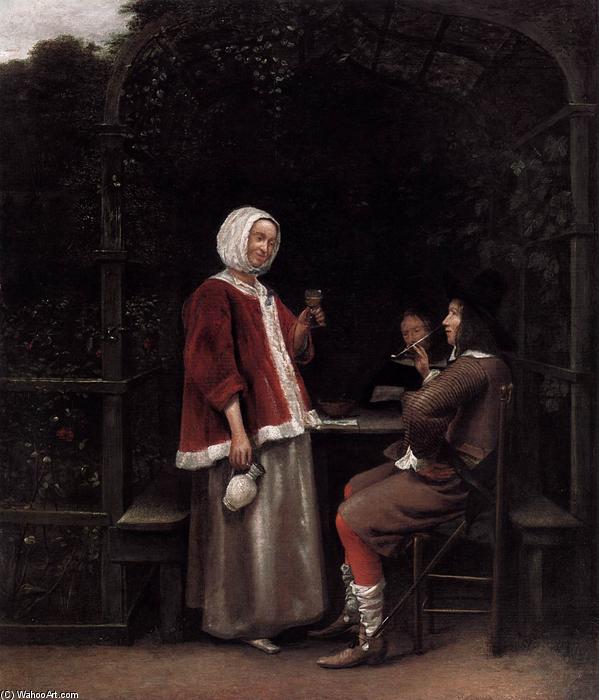
- Subject Matter: The painting depicts three figures seated beneath an arbor—a woman adorned in crimson attire and facing away from the viewer, accompanied by two men engaged in conversation. This intimate tableau captures a moment of serene companionship, reflecting the values of privacy and refined leisure that were becoming increasingly prevalent within Dutch society at the time.
- Style: De Hooch’s style is undeniably Baroque, yet tempered with an understated elegance that distinguishes it from its more flamboyant counterparts. He eschewed dramatic gestures or theatrical poses, favoring instead subtle expressions and carefully observed details to convey mood and atmosphere. This approach aligns perfectly with his fascination for portraying the inner lives of individuals—a hallmark of his artistic vision.
- Technique: De Hooch’s meticulous technique is evident in every brushstroke. He employed a layered glazing method, applying thin washes of color over subsequent layers to achieve luminous effects and create depth within the scene. The artist skillfully manipulated light to illuminate specific areas of interest—particularly the woman's face—drawing the viewer's gaze inward and fostering contemplation.
Historical Context: Reflecting Dutch Bourgeois Values
“A Woman and Two Men in an Arbor” emerged during a period of significant social transformation in Holland. The rise of the merchant class fueled economic prosperity and fostered a culture of intellectual curiosity and artistic patronage. Artists like de Hooch responded to these developments by depicting scenes from everyday life—domestic interiors, taverns, and gardens—that resonated with the aspirations of their clientele. These paintings served not merely as decorative objects but also as emblems of social status and moral virtue—values that were highly esteemed during the Baroque period.
Symbolism: Light, Privacy, and Domestic Harmony
The arbor itself functions as a powerful symbol—representing seclusion, tranquility, and the idealized domestic sphere. The vine climbing over its archway reinforces this notion of natural beauty intertwined with human comfort. Furthermore, the woman’s posture—facing away from the viewer—suggests introspection and vulnerability, inviting viewers to contemplate her inner thoughts and emotions. The subtle gestures of the men convey a sense of camaraderie and mutual respect—underscoring the importance of social bonds within the bourgeois household.
Emotional Impact: A Moment Frozen in Time
Ultimately, “A Woman and Two Men in an Arbor” succeeds in conveying a profound emotional resonance. De Hooch’s masterful use of light and color creates a palpable atmosphere—one of warmth, intimacy, and understated elegance. The painting captures a fleeting moment of human connection—a quiet conversation beneath the shade of an arbor—that speaks to universal themes of companionship, contemplation, and the pursuit of happiness. It remains a testament to de Hooch’s ability to transform ordinary scenes into enduring expressions of artistic beauty and psychological insight.