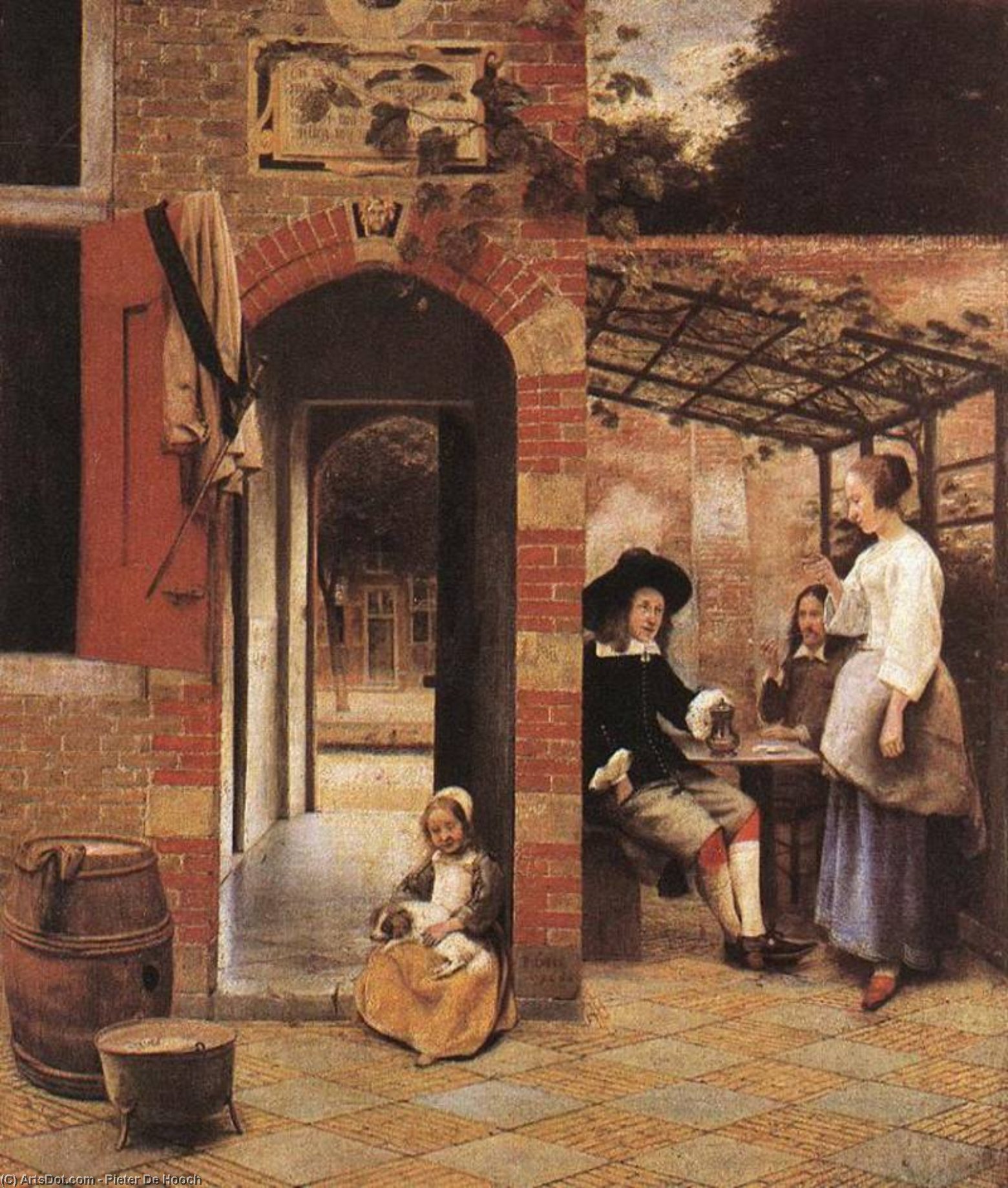
Pieter de Hooch’s serene ‘Drinkers in the Bower,’ painted in 1658, captures Dutch Golden Age tranquility with masterful chiaroscuro and meticulous detail—a captivating glimpse into domestic life that invites contemplation and artistic appreciation.
Pieter de Hooch (1629-1694) was a Dutch Golden Age painter known for his luminous depictions of domestic life, architectural interiors & tranquil courtyards. Explore his realistic style and influence on Impressionism.
Explore Scottish art & history at the National Gallery of Scotland! Discover masterpieces by renowned artists, delve into cultural heritage, and experience a stunning neoclassical building in Edinburgh's heart.
Pieter de Hooch’s “Drinkers in the Bower”: A Window Into Dutch Domestic Tranquility
The painting "Drinkers in the Bower," executed by Pieter de Hooch in 1658, stands as a quintessential example of Dutch Golden Age art—a testament to meticulous observation and an understated elegance that continues to resonate with audiences today. More than just a depiction of figures seated outdoors, it’s a carefully crafted tableau capturing a fleeting moment of domestic serenity amidst the burgeoning complexities of seventeenth-century Amsterdam society.
Subject Matter and Composition
At first glance, the scene presents itself as remarkably simple: several individuals occupy a courtyard garden setting. A woman cradles her infant child, while another man sits beside her on a bench—a commonplace tableau reflecting the daily life of affluent families during this period. However, De Hooch’s genius lies in his ability to imbue this seemingly unremarkable subject with profound psychological depth. The inclusion of a dog adds an element of domesticity and companionship, subtly reinforcing the theme of familial warmth. Two potted plants strategically positioned within the courtyard frame contribute to the overall composition, guiding the viewer's eye and enhancing the sense of tranquility.
Style and Technique: Mastering Light and Atmosphere
De Hooch’s artistic style is characterized by its masterful manipulation of light—a technique central to his oeuvre and emblematic of the Dutch Baroque tradition. He employs chiaroscuro, utilizing dramatic contrasts between light and shadow to sculpt forms and create a palpable atmosphere. The diffused daylight filtering through the foliage casts soft shadows across the courtyard, illuminating faces and drapery with an ethereal glow. This subtle illumination isn’t merely decorative; it serves to convey emotion—a quiet contemplation of life's pleasures and connections. De Hooch’s meticulous brushwork contributes to the painting’s realism, capturing textures and nuances that would have captivated discerning viewers of his time.
Historical Context: Reflecting Amsterdam’s Ascendancy
“Drinkers in the Bower” emerged during a period of unprecedented economic prosperity and cultural flourishing for Amsterdam—the apex of the Dutch Golden Age. The city had become a global center for trade, attracting merchants from across Europe and fostering an environment of intellectual curiosity and artistic innovation. Paintings like this reflected the values of the emerging middle class—a focus on family life, refined sensibilities, and appreciation for beauty. De Hooch’s work aligns with broader trends in Dutch art during this era, prioritizing psychological realism over grand mythological narratives or historical grandeur.
Symbolism: Beyond Surface Appearances
The courtyard garden itself holds symbolic significance. Traditionally associated with privacy and contemplation, it represents a refuge from the pressures of urban life—a space for quiet reflection and familial connection. The woman holding her child embodies maternal tenderness and nurturing care—values deeply ingrained in Dutch culture during the seventeenth century. Furthermore, the presence of the dog symbolizes loyalty and companionship, reinforcing the painting’s overarching message of domestic harmony.
Emotional Impact: Capturing a Moment of Quiet Beauty
Ultimately, “Drinkers in the Bower” succeeds in conveying an extraordinary emotional resonance—a feeling of serene contentment and understated grace. De Hooch's ability to capture the subtle nuances of human emotion is remarkable, inviting viewers to immerse themselves in this tranquil scene and contemplate the beauty of everyday life. It remains a captivating piece of art that speaks volumes about the spirit of its time and continues to inspire admiration for its masterful execution and profound psychological insight.