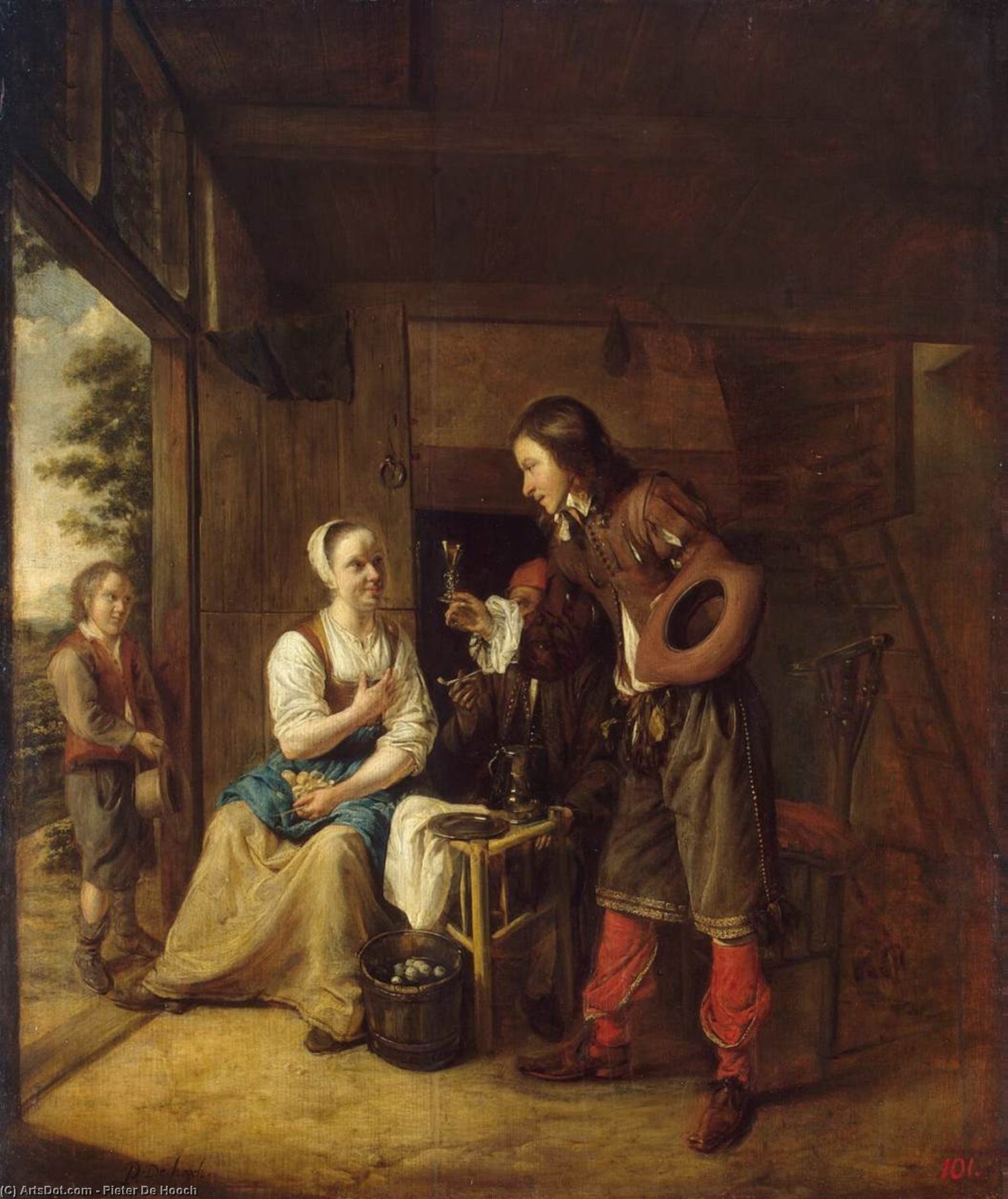
Experience Pieter de Hooch’s ‘Man Offering Wine’! This 1653 masterpiece captures 17th-century Dutch life with realism & warmth. A stunning hand-painted reproduction of a rustic social scene, perfect for your home.
Pieter de Hooch (1629-1694) was a Dutch Golden Age painter known for his luminous depictions of domestic life, architectural interiors & tranquil courtyards. Explore his realistic style and influence on Impressionism.
Explore the Hermitage Museum in St. Petersburg! Discover masterpieces from Renaissance to modern times within stunning historic palaces – a cultural journey awaits.
A Moment of Quiet Refinement: Pieter de Hooch’s “Man Offering a Glass of Wine”
Pieter de Hooch's "Man Offering a Glass of Wine to a Woman," painted in 1653, is more than just a depiction of a social gathering; it’s a masterful study in light, atmosphere, and the subtle nuances of human interaction within the burgeoning middle-class world of 17th-century Holland. This intimate scene, rendered in a remarkably restrained yet profoundly evocative style, offers a glimpse into the daily lives and aspirations of a society embracing prosperity and refinement. Measuring just 53 x 42 cm, the painting’s modest scale belies its remarkable depth – it invites us to step inside this carefully constructed domestic tableau and observe the quiet drama unfolding before us. De Hooch, a key figure in the Delft School, was renowned for his ability to capture the fleeting moments of everyday life, particularly those occurring within the private spaces of homes, often framed by an open doorway that suggests both observation and participation.
The Art of the Dutch Golden Age: Light, Shadow, and Composition
De Hooch’s technique is characterized by a meticulous attention to detail and a masterful manipulation of light – a hallmark of the Dutch Golden Age. He employed a *chiaroscuro* effect, skillfully layering translucent glazes of paint to create an ethereal quality, particularly noticeable in the diffused light filtering through the window. This isn't dramatic illumination; rather, it’s a subtle dance of light and shadow that defines form and mood. The composition itself is carefully balanced, drawing our eye across the scene. The man, positioned slightly off-center, extends his hand offering the wine glass – an action laden with polite formality and perhaps a hint of flirtation. The woman, seated comfortably, receives the gesture with a modest grace, her gaze directed towards him with an expression that suggests both curiosity and acceptance. Notice how De Hooch uses the architecture—the simple wooden beams and walls—to frame the figures, creating a sense of intimacy and drawing us into their world. The inclusion of two secondary figures – one on either side – adds to the scene’s realism, hinting at a larger gathering and enriching the narrative without overwhelming it.
Symbolism and Social Context
Beyond its aesthetic beauty, “Man Offering a Glass of Wine” is rich in symbolic meaning. The act of offering wine was a traditional gesture of hospitality and courtship during this period. It signified respect, generosity, and an invitation to share in a moment of conviviality. The bowl on the ground near the woman could represent a shared refreshment or perhaps a simple offering of sustenance. The presence of multiple individuals suggests a social event – possibly a family gathering, a meeting of friends, or even a business transaction conducted within the comfortable confines of a home. De Hooch’s focus on domestic scenes reflects the growing importance of the middle class in 17th-century Holland, who were increasingly seeking to emulate the refined tastes and manners of the wealthy elite. The painting captures this aspiration for social status and cultural refinement – a desire to create an atmosphere of elegance and sophistication within one's own home.
A Timeless Portrait of Human Connection
Despite its historical context, “Man Offering a Glass of Wine” transcends mere documentation of a specific time and place. It’s a universal portrayal of human connection—a quiet exchange between two individuals marked by politeness, curiosity, and perhaps the unspoken potential for something more. De Hooch's ability to capture such subtle emotions through his masterful use of light, composition, and detail is what makes this painting so enduringly captivating. It’s a reminder that even in the most ordinary moments, there can be profound beauty and significance. The reproduction offered by ArtsDot.com allows you to bring this exquisite work into your own space, experiencing its quiet charm and timeless appeal firsthand. It's an investment not just in art, but in a moment of serene contemplation—a window into the heart of 17th-century Dutch life.