A Quiet Sanctuary of the Dutch Golden Age
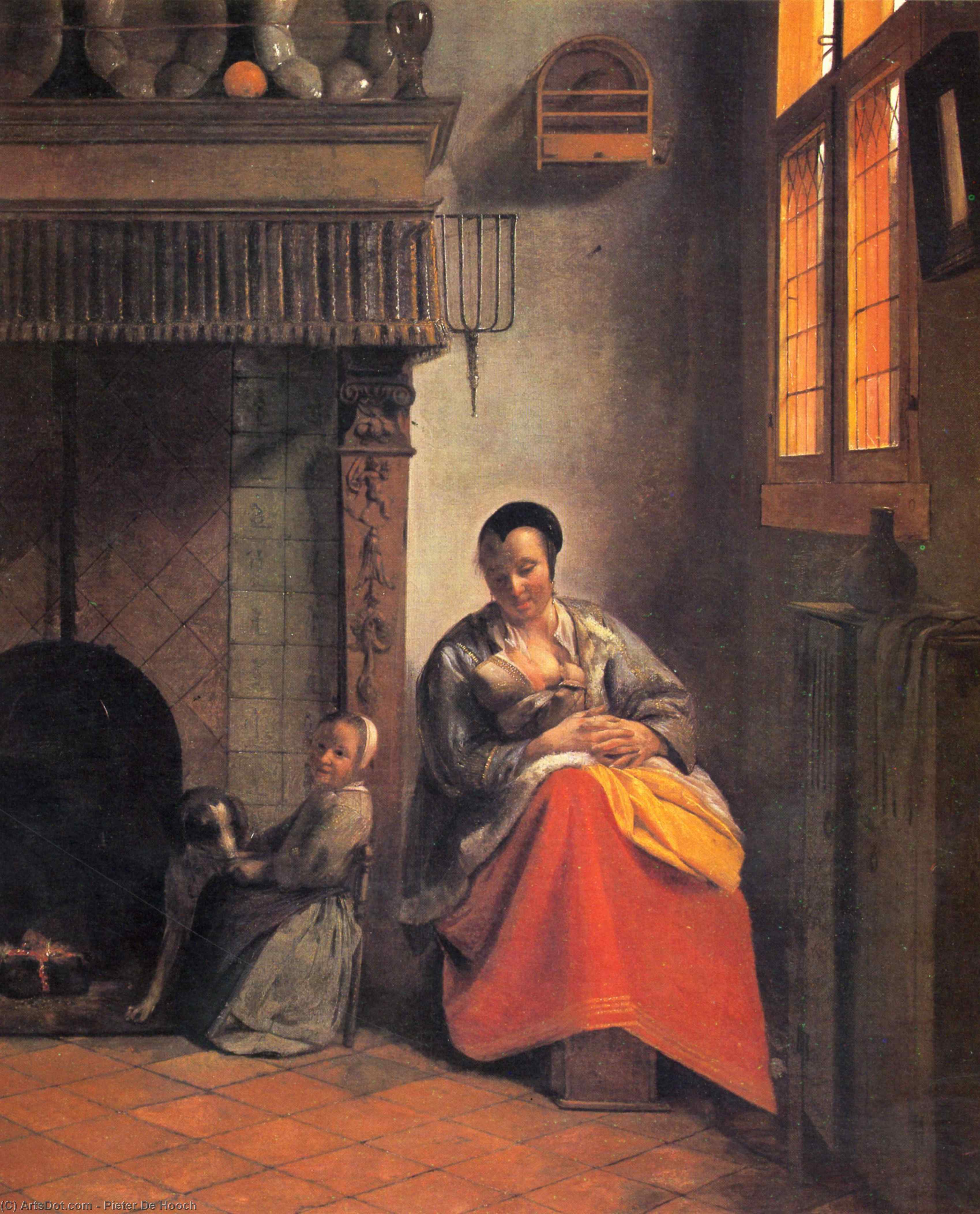
In the soft, amber glow of a seventeenth-century interior, Pieter de Hooch invites us into a moment of profound intimacy and domestic tranquility. Nursing Mother, painted in 1659, serves as a masterful window into the heart of the Dutch Golden Age, capturing a scene that transcends mere genre painting to become an ode to maternal care and the sanctity of the home. The composition centers on a woman seated before the warmth of a fireplace, her focus entirely consumed by the tender act of nursing her child. This quiet communion is framed by the subtle presence of another figure nearby, suggesting a household filled with companionship and shared rhythms of life. Through his meticulous brushwork, De Hooch transforms a mundane domestic chore into a sacred ritual of nourishment and love.
The atmosphere of the painting is thick with the palpable warmth of a lived-in space. As one gazes upon the canvas, the eye wanders through a meticulously arranged room where every object tells a story of middle-class stability and comfort. Two cats, positioned like silent guardians on either side of the scene, add a layer of naturalistic charm and domestic coziness, grounding the human drama in the reality of everyday life. The artist’s command over light is nothing short of extraordinary; the flickering light from the hearth dances across various textures—the smooth ceramic of a bowl, the delicate curve of a vase, and the steady ticking of the clock hanging above the mantle. This interplay of light and shadow creates a sense of depth that draws the viewer into the very air of the room, making the scene feel less like a distant memory and more like a breathing, present reality.
Mastery of Detail and Domestic Symbolism
Pieter de Hooch was renowned for his ability to capture the "quiet" moments of life, and in this work, his technical prowess is on full display. The composition is a masterclass in balance and spatial arrangement. By scattering objects such as bowls and vases throughout the room, De Hooch creates a rhythmic movement that guides the viewer’s gaze from the central maternal figure to the periphery of the domestic world. His technique allows for a remarkable clarity, where the textures of fabric, wood, and metal are rendered with such precision that they invite tactile curiosity. For the collector or interior designer, this level of detail offers a profound sense of richness; a reproduction of such a piece brings not just color to a room, but a sophisticated narrative texture that complements both classical and contemporary settings.
Beyond the visual splendor, the painting is rich with the symbolism characteristic of the Dutch era. The fireplace represents the hearth as the soul of the home, while the clock serves as a gentle memento mori, a reminder of the passage of time amidst the eternal cycle of life and nurturing. Even the presence of the animals and the scattered household items speak to the virtues of order, prosperity, and the quiet dignity found in the everyday. To possess or display such a work is to invite an atmosphere of peace and contemplation into one's space. It is an evocative piece that speaks to the universal human experience, making it an enduring choice for those who seek art that resonates with emotional depth, historical significance, and an unparalleled sense of grace.