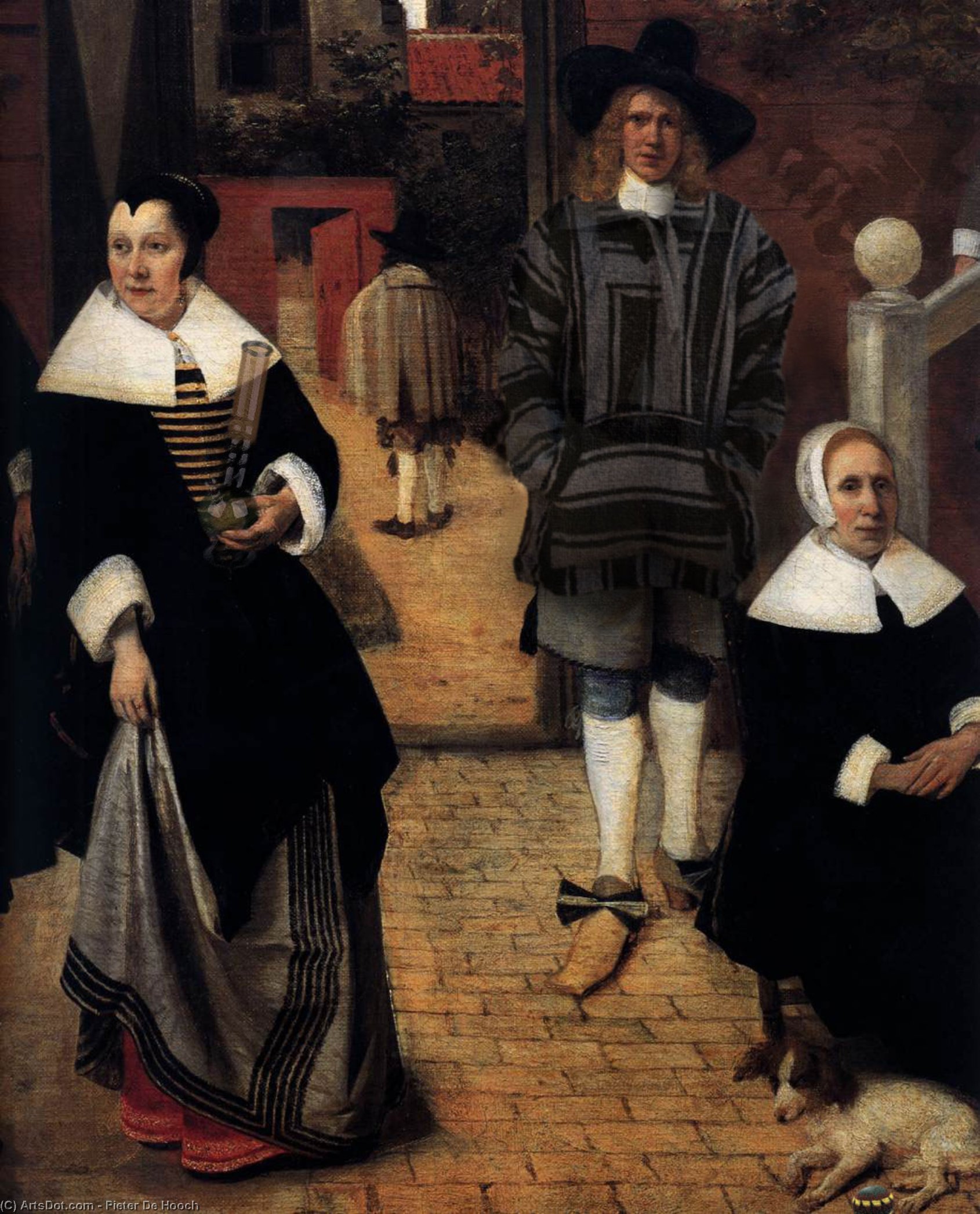
Pieter de Hooch’s ‘Portrait of a Family in Delft Courtyard,’ completed around 1658-60, exemplifies the Delft school's artistic excellence. Featuring a family enjoying leisure time amidst architectural splendor and naturalistic light, it portrays familial bonds with tenderness. Admire its meticulous depiction of domestic space and explore its enduring influence on Impressionism.
Portrait of a Family in a Courtyard in Delft (detail) – A Window Into Dutch Golden Age Domestic Life
Pieter de Hooch’s “Portrait of a Family in a Courtyard in Delft,” completed around 1658-60, stands as an enduring testament to the artistic achievements of the Dutch Golden Age. More than just a depiction of a family gathering, it's a meticulously crafted tableau that encapsulates the values and aspirations of its era—a celebration of domestic tranquility interwoven with subtle symbolic gestures.
The painting immediately draws the eye with its masterful use of light – a hallmark of de Hooch’s style. Soft, diffused illumination spills across the courtyard, bathing the figures in an ethereal glow that lends an air of serenity and intimacy to the scene. This technique wasn't merely aesthetic; it reflected the prevailing belief that light symbolized divine grace and illuminated the moral virtues of its subjects.
- Subject Matter: The composition centers on a family – a patriarch, his wife, their daughter, and two sons – inhabiting a Delft courtyard. This choice was deliberate, aligning with the artistic trend of portraying everyday life rather than grand historical narratives.
- Style & Technique: De Hooch employed oil paint on canvas, utilizing layering techniques to achieve remarkable realism. Notice the meticulous rendering of textures—the rough brickwork of the archway, the smooth surface of the courtyard tiles—demonstrating a dedication to capturing the nuances of material appearance.
- Historical Context: Painted during the height of Dutch prosperity and cultural flourishing, “The Courtyard” reflects the burgeoning middle class’s desire for comfortable domestic spaces and idealized representations of family life. It speaks to a period marked by intellectual curiosity and artistic innovation.
Beyond its visual beauty, the painting resonates with deeper symbolic meanings. The courtyard itself represents a microcosm of the ideal home—a space of refuge from the outside world, governed by order and harmony. The woman’s gesture of presenting grapes symbolizes fertility and abundance – a common motif in Dutch art during this time.
Furthermore, the inclusion of the Nieuwe Kerk tower serves as a visual anchor, grounding the scene in Delft’s religious landscape and reinforcing the family's piety. De Hooch skillfully integrates these elements to convey not only a portrait of a household but also an emblem of moral virtue and spiritual aspiration.
“Portrait of a Family in a Courtyard in Delft” continues to captivate viewers today because it transcends mere representation, offering a glimpse into the soul of its time—a beautifully rendered meditation on domestic life, faith, and the enduring allure of naturalistic art.