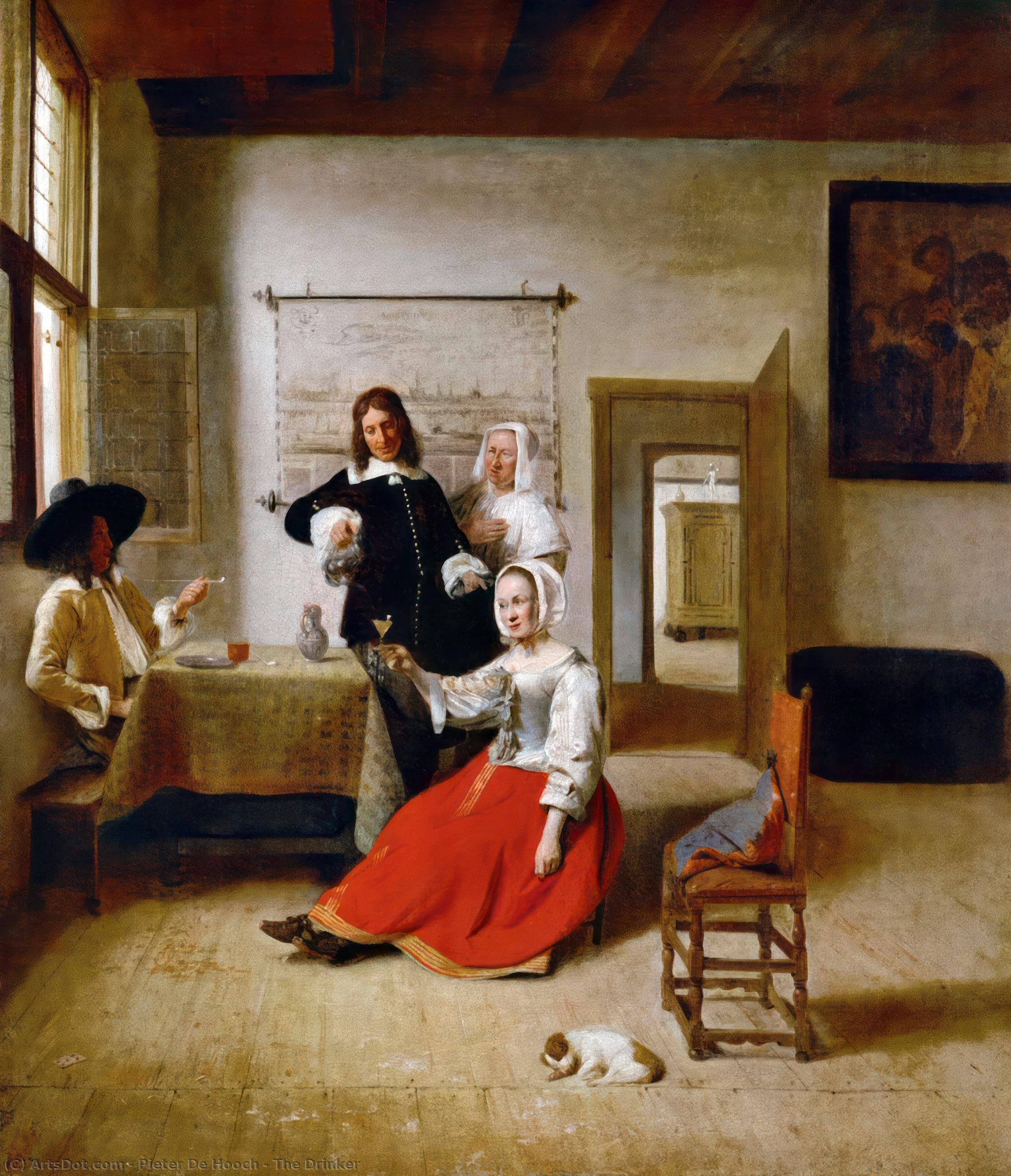
Pieter de Hooch’s "The Drinker" captures a serene Delft courtyard scene circa 1658, showcasing the Dutch Golden Age's refined domesticity with masterful light and subtle detail. Discover this captivating portrait and bring home a timeless masterpiece.
Pieter de Hooch (1629-1694) was a Dutch Golden Age painter known for his luminous depictions of domestic life, architectural interiors & tranquil courtyards. Explore his realistic style and influence on Impressionism.
Explore the Louvre Museum in Paris! Home to iconic masterpieces like the Mona Lisa & Venus de Milo, journey through art history from ancient Egypt to Renaissance icons. Plan your visit today!
A Moment Frozen in Delft Light – Pieter de Hooch’s “The Drinker”
Pieter de Hooch's "The Drinker," painted circa 1658, stands as a quintessential example of Dutch Golden Age domestic genre painting—a captivating glimpse into the burgeoning middle class life of seventeenth-century Delft. More than just a depiction of an everyday scene, this artwork embodies De Hooch’s masterful ability to convey atmosphere and psychological nuance through subtle observation and meticulous technique. The canvas captures a quiet courtyard interior, bathed in diffused daylight filtering through a doorway, instantly transporting viewers back to a time of refined sensibilities and understated elegance.
The Composition: A Study in Restraint
The painting's composition is remarkably balanced, prioritizing spatial depth and creating an illusion of realism that was revolutionary for its era. De Hooch skillfully employs perspective—a technique pioneered during this period—to establish a believable sense of space. The central figure, seated on the floor amidst two chairs, dominates the scene but isn’t presented as overtly dominant; rather, he exudes a calm composure, cradling a feline companion – a motif frequently explored by De Hooch and indicative of his fascination with capturing domestic tranquility. Two additional individuals stand near the doorway, engaged in conversation, adding to the dynamism of the composition without disrupting its overall serenity. The placement of the dining table and cup subtly reinforces the narrative of daily life—a scene designed not merely to record what was seen but to evoke a feeling of warmth and intimacy.
Technique and Style: Vermeer’s Influence
De Hooch's artistic style owes considerable debt to Johannes Vermeer, whose groundbreaking use of light and shadow – *chiaroscuro* – profoundly impacted the Dutch painting tradition. Like Vermeer, De Hooch meticulously renders textures with remarkable accuracy, utilizing thin layers of oil paint to achieve luminous effects that illuminate the figures and surfaces within the courtyard. The artist’s attention to detail extends beyond mere visual representation; he captures subtle nuances of expression and posture, conveying a profound understanding of human psychology. This meticulous approach is evident in the rendering of the cat's fur, the folds of fabric, and even the reflections on the tabletop—elements that contribute significantly to the painting's immersive quality.
Symbolism: Domestic Tranquility and Moral Reflection
Beyond its aesthetic beauty, “The Drinker” carries symbolic weight reflecting the values of the time. The courtyard itself represents a microcosm of Dutch society – a space for contemplation and social interaction within the confines of the home. The presence of the cat is often interpreted as symbolizing domestic contentment and fertility—a common theme in De Hooch’s oeuvre. Furthermore, the quiet demeanor of the drinker invites viewers to consider themes of moderation and inner peace—values highly prized during the Dutch Golden Age. The painting serves as a visual meditation on the complexities of human experience within the context of a comfortable, secure environment.
Emotional Impact: Capturing the Essence of Everyday Life
Ultimately, “The Drinker” succeeds in capturing the very essence of everyday life – a scene imbued with understated beauty and psychological depth. De Hooch’s masterful use of light and color creates an atmosphere of warmth and intimacy, inviting viewers to linger on the canvas and contemplate the quiet dramas unfolding within its frame. It's a painting that speaks volumes about human connection and the pursuit of contentment—a timeless masterpiece that continues to resonate with audiences today.