A Window into the Dutch Golden Age
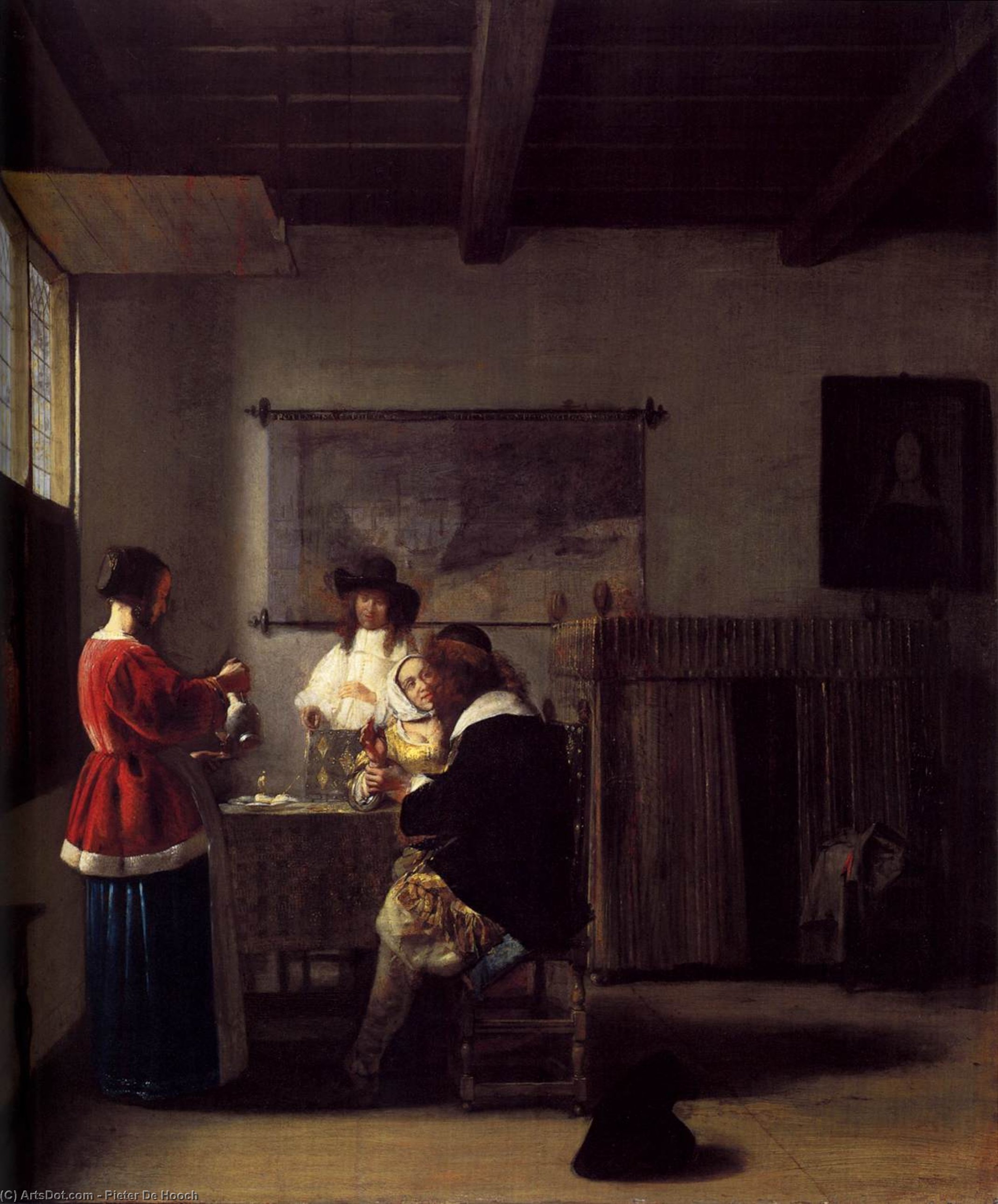
In the quiet, sun-drenched interiors of the seventeenth century, moments of profound connection were often found in the most mundane settings. Pieter de Hooch, a master of the Dutch Golden Age, captures this essence perfectly in his 1657 masterpiece, The Visit. This evocative piece invites the viewer into a lively social gathering, where the boundaries between the private domestic sphere and the public world seem to blur. As we gaze upon the scene, we are not merely observers of a meal, but guests at a table surrounded by the warmth of companionship. The composition is anchored by a central dining area, where figures are arranged in a naturalistic, unposed manner that suggests a fleeting moment captured in time. A delicate bird perched in the upper corner and the steady presence of a wall clock serve as subtle reminders of the passage of time, adding a layer of contemplative depth to an otherwise bustling domestic tableau.
The artistry of De Hooch is defined by his unparalleled ability to manipulate light and shadow, a technique that breathes life into every corner of the room. Through a masterful application of chiaroscuro and soft, diffused illumination, he creates a sense of atmospheric depth that draws the eye through the layers of the household. The textures of the wooden furniture, the subtle sheen on the ceramic bowls, and the heavy folds of period clothing are rendered with such precision that one can almost feel the stillness of the air. This meticulous attention to detail is not merely decorative; it serves to ground the painting in a tangible reality, making the historical setting feel immediate and intimate for the modern viewer.
Symbolism and the Art of Domesticity
Beyond its surface beauty, The Visit functions as a profound exploration of middle-class values during the Dutch Golden Age. During this era, the home was viewed as a sanctuary of morality and order. De Hooch utilizes elements within the room—the organized placement of chairs, the communal bowl of food, and the structured gathering—to symbolize the stability and prosperity of the burgeoning merchant class. The presence of the clock is particularly poignant, acting as a memento mori that reminds us to cherish the fleeting joys of human connection amidst the inevitable march of time. For the collector or interior designer, this painting offers more than just aesthetic appeal; it provides a narrative of continuity and the enduring importance of home and hearth.
Integrating a high-quality reproduction of such a work into a contemporary space allows for a sophisticated dialogue between history and modernity. The muted, earthy palette of De Hooch’s work complements both classical and minimalist decor, providing a focal point that evokes feelings of nostalgia, warmth, and intellectual curiosity. Whether placed in a grand library or a cozy breakfast nook, The Visit serves as an emotional anchor, transforming a room into a space of storytelling and quiet reflection. It is an invitation to slow down, to observe the light, and to find beauty in the shared moments of our own lives.