A Snapshot of Dutch Domestic Life: Pieter de Hooch’s “Village House”
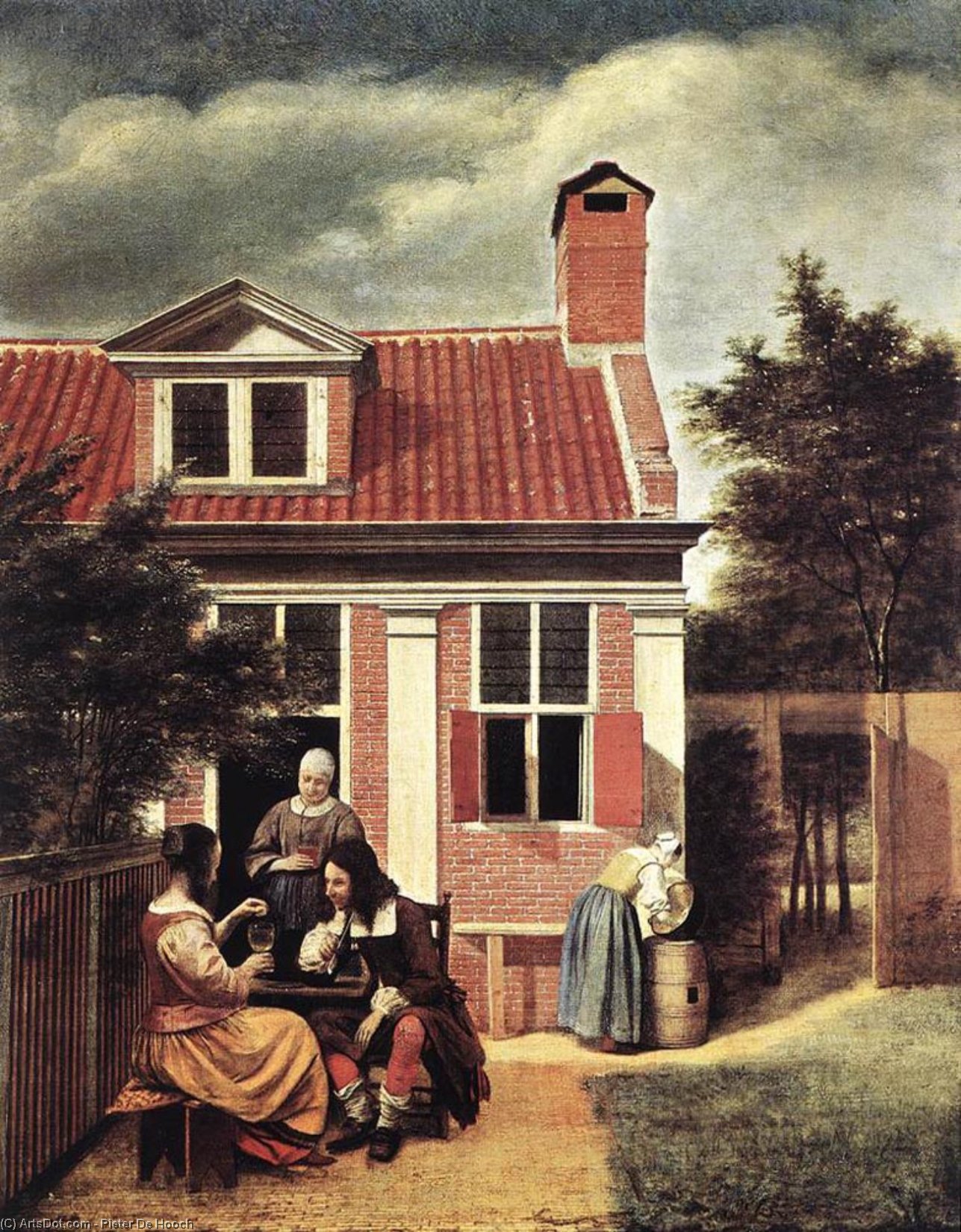
Pieter de Hooch's "Village House," painted circa 1665, stands as a quintessential example of Dutch Golden Age genre painting—a genre dedicated to capturing scenes from everyday life with remarkable realism and psychological depth. More than just a depiction of a courtyard interior, it’s a window into the values and sensibilities of seventeenth-century Holland, where domestic tranquility and social connection were paramount.
Composition & Technique: Baroque Influence Meets Quiet Observation
The painting's central focus is undeniably the brick house itself—a modest structure rendered with meticulous attention to architectural detail. De Hooch employs a flattened perspective, subtly diminishing depth while maintaining a convincing sense of space. Light plays a crucial role, diffusing softly across the scene and illuminating the figures within, characteristic of Baroque influences but tempered by De Hooch’s commitment to naturalistic observation.
- Oil Paint on Canvas: The medium—oil paint—allows for rich textures and nuanced tonal gradations, reflecting De Hooch's mastery of technique.
- Brushstrokes: Visible brushstrokes contribute to the painting’s tactile quality, conveying a sense of immediacy and capturing the subtle nuances of light and shadow.
- Texture Variation: From smooth surfaces on the brick walls to rougher areas representing foliage and ground, De Hooch skillfully manipulates texture to enhance visual interest and realism.
Subject Matter & Symbolic Resonance
Three women occupy a bench before the house, engaged in animated conversation—a scene that speaks volumes about the social customs of the time. Their clothing—pink, brown, and blue dresses—suggests elegance and refinement, mirroring the aspirations of the burgeoning middle class. The inclusion of lemon juice and beer adds to the realism of the setting.
Symbolism: The courtyard itself symbolizes domesticity and privacy, reflecting the importance of family life in Dutch society. The women’s interaction embodies social bonds and intellectual engagement—themes central to Baroque art's exploration of human psychology.
Emotional Impact & Artistic Legacy
"Village House" evokes a profound sense of serenity and contemplation. De Hooch’s ability to convey emotion through subtle gestures and facial expressions elevates the painting beyond mere representation, capturing the essence of human experience. It remains an influential work, inspiring Impressionist painters like Claude Monet who sought to capture fleeting moments of light and atmosphere—a testament to De Hooch's enduring artistic legacy.
Further Exploration