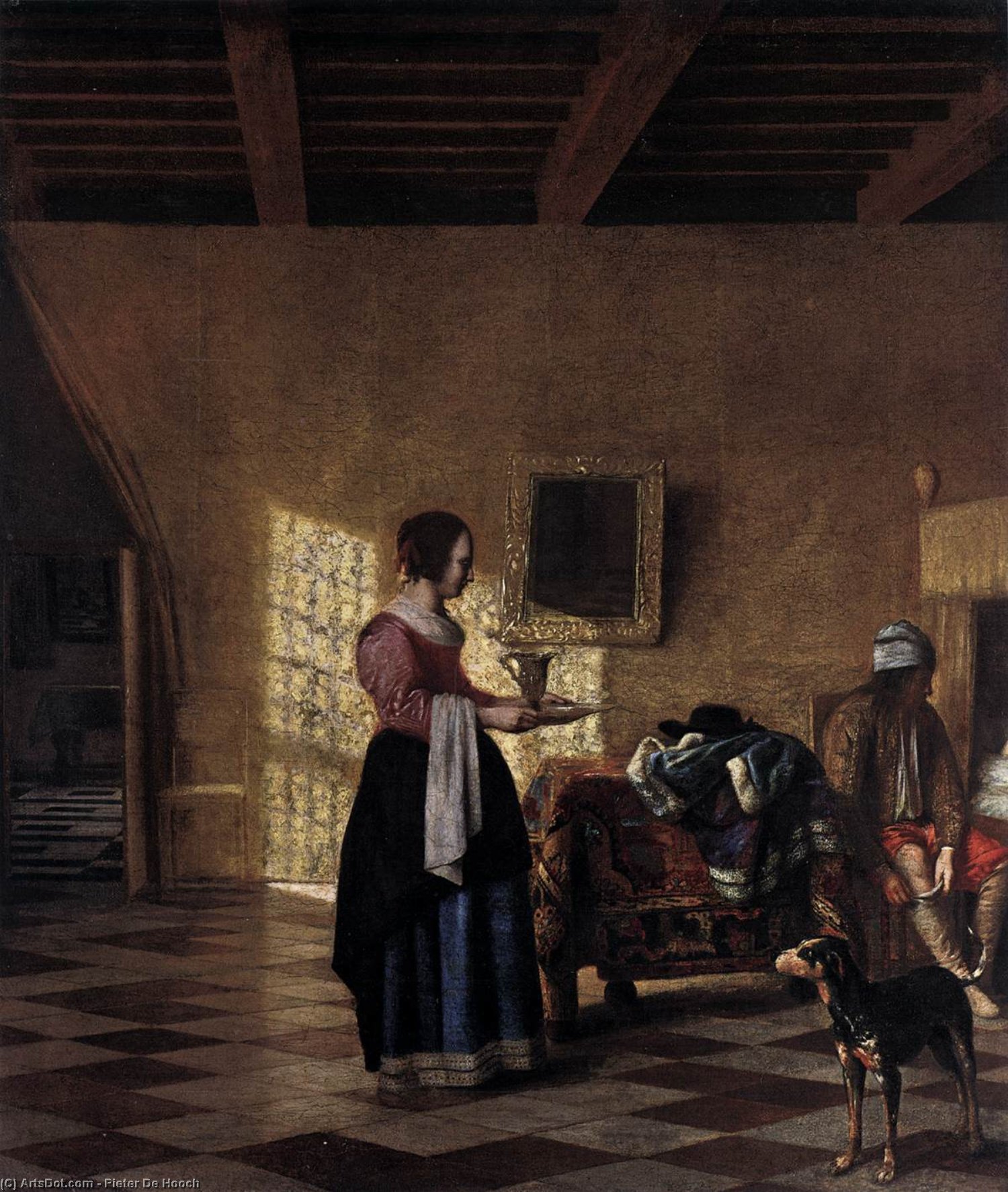
Pieter de Hooch (1629-1694), a cornerstone of the Dutch Golden Age, honed his skills under Nicolaes Berchem in Haarlem alongside Jacob Ochtervelt. Known for capturing quiet domestic scenes illuminated by subtle light, he exemplifies the era's fascination with realism and nuanced observation.
Pieter de Hooch (1629-1694) was a Dutch Golden Age painter known for his luminous depictions of domestic life, architectural interiors & tranquil courtyards. Explore his realistic style and influence on Impressionism.
Explore The Metropolitan Museum of Art: 5,000 years of art from around the world! Discover masterpieces, ancient artifacts & immersive exhibitions – a global art destination awaits.
A Window into Domestic Tranquility: Pieter de Hooch’s “Woman with a Water Pitcher, and a Man by a Bed”
Pieter de Hooch's "Woman with a Water Pitcher, and a Man by a Bed," painted in 1667, stands as an exemplar of Dutch Golden Age artistry—a masterful depiction of quiet domestic life that transcends mere observation to convey profound psychological depth. Executed in oil on canvas measuring 62 x 52 cm, this artwork resides within the collection of The Metropolitan Museum of Art, offering visitors a glimpse into the artistic sensibilities of its era and demonstrating De Hooch’s unparalleled ability to capture fleeting moments of human experience.
The Painter's Vision: Style and Technique
De Hooch’s distinctive style is characterized by an almost obsessive attention to detail—a hallmark of his training under Nicolaes Berchem, alongside Jacob Ochtervelt—resulting in a luminous realism that distinguishes him from many contemporaries. Unlike the grand landscapes favored by other prominent artists of the time, De Hooch focused on interiors, specifically capturing scenes of everyday life within bourgeois homes. The painting utilizes chiaroscuro – dramatic contrasts between light and shadow – to sculpt the figures and create an atmosphere of intimacy and serenity. Light streams softly through a doorway, illuminating the woman’s face and casting delicate shadows across the room, drawing the viewer's eye into the scene. This masterful manipulation of light is not merely decorative; it serves to heighten emotional resonance and subtly suggest inner thoughts and feelings.
Historical Context: Reflecting Dutch Society
“Woman with a Water Pitcher” emerged during a period of significant social transformation in Holland—the burgeoning middle class was gaining prominence, reshaping societal values and aspirations. De Hooch’s canvases reflect this shift by portraying scenes of domestic tranquility, emphasizing comfort, refinement, and the importance of family life. The presence of two dogs adds an element of rustic charm to the composition, grounding the scene in a tangible reality while simultaneously hinting at themes of companionship and vulnerability. The checkered floor and wooden walls contribute to the painting’s understated elegance, reinforcing its connection to the burgeoning bourgeois lifestyle.
Symbolism: Beyond Surface Appearance
The woman holding the water pitcher is not simply performing a mundane task; she embodies grace and composure—qualities considered desirable in women of the period. The man lying on the bed represents restfulness and vulnerability, suggesting a scene of domestic harmony. While seemingly simple, these figures are imbued with symbolic significance, reflecting broader cultural ideals concerning femininity, masculinity, and familial bonds. The open doorway symbolizes access to the outside world but simultaneously emphasizes the importance of seclusion and privacy within the home—a concept central to De Hooch’s artistic vision.
Emotional Impact: Capturing Transient Beauty
Ultimately, “Woman with a Water Pitcher” succeeds in conveying an emotional depth rarely achieved by artists of its time. The painting evokes feelings of peace, contemplation, and understated beauty—capturing the fleeting moments of human connection that define everyday life. It invites viewers to linger on the scene, absorbing its subtle nuances and appreciating De Hooch’s ability to transform ordinary subjects into enduring symbols of artistic excellence. Its quiet grandeur continues to inspire admiration and serves as a testament to the power of art to illuminate the complexities of human experience.