A Window into 17th-Century Domesticity
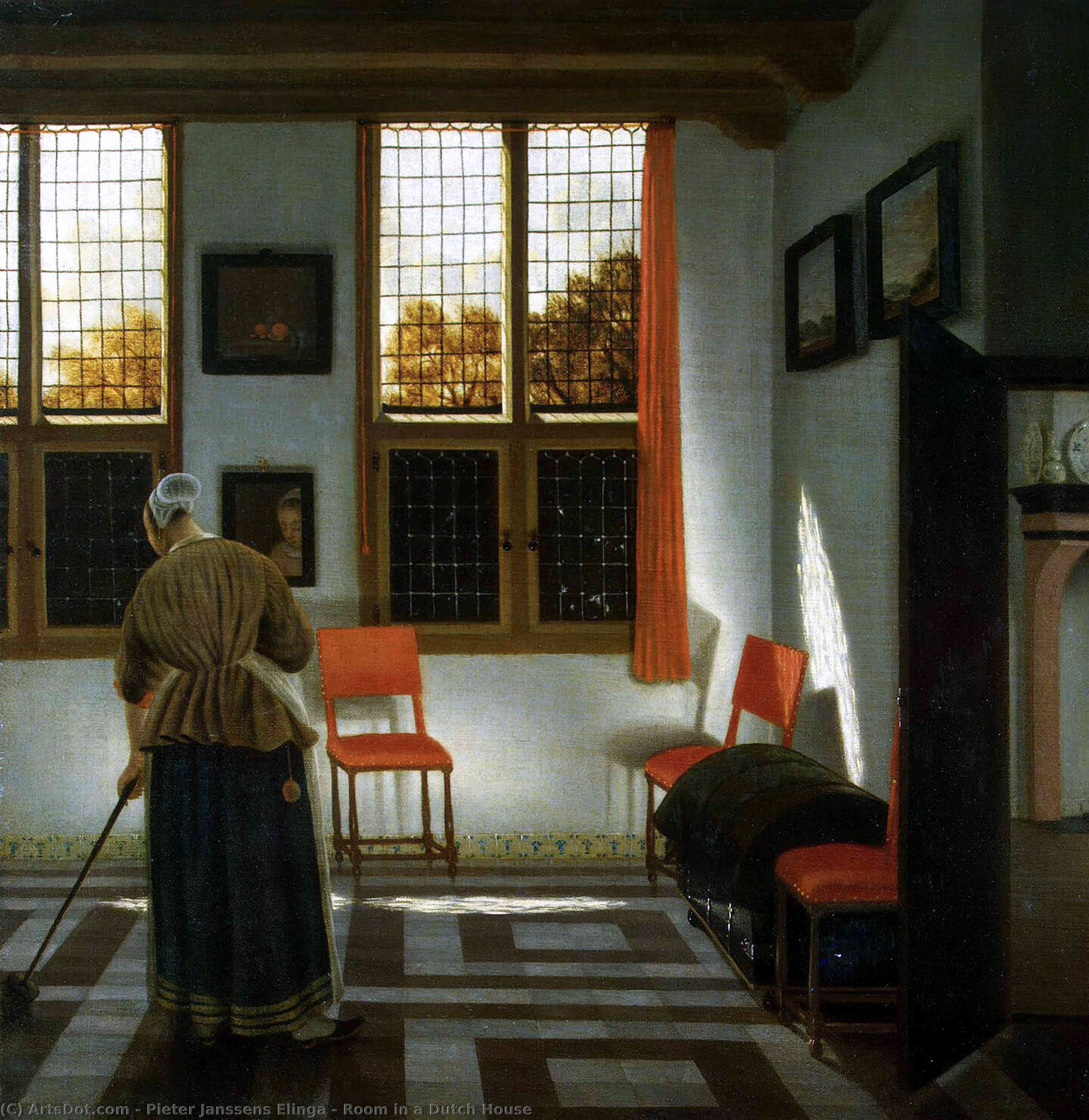
Pieter Janssens Elinga’s “Room in a Dutch House” (1668) offers an intimate glimpse into the heart of everyday life during the Dutch Golden Age. This captivating oil on canvas, now residing at The Hermitage in St. Petersburg, isn't merely a depiction of an interior; it’s a carefully constructed tableau that speaks volumes about societal values, domestic roles, and artistic skill. Measuring 62 x 59 cm, the painting invites viewers to step into a world defined by order, cleanliness, and quiet contemplation.
The Scene: A Moment of Quiet Labor
The composition centers around a woman diligently sweeping the floor – a seemingly mundane task elevated through Elinga’s masterful rendering. She is positioned within a meticulously arranged room, furnished with chairs and a bed that exemplify the Dutch penchant for practicality and orderliness. Sunlight streams through three windows adorned with orange curtains, illuminating dust motes dancing in the air and casting warm highlights on the furniture and the woman's figure. The checkered tile floor adds another layer of geometric precision to the scene. Two framed pictures hang above the bed, and one below it, while a clock subtly marks the passage of time.
Artistic Influences & Style
Elinga’s work is often compared to that of
Pieter de Hooch, a leading figure in Dutch interior painting. Both artists demonstrate a keen interest in architectural perspective, particularly the interplay of light and shadow on surfaces like windows and tiling. However, Elinga distinguishes himself through his ability to imbue these scenes with a profound sense of stillness and introspection. While De Hooch often depicts bustling domestic activity, Elinga favors moments of quietude, inviting viewers into a more contemplative space. He also shows influence from artists such as
Pieter Jacobsz Codde and
Pieter Aertsen’s workshop, demonstrating an understanding of genre scenes and still life elements within the domestic setting.
Technique & Mastery of Light
Elinga's technical skill is evident in his masterful handling of light and shadow. The sunlight isn’t simply *present* – it actively shapes the scene, defining forms, creating depth, and lending a sense of realism to the textures of wood, fabric, and tile. His use of oil paint allows for rich color variations and subtle gradations, enhancing the overall impression of authenticity. This meticulous attention to detail was characteristic of Dutch Golden Age painting, where artists strived to capture the world around them with unparalleled accuracy.
Symbolism & The Dutch Golden Age
The seemingly simple act of sweeping carries symbolic weight within the context of 17th-century Dutch society. It represents diligence, domestic virtue, and a commitment to maintaining order – qualities highly valued during this period of economic prosperity and social stability. The well-appointed room itself speaks to the rising affluence of the merchant class, who commissioned many such paintings as symbols of their status and refined taste. The painting reflects the Dutch emphasis on *gezelligheid* - a feeling of cozy comfort and contentment within the home.
Emotional Resonance & Enduring Appeal
“Room in a Dutch House” transcends its historical context to offer a timeless message about the human desire for peace, order, and tranquility. The painting evokes a sense of calm and serenity, inviting viewers to pause and appreciate the beauty of everyday life. Its enduring appeal lies in its ability to resonate with our own aspirations for comfortable, well-ordered living spaces.
Bring This Masterpiece Home
ArtsDot.com offers exquisite, hand-painted reproductions of Pieter Janssens Elinga’s “Room in a Dutch House.” Each reproduction is crafted by skilled artists using eco-friendly materials and solvent-free paints, ensuring exceptional quality and longevity.
Experience the serenity and timeless beauty of “Room in a Dutch House” with a stunning reproduction from ArtsDot.com.